
Economic War on Iran: What Happens Next for Oil, Bonds & the Fed?
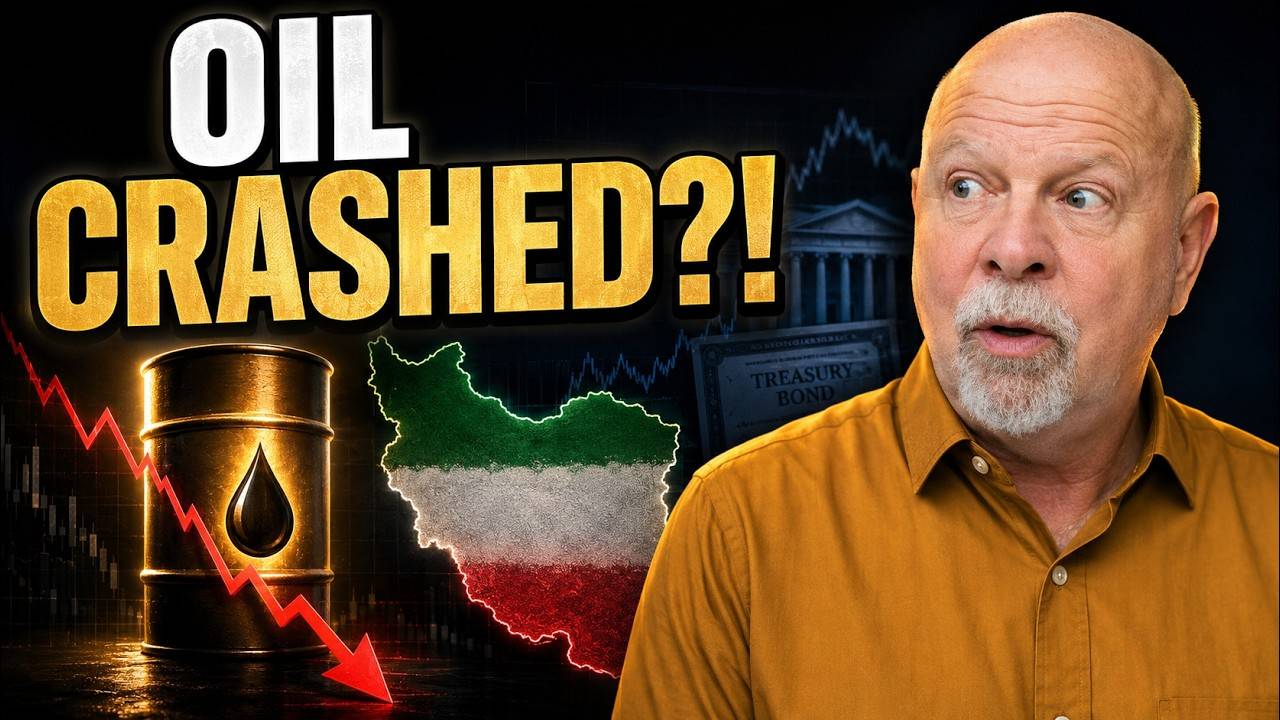
Economic War, Falling Oil Prices, and Why Bonds Are Warning Investors About Recession Risks
Markets are sending conflicting signals. Oil prices are falling despite major geopolitical restrictions, Treasury bonds are rallying, and investors are trying to understand what these moves mean for the economy.
A major economic event involving Iran has created one of the most unusual market reactions of the year. Traditional market logic suggested that restrictions on a major oil exporter would push oil prices higher. Instead, crude prices moved lower as traders focused on a deeper concern: weakening demand and possible recession risks.
Key Takeaways
Despite supply concerns, oil declined because traders appeared more focused on possible economic weakness and demand destruction.
Treasury bonds rallied strongly as investors moved toward safety, while corporate credit spreads widened.
The Federal Reserve must balance remaining inflation pressure against growing recession concerns.
Mark explains how investors can focus on generating cash flow through strategies such as covered calls.
Why Oil Fell When Supply Was Restricted
When major restrictions were placed on Iran’s ability to export oil and participate in international trade, many investors expected oil prices to rise.
The logic was straightforward: lower supply usually creates higher prices. However, the market reaction was completely different.
Oil prices moved lower because traders were looking beyond the immediate supply impact. According to Mark’s analysis, the market was considering whether these aggressive economic actions reflected concerns about future demand and economic growth.
Market Insight
The market may be pricing in two forces at once: supply risk from restrictions and demand weakness from possible economic slowdown.
Bond Markets Are Warning About Recession Risks
When traders believe a recession may be approaching, they often move away from risk assets and toward safer investments. That is exactly what happened in the Treasury market.
Treasury yields moved sharply lower as investors increased demand for government bonds. Mark described this as a major shift because a large move in yields suggests fear has entered the market.
However, the Treasury rally was only part of the story. At the same time, the spread between government bonds and corporate bonds widened.
This difference matters. It suggests investors are not simply expecting lower rates. They are also becoming more concerned about credit risk.
The Federal Reserve Is Trapped Between Two Risks
The Federal Reserve raised interest rates aggressively to control inflation. While inflation has improved from its peak, it has not completely disappeared.
Now the Fed faces conflicting signals:
- Bond markets are suggesting recession risk.
- Oil markets are reflecting demand concerns.
- Corporate credit spreads are showing increased caution.
- Inflation and wage growth remain important concerns.
Cutting rates too early could risk inflation returning. Keeping rates high for too long could increase economic damage.
Why Bonds Are Becoming Interesting Again
For several years, rising rates created a difficult environment for bond investors. Now, with rates moving in multiple directions, opportunities are returning.
According to Mark, bond markets have become tradable again because investors can potentially take advantage of changing rate environments.
Some traders are positioning for additional bond rallies. Others expect stabilization. The important point is that uncertainty has created movement.
Why Cash Flow Matters In Uncertain Markets
When markets become unpredictable, income can become more valuable than relying only on growth.
Mark explains that covered calls can help investors generate income from stocks they already own.
A covered call involves owning shares and selling a call option against those shares. The investor receives a premium in exchange for giving someone else the right to buy the stock at a specific price.
Building A Cash Flow Machine
By repeatedly selling covered calls across a portfolio, investors can create a system designed around generating monthly option income.
What Investors Should Watch
- Bond yields and Treasury market movements
- Corporate credit spreads
- Federal Reserve decisions
- Inflation trends
- Economic growth signals
- Market volatility and option premiums
The Bottom Line
Markets are sending mixed signals. Oil prices, bonds, and credit markets are suggesting growing caution, while inflation and labor data continue creating challenges for the Federal Reserve.
According to Mark’s analysis, investors should pay attention to the return of volatility and the opportunities it creates. In uncertain environments, generating income can become an important part of a portfolio strategy.
Want to Learn How We Generate Income Regardless of Market Direction?
Discover how the Cash Flow Machine approach helps investors build monthly income strategies using stocks they already own.
Watch Free MasterclassSerious Investors Join Us Inside Elite
Learn the broader Cash Flow Machine system and explore advanced strategies for creating portfolio income.
Join Elite