
Are You Overtrading? How a Trading Plan Can Protect Your Returns and Your Mindset
Are You Overtrading? How a Trading Plan Can Protect Your Returns and Your Mindset
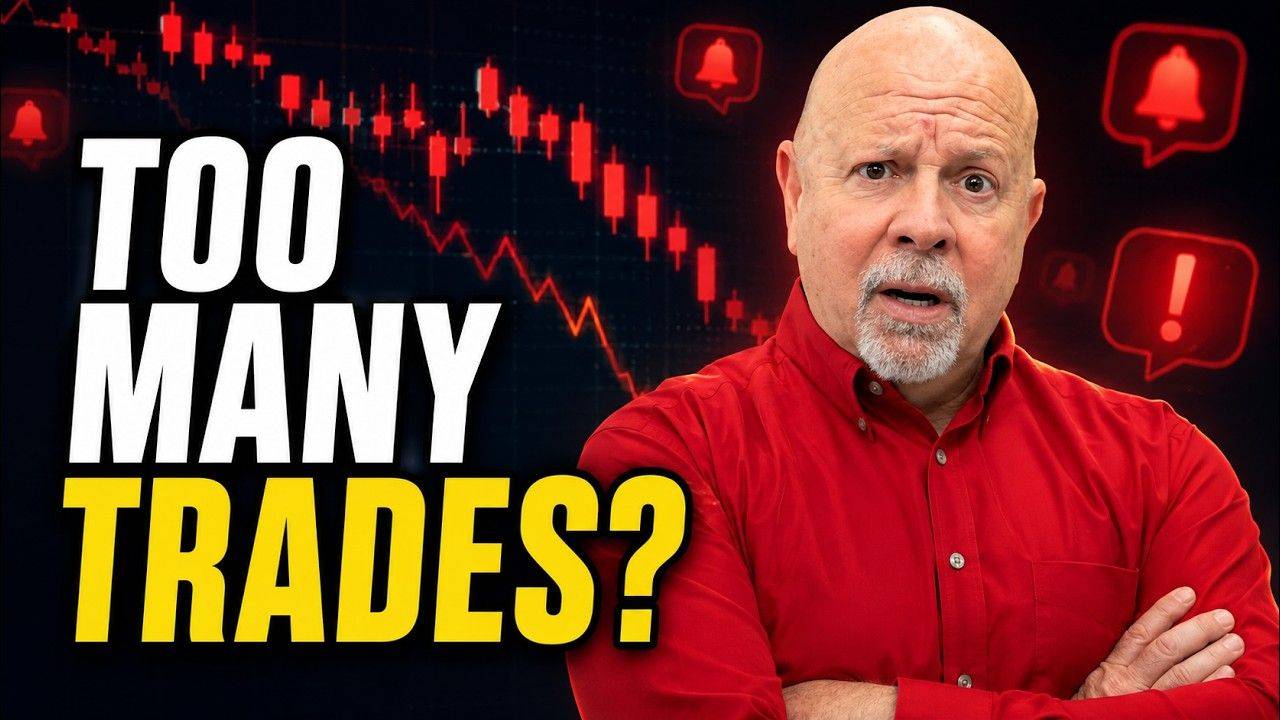
Overtrading does not always begin with one obviously bad decision. It can creep into an account gradually—checking positions throughout the day, making small adjustments without a technical reason, opening additional trades simply to stay active, or reacting to market noise and fear of missing out.
Mark Yegge believes these habits can create both a financial cost and a mental cost. His approach is centered on reducing unnecessary decisions, following a defined trading plan, preserving emotional capital, and allowing a proven process to determine when action is actually required.
Key Takeaways
What Overtrading Can Look Like
Overtrading is not limited to placing an unusually high number of trades. It can also appear as excessive attention and unnecessary intervention.
One warning sign Mark highlights is obsessively checking positions throughout the day even when there is no reason to make a decision. Instead of watching every market movement, he suggests that traders can use alerts around meaningful levels and step away until action may actually be necessary.
Another symptom is repeatedly adjusting trades without a technical trigger. When the decision comes from anxiety, excitement, or discomfort rather than a predefined rule, emotion begins controlling the trade.
Mark also warns against opening positions simply to stay busy. A stock appearing in the news, making a sudden move, or becoming part of a popular market theme does not automatically make it a suitable trade.
Mark's preference is to identify specific places on the chart where a trade makes sense rather than chasing a stock after excitement has already taken over. The goal is to let the setup determine the entry—not fear of missing the move.
The Financial Cost of Micromanaging Trades
Constant adjustments can create direct costs. Mark points specifically to commissions where applicable and, particularly with options, the cost created by bid-ask spreads and slippage.
There is also an opportunity cost. A trader may make one adjustment, react again when the position moves, and eventually realize that neither change was required by the original setup.
The more a trader interferes with positions, the more decisions must be made. That can eventually lead to decision fatigue—especially when several positions are moving simultaneously.
Emotional Capital Is a Trading Resource
Mark describes emotional capital as a hidden resource. Every market decision uses some of that resource, even if the individual decision feels small.
Too much market noise can erode confidence and increase stress. When traders are constantly deciding whether to buy, sell, adjust, defend, roll, or simply continue watching, maintaining consistency becomes more difficult.
His solution is not to eliminate decision-making. It is to eliminate unnecessary decision-making.
Consistency and discipline can preserve mental energy by reducing the number of choices a trader has to make in real time.
Build the System Before Emotions Take Over
At the center of Mark's approach is a proven framework and a written trading plan. His reasoning is straightforward: important decisions should be made before a trader is emotionally involved in the outcome of a position.
A trading plan can define what the market trend looks like, what direction the individual stock is moving, which indicators matter, when a position should be defended, and what conditions justify an exit or adjustment.
That changes the question from, “What do I feel like doing right now?” to, “What does my plan say should happen under these conditions?”
Mark also encourages traders to reduce their dependence on outside opinions. Rather than reacting to television commentary or market chatter, he prefers studying patterns, technical setups, fundamentals, and the rules of the individual trading system.
When Should You Adjust—and When Should You Let It Ride?
Mark's answer begins with preset rules. If a position has not reached one of the conditions defined in the trading plan, constant intervention may be unnecessary.
For covered calls, he discusses a guideline used in his programs: once roughly 75% of the available premium—or “juice”—has been captured, the trader can evaluate the next planned action, such as buying back the call or rolling to another call.
Risk controls also matter. Mark encourages traders to establish circuit breakers and exit rules so that manageable losses do not have the opportunity to become much larger ones.
An adjustment should come from a predefined rule or meaningful technical trigger—not simply because the market moved and the movement created an emotional reaction.
Why Patience Matters for Options Income Traders
One reason Mark believes options sellers should resist unnecessary adjustments is theta decay. When an options strategy is structured around selling time premium, the passage of time can be part of the intended mechanics of the trade.
Constantly changing a position may interfere with that process. Instead, the Cash Flow Machine approach focuses on the setup, the available premium, and the predefined rules governing the position.
The objective is not to predict every short-term market move. Mark describes the approach as probability-based and income-focused rather than an attempt to repeatedly hit dramatic home runs.
A Better Mindset for the Trading Week
Mark recommends beginning the week by calibrating the market environment. Is the overall market favorable, unfavorable, or somewhere in between? What is the prevailing trend, and what does that environment mean for the trading plan?
From there, the emphasis shifts toward trusting the system rather than reacting to every candlestick. He also recommends reviewing results periodically instead of continuously checking whether the account is up or down throughout the day.
Perhaps most importantly, traders can give themselves permission not to watch the market all day. A well-defined plan should create more structure—not require constant attention.
What Traders Should Watch
The Bottom Line
Overtrading can be expensive even when the individual decisions seem harmless. The costs can appear through slippage and unnecessary adjustments, but they can also appear through stress, decision fatigue, reduced confidence, and inconsistent execution.
Mark Yegge's message is to become more deliberate: build a system, create a trading plan, establish technical triggers and risk controls, and avoid letting FOMO or market noise dictate the next move.
The goal is not to eliminate action. It is to make sure that action has a reason. Plan the trade, follow the plan, and allow patience to become part of the process.
Want to Learn How We Generate Income Regardless of Market Direction?
Watch the free Cash Flow Machine masterclass to learn more about the income-focused framework Mark uses for approaching options, trading plans, and different market environments.
Watch the Free MasterclassSerious Investors Join Us Inside Elite
Elite goes deeper into the broader Cash Flow Machine system, including structured trading plans, options-income concepts, risk management, and disciplined execution.
Learn More About Elite