
Oil Supply Just Collapsed—What Happens Next?
Oil, Stagflation, and Covered Calls: Why Income Matters in an Uncertain Market
Oil prices, geopolitical risk, inflation pressure, and Fed uncertainty are creating a market environment where the old easy-money playbook may not work the way investors expect.
Mark Yegge’s message is clear: when growth is uncertain, volatility is elevated, and investors are waiting for clarity, covered calls can become a practical way to generate cash flow from stocks already owned or stocks an investor wants to own.
Key Takeaways
Oil is driving the inflation concern.
Mark argues that elevated oil prices are keeping inflation sticky, especially through transportation, food, services, and basic household costs.
The Fed may be trapped.
If inflation stays elevated, rate cuts become harder to justify. If rates stay high, the consumer and equities may remain under pressure.
Bonds are competing with stocks.
With Treasury yields and short-term income products offering meaningful returns, equities face real competition for capital.
Covered calls can create income while waiting.
Mark sees elevated volatility as a window where option premiums may be attractive for investors who already own quality stocks.
Stock selection still matters.
The strategy begins with stocks an investor actually wants to own, not random tickers chosen only for high option premium.
Oil Is Changing the Market Equation
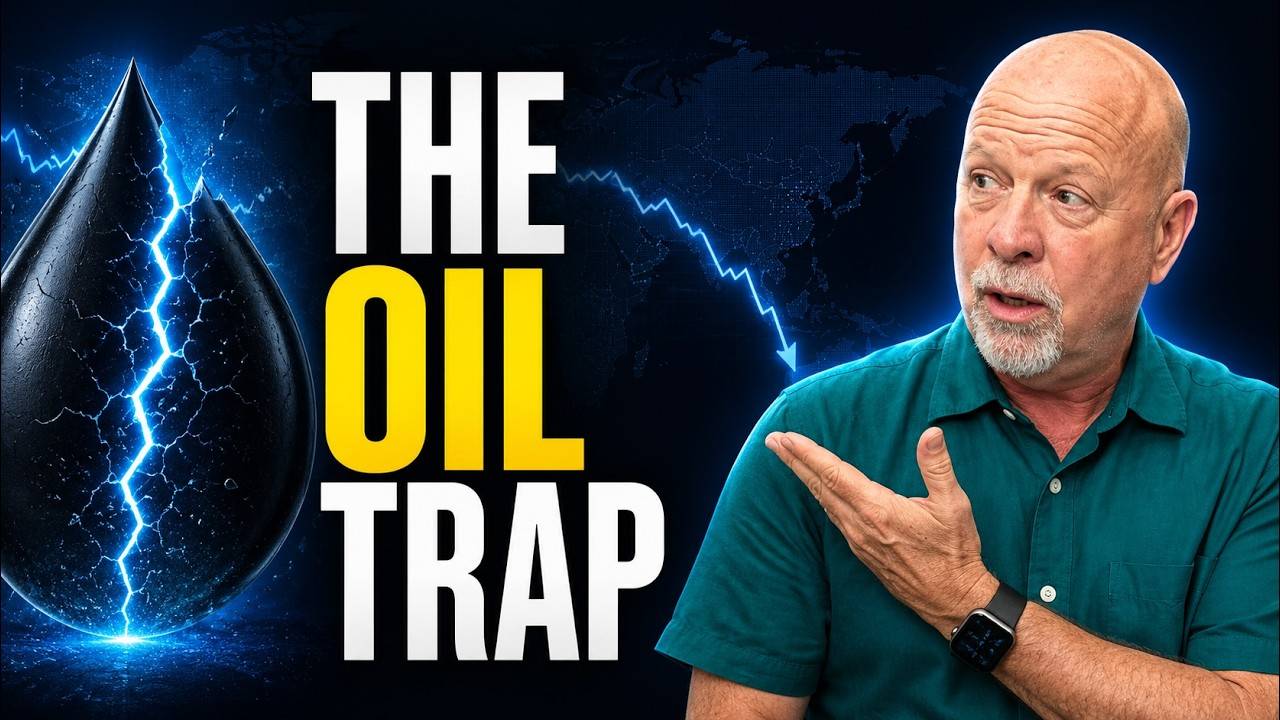
Mark frames the current market around one major pressure point: oil supply risk. He argues that the Strait of Hormuz, shipping disruptions, geopolitical conflict, insurance costs, and tanker rates are creating a supply-driven oil problem.
In a normal demand slowdown, oil prices would usually be expected to fall. But Mark’s point is that this is not a normal demand story. In his view, supply instability is keeping a floor under prices even as consumers are already stretched.
Mark’s core view: oil is acting less like a simple commodity cycle and more like a geopolitical pressure valve. That makes inflation harder to tame and the Fed’s next move harder to predict.
Why Stagflation Is Back in the Conversation
The risk Mark highlights is stagflation: slowing growth while inflation remains elevated. He points to consumers pulling back, credit card delinquencies rising, savings rates falling, and households spending more income on essentials such as rent, food, utilities, and gas.
That combination matters because it leaves less room for discretionary spending. Mark believes retailers may feel that pressure, especially as consumers head into important seasonal spending periods with less financial flexibility than before.
In this setup, inflation does not have to accelerate dramatically to become a problem. It simply has to stay sticky while growth slows. That is the kind of environment where investors may find it harder to rely on broad stock market appreciation alone.
The Fed’s Problem: Cut, Hold, or Hike?
Mark argues that the Fed is running out of clean choices. If it cuts rates while oil and inflation remain elevated, it risks fueling inflation concerns. If it holds rates high, the consumer may weaken further. If it hikes, pressure on both consumers and equities could intensify.
He also points to the 10-year Treasury yield near 4.66% and warns that a move toward 5% could change the math across mortgages, corporate debt, and equity valuations. Higher yields make risk-free income more competitive, which can pull attention away from stocks that already depend heavily on future growth expectations.
Why Yields Matter
When short-term Treasuries, two-year Treasuries, and CDs offer meaningful yields, investors are no longer forced to chase equity upside for every return opportunity. That creates competition for stocks, especially in an uncertain rate environment.
Why Covered Calls Fit This Environment
Mark’s response to this uncertainty is not to predict every Fed move or every oil headline. Instead, he focuses on income generation. In his view, covered calls allow investors to get paid while waiting for clarity.
The basic idea is simple: an investor owns 100 shares of a stock, sells a call option above the current stock price, and collects premium. If the stock stays below the strike price, the investor keeps the stock and the premium. If the stock rises above the strike and the shares are called away, the investor sells at the strike price and keeps the premium already collected.
Mark emphasizes that this is not about guessing the next big market move. It is about using elevated volatility to generate cash flow on stocks an investor already owns or wants to own.
A Simple Covered Call Example
Mark gives a straightforward example. An investor owns 100 shares of a stock trading at $100. They sell a call option with a $105 strike price and collect $3 per share in premium. That creates $300 in option income on the position.
If the stock is called away at $105, the investor receives the $5 per share stock gain plus the premium collected. If it is not called away, the investor keeps the shares and can potentially repeat the process the next month.
The Strategy Is About Cash Flow, Not Action
Mark’s point is that covered calls can help investors generate income in a market where upside may be uncertain. The goal is not constant trading activity. The goal is disciplined monthly income generation.
Why Volatility Matters for Option Premium
Covered call income depends partly on option premium. Mark believes that as fear rises and volatility increases, option premiums can become more attractive. That is why he sees the current uncertainty as a potential opportunity for investors using an income-based options approach.
However, he also warns that the window may not stay open forever. If volatility compresses, premiums may shrink. If the Fed cuts and stocks rally hard, or if inflation rolls over and money rotates again, the setup could change.
That is why Mark argues that investors should be intentional now, while uncertainty remains high and option premium is still available.
How Mark Thinks Investors Should Approach Covered Calls
Mark does not present covered calls as a random trade. He starts with stock selection. The first step is choosing stocks the investor actually wants to own for the long term, ideally quality companies and, in many cases, dividend payers.
From there, the investor can sell out-of-the-money calls. That means the strike price is above where the stock currently trades. This gives the stock room to rise while still allowing the investor to collect income.
For investors worried about assignment, Mark suggests choosing strike prices farther away from the current stock price. The premium may be lower, but the probability of keeping the shares may be higher.
What Investors Should Watch
Oil Prices
Mark is watching whether oil remains elevated, falls on geopolitical resolution, or spikes if supply disruptions worsen.
Fed Signals
Rate cuts, rate holds, or hawkish guidance could all force the market to reprice expectations.
10-Year Treasury Yield
Mark believes a move toward 5% could pressure mortgages, corporate debt, equity valuations, and consumer demand.
Consumer Weakness
Spending, delinquencies, savings rates, and retail warnings matter because the consumer is central to the growth outlook.
Option Premium
Elevated volatility can increase covered call premiums, but those premiums can shrink if fear fades.
Stock Quality
Covered calls work best when built around stocks an investor is comfortable owning, not just chasing premium.
The Bottom Line
Mark’s bigger message is that the market regime has changed. Easy money is no longer the automatic tailwind it once was. Oil risk, inflation pressure, Fed uncertainty, consumer weakness, and higher bond yields are all forcing investors to rethink where returns may come from.
In that environment, covered calls may offer a more disciplined way to generate income while waiting for the market to sort itself out. The strategy still carries risk because stocks can fall, shares can be called away, and premiums can change. But for investors who already own quality stocks, Mark sees covered calls as a practical way to turn volatility into potential monthly cash flow.
The lesson is not to predict every headline. The lesson is to build a plan, understand the risks, choose the right stocks, manage the positions, and use uncertainty intelligently.
Want to Learn How We Generate Income Regardless of Market Direction?
Watch the free masterclass to learn how the Cash Flow Machine approach is designed to help investors focus on disciplined income strategies instead of relying only on market direction.
Watch the Free MasterclassSerious Investors Join Us Inside Elite
Elite teaches the broader Cash Flow Machine system, including stock selection, options income strategy, position management, and disciplined portfolio planning.
Learn More About Elite