
SpaceX Earnings Preview: Starlink Growth, Starship Spending, and the Share Unlock Risk
SpaceX Earnings Preview: Starlink Growth, Starship Spending, and the Share Unlock Risk
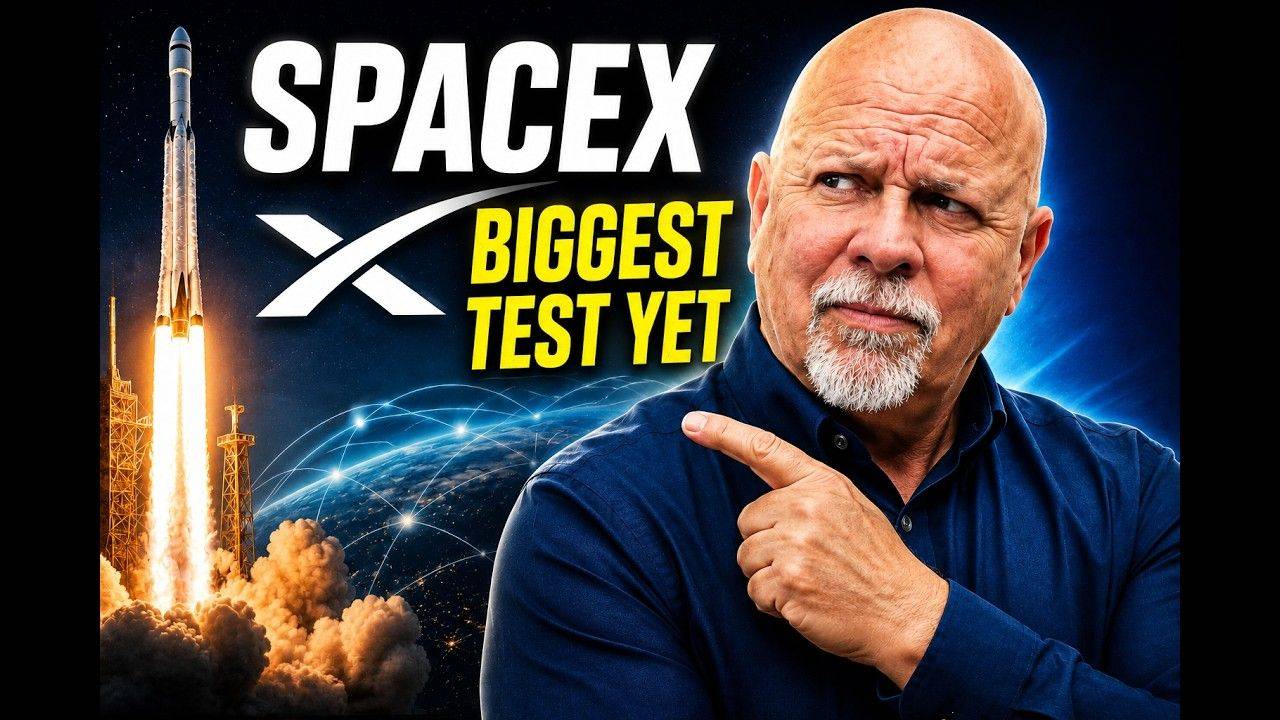
SpaceX is facing its first major public earnings test, and Mark Yegge believes this report is bigger than just one quarter. The market is watching revenue growth, Starlink momentum, Falcon launch cadence, Starship spending, valuation, and a major insider share unlock that could affect the stock after earnings.
Mark’s message going into the report is simple: protect yourself. The stock has already come down sharply from its post-public peak and is trading below its public offering range, but that does not automatically mean the risk is gone.
Key Takeaways
Earnings Are Bigger Than One Quarter
Mark believes this report is about more than revenue and earnings. It is also about growth quality, execution, spending, and share supply.
Starlink Is the Main Story
Starlink has moved beyond being a side business and is expected to become a major growth engine for SpaceX.
Launch Cadence Is the Moat
SpaceX’s ability to launch frequently and reuse rockets is central to its industrial advantage.
Starship Is Promise and Risk
Starship could expand SpaceX’s future opportunity, but it also brings major spending risk if execution resets are needed.
Share Unlocks Could Move the Stock
The first lockup tranche could add supply to the market, but Mark believes selling pressure may already be partly priced in.
SpaceX Faces Its First Public Earnings Test
SpaceX reports earnings after the closing bell on Tuesday, August 4, with management’s webcast scheduled for 4:30. Wall Street is expecting roughly $6.9 billion in revenue and a loss of about 23 cents per share.
Mark believes the expected loss is not surprising because SpaceX is still ramping its launches, Starlink, Starship, Falcon operations, and other major programs. The real question is whether the company’s fast growth can justify its extraordinary spending and valuation.
The stock priced at $135 in the IPO and came public around $148. It has since fallen below that range. Mark notes that this kind of pattern is common with IPOs: excitement pushes shares higher early, then profit-taking can bring the stock back down.
Mark’s Earnings View
The earnings reaction may not come down to one headline number. Investors should look at cash, execution, valuation, and incoming share supply.
Starlink Is Becoming the Growth Engine
Mark believes Starlink is the real story inside SpaceX. The service already has 10.3 million users, and he says it is still just getting started.
He also speaks from personal experience, saying he travels often and brings Starlink with him because it provides the speed he needs in places where traditional internet may be available but not fast enough.
The transcript points to $3 billion in second-quarter revenue for Starlink and $1.42 billion in operating profit. Mark’s view is that Starlink is no longer a side business. It is expected to be a major engine for SpaceX going forward.
Why Starlink Matters
Mark believes every new Starlink subscriber may be a high-margin opportunity because much of the satellite network is already in orbit.
Launch Cadence Is SpaceX’s Industrial Advantage
Mark describes SpaceX’s launch cadence as its industrial moat. He compares today’s launch pace with the older NASA space program, where launches were far less frequent. Now, SpaceX is launching practically weekly.
A major reason is reusability. Mark points to boosters landing on ocean platforms and rockets being caught and reused, which has helped bring down launch costs markedly.
According to the transcript, SpaceX has already completed 90 Falcon missions in 2026 by August. Mark says the company is handling most Western launches, while China operates on the other side of the business.
The company also placed about 2,213 metric tons into orbit last year, and a $1.6 billion Space Force award covers 18 Falcon 9 launches. That booked business is part of the revenue growth story.
Starship Is the Big Future Bet
Falcon and Starlink support the business now. Starship is the forward-looking opportunity.
Mark says Starship is both the promise and the spending risk. It is much larger than Falcon 9 and can carry far more into space. That creates a major business opportunity because customers are willing to pay for that capability.
NASA is also basing its Artemis lunar program on SpaceX’s landing system, which makes Starship a key part of the long-term story. Still, investors need to watch whether the Starship road map advances without another major spending reset.
The Share Unlock Could Be the Near-Term Wild Card
One of the biggest near-term issues is the first lockup tranche. According to the transcript, 911.5 million shares are eligible for the first release, which happens a couple of days after earnings.
The first tranche represents about 20% of eligible employee and insider shares, and the block is worth about $100 billion. The unlock allows selling, but it does not guarantee that holders will sell.
Mark explains the human side of the issue. Employees who have waited years with locked-up shares may want to create generational wealth for their families. Some may sell part of their holdings now and keep the rest for a potential rebound.
The Unlock Question
Mark believes the market may already be expecting a wave of selling. If everyone expects the same thing, the stock does not always react the obvious way.
Still, he is clear that if the market gets more supply than expected, the stock could continue to decline. The share unlock is not automatically bearish, but it is a real risk to watch.
Valuation Still Leaves Little Room for Disappointment
The stock has already lost about half of its peak value and is trading around 18% below the IPO price, according to Mark. That decline lowers expectations, but it does not remove the valuation question.
Mark notes that a valuation near 35 times projected sales still leaves little room for disappointment. The market may eventually look forward and trade the stock on future earnings potential, but the company still has to execute.
He compares the situation to Tesla’s early public-market story: a period of flat trading, followed by a major move higher after expectations shifted toward forward earnings. The question is whether SpaceX can follow a similar path.
Four Questions That Could Drive the Earnings Reaction
Mark believes four major answers will determine how the market reacts to the report.
1. Starlink
Are customers, revenue, and margins still accelerating?
2. Launches
Can Falcon maintain its pace and contract dominance?
3. Starship
Is the road map advancing without another major spending reset?
4. Share Supply
How much selling pressure comes from the insider and employee share unlock?
What Investors Should Watch
Mark’s advice is to go beyond the surface-level earnings headline. Revenue matters, but it is not the whole story. Investors should pay attention to cash, execution, share supply, and the company’s ability to keep funding growth without disappointing the market.
Starlink Metrics
Watch subscriber growth, revenue growth, and margin strength.
Falcon Launch Pace
Look for signs that Falcon can maintain launch cadence and contract dominance.
Starship Progress
Watch whether Starship keeps advancing without a major spending reset.
Share Unlock Pressure
Monitor whether unlocked employee and insider shares create meaningful selling pressure.
Valuation Risk
The valuation still leaves little room for disappointment if growth or execution comes in weaker than expected.
Covered Call Opportunity
For income-focused traders, Mark is watching whether covered calls can cushion downside while generating income.
Covered Calls and the Income Trader’s Perspective
Mark says he does not know whether the stock will go up, down, or sideways after earnings. That uncertainty is exactly why he focuses on income trading.
He has discussed covered calls on SpaceX in previous videos and says covered calls can help protect and cushion a position on the way down while generating income. That does not mean covered calls remove risk, but they can create a more disciplined approach for investors who already own shares.
Mark’s broader point is that every story has at least two sides. The bullish case is growth, Starlink, launches, Starship, and long-term execution. The risk case is valuation, spending, share unlocks, and post-IPO selling pressure.
Be Careful Going Into Earnings
Mark ends with a clear warning: do not be a hero going into earnings. Investors should not assume they know the stock will pop, and they should not assume they know it will fall.
Nobody knows the immediate earnings reaction with certainty. The better approach is to understand both sides of the setup, protect yourself, and avoid making emotional bets around a volatile event.
The Bottom Line
SpaceX earnings are not just about one quarter. They are about whether Starlink can keep accelerating, whether Falcon can maintain launch dominance, whether Starship can advance without another major spending reset, and whether the share unlock creates new selling pressure.
Mark believes the opportunity is real, but so are the risks. The stock has already fallen sharply from its peak and below its IPO range, which may lower expectations. But with the valuation still demanding strong execution, investors should not ignore downside risk.
The practical takeaway is simple: be careful around earnings, understand both sides of the setup, protect your position, and remember that income strategies like covered calls may help cushion volatility when used with discipline.
Want to Learn How We Generate Income Regardless of Market Direction?
Watch the free Cash Flow Machine masterclass and learn how we approach income, risk management, and disciplined trading strategies in different market environments.
Watch the Free MasterclassSerious Investors Join Us Inside Elite
Elite teaches the broader Cash Flow Machine system, including income strategy, portfolio process, risk control, and disciplined execution. No unrealistic income guarantees — just a structured approach to the market.
Learn More About Elite