
Insider Tips - Weekly Stock Market Report - Week August 03, 2026
Insider Tips — August 03, 2026
Tech Weakness Deepens as the Market Shifts Into Defensive Mode
The market ended July on a defensive note, with technology and artificial intelligence stocks carrying most of the selling pressure. Three of the four major market indexes reviewed this week were in negative territory, while the Dow Jones Industrial Average showed better relative strength as investors moved toward more established, lower-volatility areas of the market.
This is not a market environment that rewards aggressive positioning. The current market-timing signal remains red, meaning the priority should be protecting capital rather than forcing new trades. A red signal does not suggest that the market is heading to zero, but it does indicate that momentum, breadth, and trend quality are not providing enough support for broad risk-taking.
The practical stance is therefore defensive but attentive. Markets can recover quickly, and damaged stocks can eventually rebuild their charts. Until the major indexes and leading stocks begin reclaiming important technical levels, however, patience, smaller position sizes, selective exposure, and clearly defined exit rules remain essential.
Technical Analysis
The Nasdaq Remains Technically Weak
The Nasdaq Composite continues to show the clearest signs of deterioration. It has spent several weeks below its 50-day moving average, indicating that the intermediate trend has weakened.
Trading below the 50-day moving average does not automatically guarantee further declines, but it creates a more difficult environment for long positions. Stocks that were purchased near recent highs may also face selling as they attempt to recover. Investors who were trapped during the decline may use future rallies to exit their positions.
This creates what technicians call overhead supply. The further a market falls, the more potential sellers may be waiting above the current price. That can make recoveries slower and more uneven.
The S&P 500 Is Holding Up Better
The S&P 500 is also below its 50-day moving average, but its chart appears healthier than the Nasdaq. The index remains above an ascending trend line and has not made a decisive test of its 200-day moving average.
That relative stability matters. It suggests that the weakness is not equally distributed across the entire market. Technology stocks are absorbing more pressure, while other sectors are helping prevent a broader breakdown.
Still, holding above a trend line is not the same as beginning a new uptrend. The index needs stronger momentum and a convincing recovery above the 50-day moving average before the technical outlook becomes more constructive.
Broader Stocks Show Relative Strength
The New York Stock Exchange Composite is holding above its 50-day moving average, which supports the idea that the current weakness is concentrated in certain growth and technology areas.
This divergence between the Nasdaq and broader market indexes points to sector rotation. Money is moving away from some of the market’s former leaders and into more traditional companies, including value, industrial, healthcare, and defensive names.
Volatility Is Elevated, but Panic Is Limited
The Volatility Index remains far below its previous peak near 35 and was around 17 during the update. That indicates uncertainty, but not widespread panic.
This is an important distinction. The market is technically weak, yet investors are not behaving as though a full financial crisis is underway. That combination can produce a frustrating environment in which indexes move between short rallies and renewed selling without establishing a reliable trend.
Market Trends I’m Calling Out
AI Stocks Are Experiencing a Necessary Reset
The AI investment theme is not disappearing. Companies will continue building models, data centres, chips, memory systems, software, and supporting infrastructure.
The market is beginning to question, however, whether every AI-related company can generate enough profit to justify its valuation. Lower-cost models, open-source competition, heavy capital spending, and eventual increases in chip supply could pressure margins across the industry.
The distinction investors need to make is between a strong long-term technology trend and an attractive stock setup today. AI may remain transformative while individual AI stocks continue correcting.
Capital Is Rotating Away From Technology
The Dow’s relative strength compared with the Nasdaq suggests that investors are not simply leaving the market. Instead, some capital appears to be rotating into companies with steadier earnings, more reasonable valuations, and less dependence on aggressive growth expectations.
Relative strength should therefore be part of the weekly review process. Investors who focus only on the headline indexes may miss opportunities developing in industrials, consumer companies, healthcare, financials, or other traditional sectors.
Earnings Risk Remains Significant
Several stocks experienced large post-earnings moves this week. These reactions reinforce the danger of carrying an unprotected position through a scheduled announcement.
A company can report respectable results and still decline if expectations were too high. Earnings reactions are shaped by guidance, margins, future spending, valuation, and institutional positioning—not simply whether the company “beat” the published estimates.
The lesson is not to predict every earnings result. It is to decide beforehand how much risk the account can absorb.
Bottoming Is a Process
Sharp declines often attract investors who believe they are buying the exact bottom. In reality, damaged stocks normally need time to establish support, absorb selling pressure, rebuild institutional demand, and recover key moving averages.
A few positive trading days do not necessarily confirm a durable reversal. The stronger approach is to wait for evidence, including improving volume, higher lows, reclaimed moving averages, and broader market support.
Individual Stocks: What I’m Seeing
Apple
Apple suffered a sharp, high-volume decline following earnings. The weekly chart formed a bearish engulfing pattern that overwhelmed several previous weeks of price action.
The stock may attempt to test lower support or its 200-day moving average. Before the technical outlook improves, Apple needs to stabilize and recover its 50-day moving average with convincing buying volume.
This is another reminder that even the market’s strongest companies can experience significant earnings-related gaps.
Nvidia
Nvidia remains below its 50-day moving average and has repeatedly tested its 200-day moving average within a relatively short period.
Repeated support tests can weaken a technical level because each test may consume part of the available buying demand. Nvidia remains a major company within the AI ecosystem, but the stock currently needs to prove that buyers are prepared to regain control.
The company’s long-term importance does not remove the need for short-term risk management.
Amazon
Amazon offered one of the more constructive setups in the update. The stock broke higher from a long consolidation following encouraging earnings results and strong earnings-per-share growth.
Its gap higher and improving fundamentals are positive, but the broader market condition remains important. Even a strong individual chart can struggle when the overall market is red.
Amazon deserves watchlist attention, although entries should still be based on price confirmation and clearly defined risk.
Microsoft
Microsoft recovered both its 50-day and 200-day moving averages with improving price action and volume.
That recovery is encouraging, but the stock still has technical work ahead. The earnings gap could eventually be tested, or the stock may build a smaller consolidation or handle before attempting another advance.
Holding above the recovered moving averages would be an important sign of continued strength.
Alphabet
Alphabet recovered much of its post-earnings gap, demonstrating that buyers remain interested in the stock. It is still below its 50-day moving average, however, which prevents the setup from becoming fully constructive.
A recovery through the 50-day moving average could become an important technical signal, particularly if it occurs while the broader market condition is improving.
Until then, the stock is recovering rather than leading.
Meta Platforms
Meta has experienced persistent selling pressure as investors evaluate the company’s heavy AI spending and the potential return on that investment.
Instagram and the company’s partnership in AI-enabled glasses may support the longer-term story. The chart, however, suggests that investors remain uncertain about whether current spending will translate into sufficient earnings growth.
Meta needs to establish support and demonstrate renewed institutional demand before the setup becomes attractive.
Tesla
Tesla remains technically damaged after its earnings-related decline. The stock broke important price levels and now faces substantial overhead supply from investors who purchased at higher prices.
Management continues to discuss long-term opportunities, but many of those expectations have been pushed further into the future. Meanwhile, earnings-per-share trends and current price action remain weak.
Tesla must first recover nearby resistance and rebuild its chart. The story may remain compelling, but the stock needs to confirm that demand is returning.
Recently Listed AI-Related Position
The recently listed position discussed in the update continues to trade within a developing consolidation while additional shares may become available to the market.
Covered-call income has helped reduce some of the downside pressure, but the underlying stock still needs to hold support. The important point is that IPO bottoms rarely form in a single session.
Newly listed stocks frequently decline, establish a trading range, absorb early selling, and only then begin a sustainable recovery. Patience is more useful than attempting to predict the exact turning point.
Micron
Micron has participated in the broader AI and semiconductor sell-off and is now below its 50-day moving average.
The stock may eventually form a rounded bottom, but it must work through meaningful overhead supply. A healthier setup would include stabilization, stronger volume on advancing days, and a recovery through important moving averages.
For now, the chart reflects damage rather than opportunity.
AMD
AMD shows a similar pattern, with the stock falling below its 50-day moving average after a major decline from its previous high.
A drop of this size generally requires time to repair. The stock needs to build support, attract meaningful volume, and recover the 50-day moving average before investors can reasonably discuss a return to prior highs.
There may still be additional downside or sideways action before a reliable bottom develops.
Memory and Semiconductor Stocks
Memory-related stocks and ETFs are displaying similar technical structures: large advances, sharp reversals, temporary rebounds, and renewed selling.
Demand for chips remains real, but high prices and high margins naturally attract new competition. Additional supply may eventually reduce shortages and pressure profitability.
Investors should monitor whether these stocks can reclaim their 50-day moving averages and whether recovery attempts are supported by strong institutional volume.
Key Takeaways
- The overall market-timing signal remains red, so capital protection should take priority over aggressive buying.
- The Nasdaq is technically weaker than the S&P 500 and broader market indexes.
- Money appears to be rotating from technology into value, industrial, and defensive sectors.
- AI remains a powerful long-term theme, but many AI-related stocks need time to repair damaged charts.
- Earnings can create sudden gap risk, even in high-quality companies.
- A stock’s story should never replace price, volume, position sizing, and exit rules.
- Keeping losses small preserves both capital and the ability to participate when conditions improve.
Conclusion
This is a market for discipline, not prediction. The strongest investors do not need to identify the exact bottom or participate in every short-term rebound. They need a repeatable process that helps them recognize when conditions are favourable and when risk is increasing.
Market-timing indicators will never be perfect, but they can provide structure around decision-making. A red signal encourages defense. A yellow signal encourages caution. A green signal creates permission to look for opportunities, but it does not eliminate the need for stock selection and risk control.
Continue watching the 50-day moving averages on the major indexes, the relative strength of non-technology sectors, and the ability of former market leaders to stabilize. Until the evidence improves, cash, smaller positions, covered-call protection, and disciplined exits are all valid tools.
The central rule remains simple: protect the account first. Opportunities will still be available when the market becomes healthier.
Current Market Condition
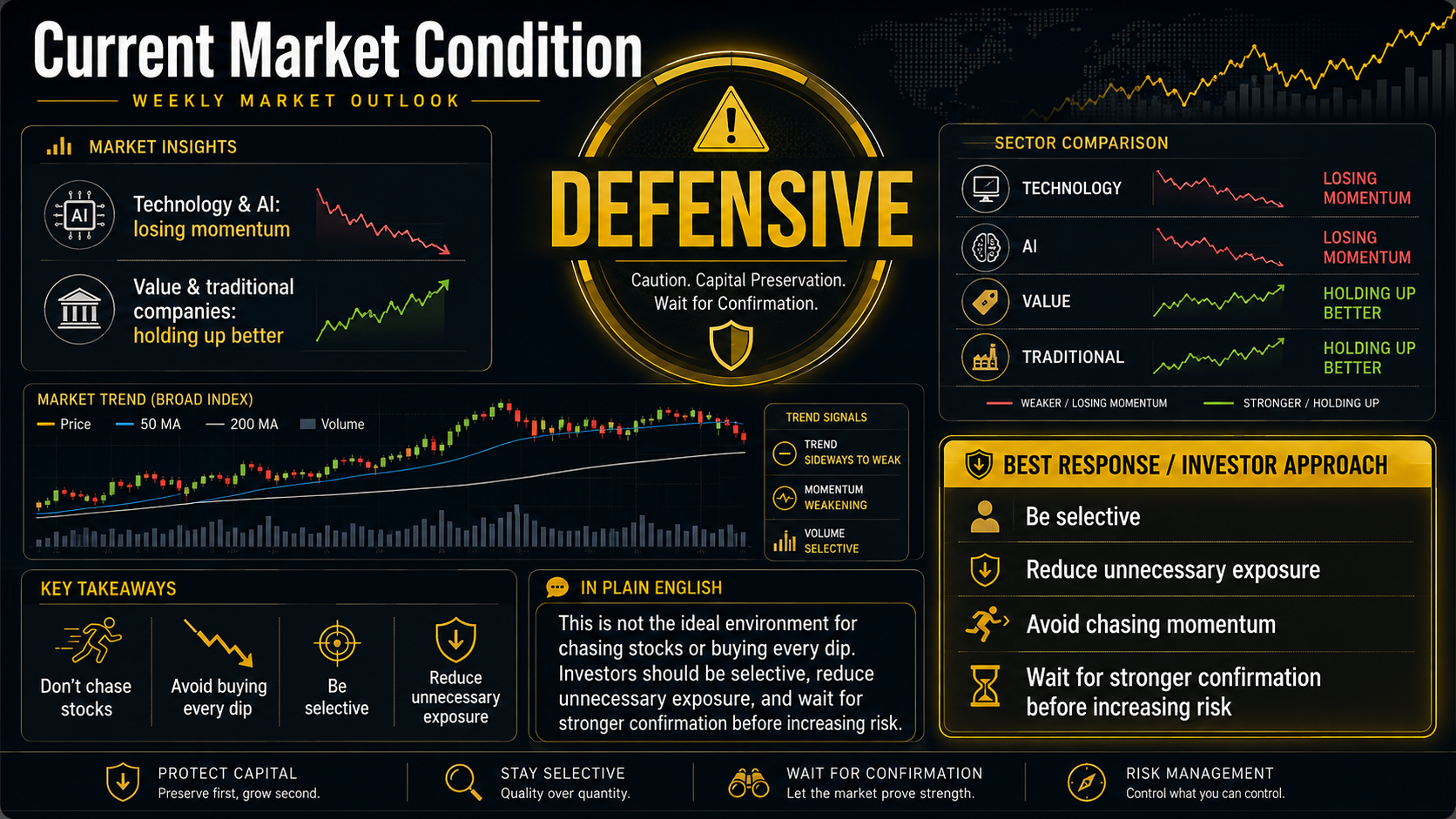
The market is currently defensive. Technology and AI stocks are losing momentum, while selected value and traditional companies are holding up better.
In plain English, this is not the ideal environment for chasing stocks or buying every dip. Investors should be selective, reduce unnecessary exposure, and wait for stronger confirmation before increasing risk.
Stock Tips This Week

Tesla Post-Earnings Breakdown: Why the Chart Matters More Than the Story
In this video, Mark examines Tesla’s technically damaging post-earnings decline and explains why enthusiasm for a company cannot replace chart analysis. The key lesson is to respect broken support, weakening moving averages, institutional selling, and predetermined circuit breakers rather than relying on the hope that a stock will quickly recover.

The AI Chip Sell-Off: What the Market Rotation Means for Investors
In this video, Mark explores the decline in semiconductor and memory stocks, including the weakening technical structures in Micron and SanDisk. It also explains why capital may be rotating from expensive technology names into value and industrial companies as investors question AI valuations, future margins, and the profitability of continued infrastructure spending.
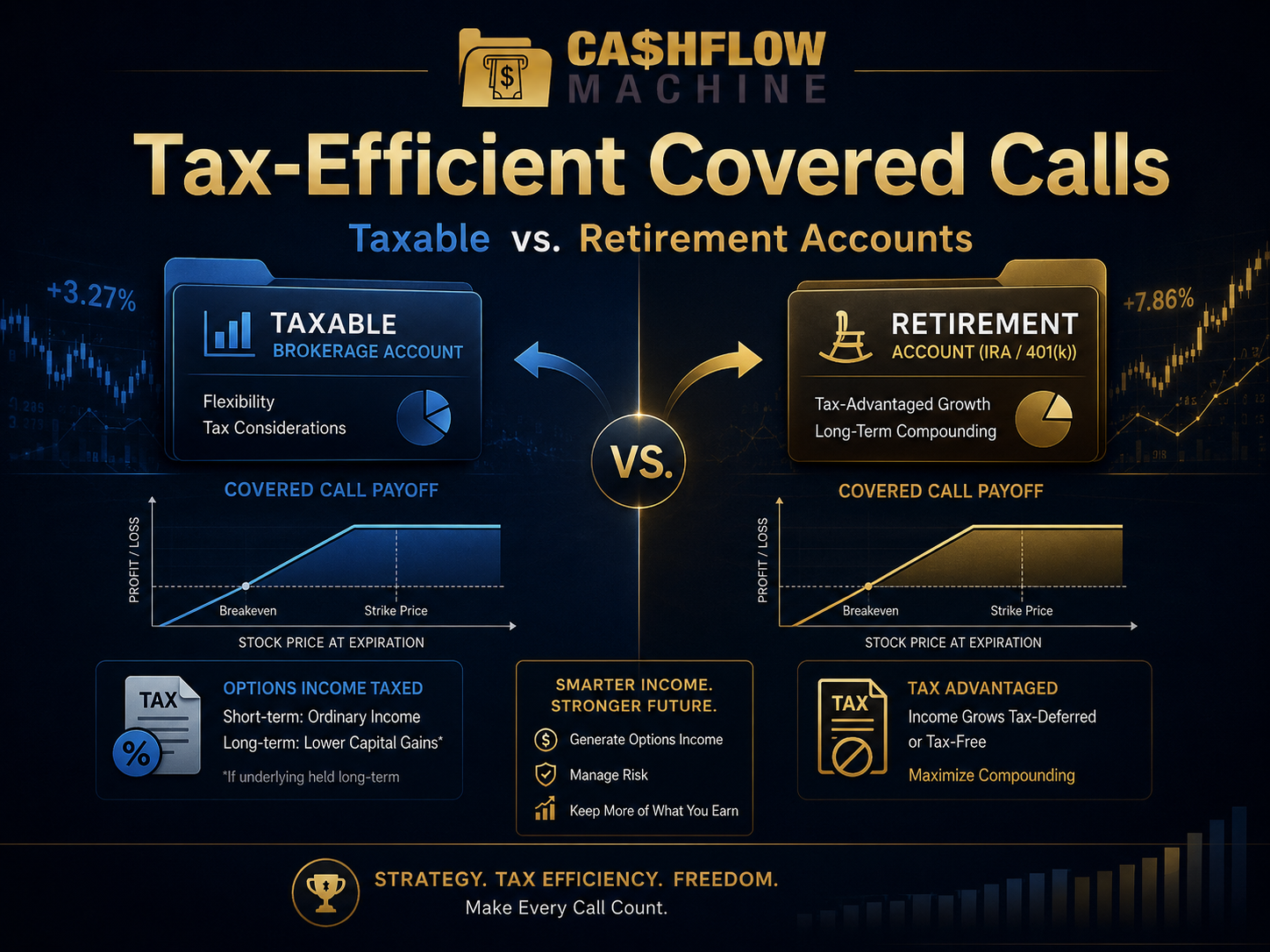
Covered-Call Tax Efficiency in Taxable and Retirement Accounts
In this blog, readers learn how account type can affect the after-tax results of a covered-call strategy. Retirement accounts may support tax-deferred compounding for active strategies, while taxable accounts provide greater flexibility for loss harvesting and longer-term portfolio planning. The appropriate structure depends on trading frequency, income needs, and individual tax circumstances.
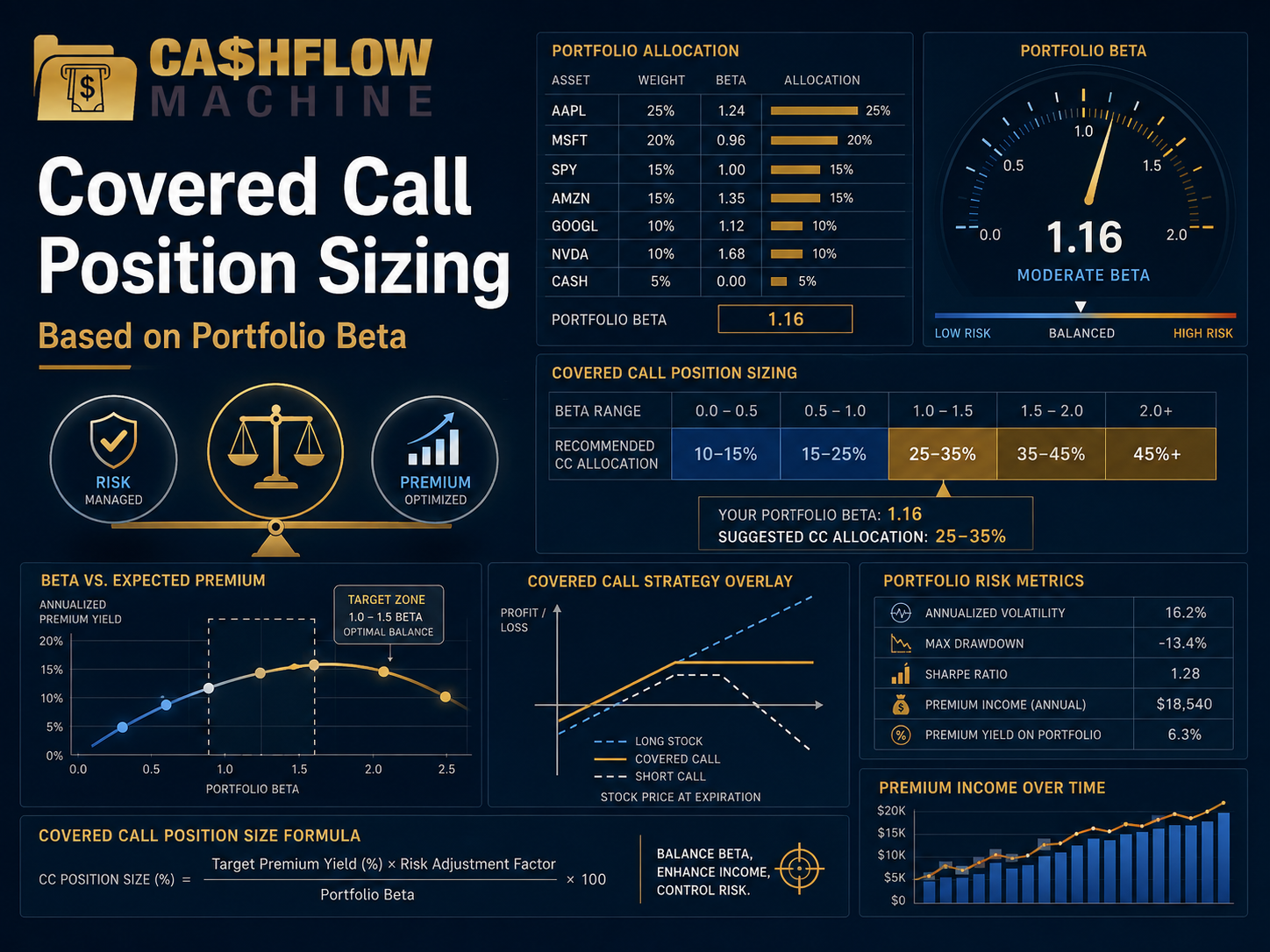
Covered-Call Position Sizing Based on Portfolio Beta
In this blog, the focus is on managing total portfolio risk rather than giving every stock the same dollar allocation. Higher-beta stocks generally require smaller positions because they can produce larger gains and losses, while lower-beta holdings may support larger allocations. The broader lesson is that covered-call income cannot compensate for excessive concentration or poor position sizing.
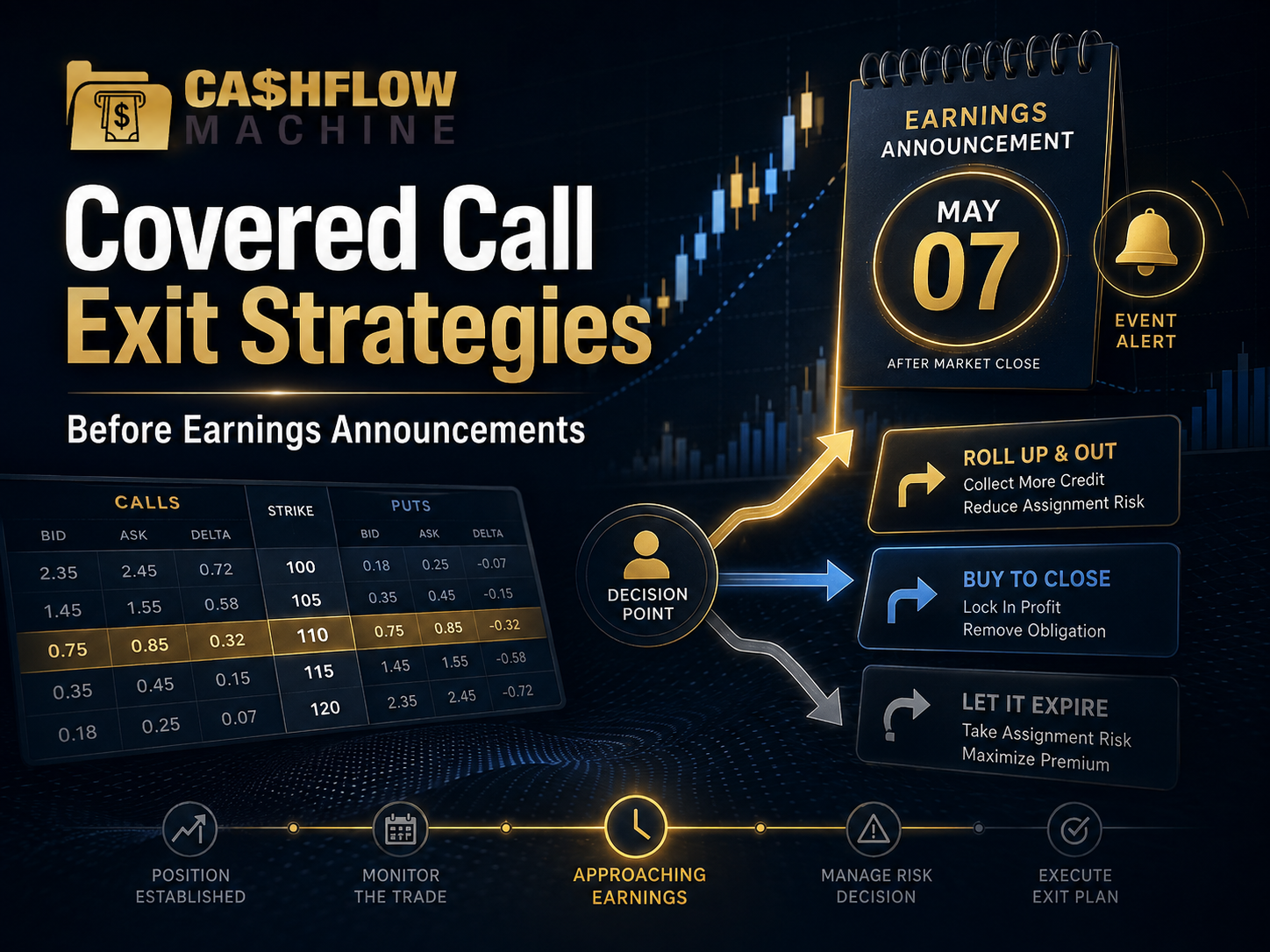
Covered-Call Exit Strategies Before Earnings Announcements
In this blog, Mark reviews several ways to manage covered calls before earnings, including rolling the option, closing the position, or allowing profitable shares to be assigned. The main principle is to make the decision before the announcement rather than improvising after a large gap. Position size, cost basis, strike price, and the investor’s willingness to own the stock should determine the approach.
