
Meta’s AI Pivot: Why Mark Yegge Says the Chart Still Looks Weak
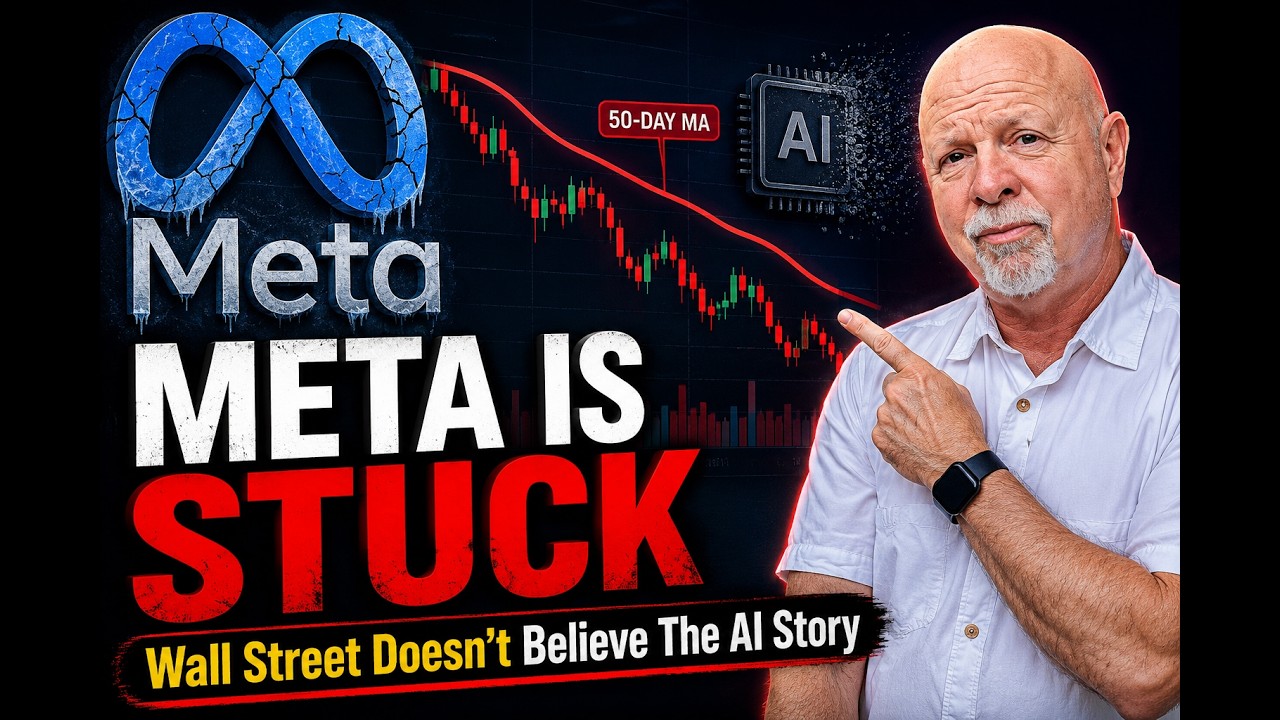
Meta Is Making a Major AI Pivot, But the Market Does Not Seem Fully Convinced
In this Market Pulse breakdown, Mark looks at Meta’s latest restructuring, the reported layoffs, the company’s push toward AI workflows, and what the stock chart is signaling right now. Even though Meta is cutting costs and shifting thousands of employees toward AI-related initiatives, the stock has been struggling to regain momentum.
For traders and income investors, the key question is simple: is Meta setting up for a comeback, or is the chart warning us to be careful?
Key Takeaways
What’s Going On at Meta?
Meta is trying to reposition itself as an AI-first company.
The company has reportedly moved thousands of employees into new AI workflow initiatives while cutting thousands of jobs as part of a broader restructuring. Reuters reported that the cuts affected about 10% of Meta’s workforce and that roughly 7,000 employees were transferred to AI-focused work.
That tells us Meta is serious about AI.
But seriousness does not always equal execution.
Mark’s concern is that the market does not appear to be rewarding the move yet. If Meta were being viewed as a clear AI winner, the chart would likely look much stronger. Instead, the stock has been struggling to stay above key technical levels.
The Chart Is the Problem
Mark’s main warning is not just about layoffs.
It is about price action.
Meta has been stuck in a weak trend, struggling to hold above its 50-day moving average and using the 200-day moving average as resistance. As of the latest available market data, Meta was trading around $610.26.
That does not automatically mean Meta is a bad company.
But it does mean the stock is not showing the kind of clean upward momentum Mark prefers to buy.
As Mark explains in the video, traders need to respect the chart. If a stock is below key moving averages, has weak relative strength, and keeps failing at resistance, that is not the same setup as a stock moving cleanly from the lower left to the upper right.
AI Still Needs Humans
One of Mark’s biggest points is that companies cannot simply say “AI” and expect everything to work.
AI can help businesses become more efficient. It can speed up workflows, automate repetitive tasks, and improve output. But AI still needs human oversight.
People still need to check the work.
People still need to make strategic decisions.
People still need to make sure the system is not producing bad information.
That is why Meta’s restructuring creates uncertainty. The company may be moving aggressively toward AI, but investors still need to see whether that shift produces stronger growth, better margins, and a better stock chart.
What Should Traders Do?
Mark’s view is simple: be careful.
That does not mean Meta can never recover. It does not mean the company has no future. But it does mean traders should avoid forcing a bullish trade when the chart is not confirming it.
For investors who still want exposure, Mark discusses strategies like selling puts or using deep-in-the-money calls to collect premium or reduce risk compared with buying shares outright.
But the bigger lesson is this:
Do not buy a stock just because the story sounds exciting.
Buy strength.
Respect the trend.
Let the chart confirm the thesis.
Want to learn how we generate income regardless of market direction?
Watch the free masterclass:
