
Alphabet Joins the Dow: Why Google’s Big Promotion May Still Be a Risky Trade
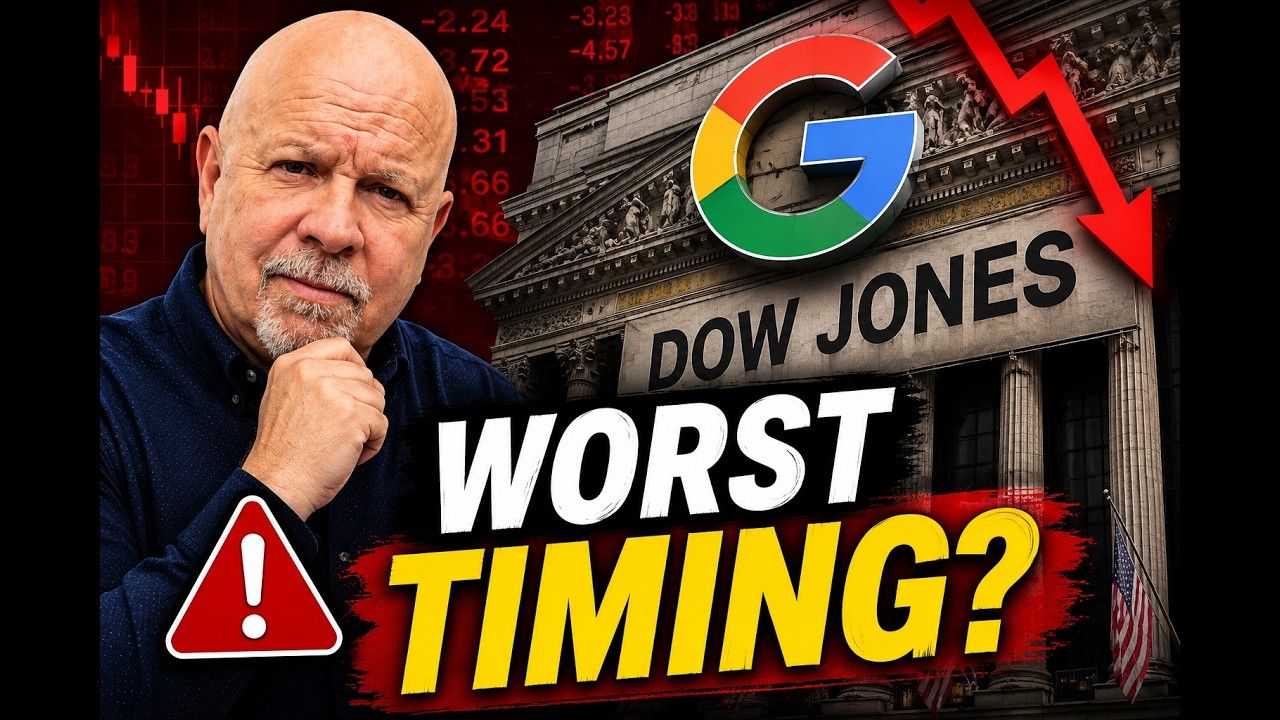
Alphabet Joins the Dow: Why Google’s Big Promotion May Still Be a Risky Trade
Alphabet joining the Dow Jones Industrial Average is a major headline. But Mark argues that a good headline does not automatically create a good trade.
In this Market Pulse update, Mark explains why investors should be careful around Google’s Dow promotion, especially with the broader market turning red, the Nasdaq showing weakness, and AI disruption changing the search landscape.
The key lesson is simple: index inclusion can create attention and demand, but it does not override weak tape, poor timing, or business uncertainty.
Key Takeaways
Alphabet Joins the Dow
Alphabet, Google’s parent company, is joining the Dow Jones Industrial Average and replacing Verizon. On the surface, this is a major validation for Alphabet and a clear signal that the Dow is becoming more technology-focused.
Mark explains that the change makes sense from a representation standpoint. Alphabet is connected to AI, cloud, digital advertising, search, YouTube, Android, and modern media infrastructure.
But he also warns that the headline alone is not enough. Being added to the Dow can put a brighter spotlight on a company, and that spotlight can magnify both strength and weakness.
Why Verizon Is Being Replaced
Verizon has been a long-time blue-chip name, but it does not represent the current market story the way Alphabet does. Verizon is lower-priced, more defensive, and more telecom-focused.
Alphabet brings a different profile to the Dow. It gives the index more exposure to megacap technology, AI infrastructure, cloud computing, and digital advertising.
That may make the Dow look more modern, but it also brings more sensitivity to the same tech-driven risk factors that are already pressuring parts of the market.
A Positive Headline in a Red Market
Mark’s biggest concern is not the Dow addition itself. His concern is the timing.
The market had just turned red in his timing system, and he points out that forced index buying does not override a bad tape. When the broader market is weak, positive headlines may not carry the same power.
That is why he views this as a tactical downgrade even though it is a Dow upgrade. The company may have earned the blue-chip promotion, but the chart and market environment still matter.
What Mark Is Watching
- Whether the broader market stays red
- Whether the Nasdaq can reclaim key moving averages
- Whether Alphabet can hold strength after the Dow headline
- Whether sellers remain in control near the close
- Whether AI-related concerns keep weighing on the stock
Why Dow Inclusion Does Not Fix Everything
Index inclusion can create demand. Funds that track or benchmark against the Dow may need exposure to Alphabet once it becomes part of the index.
But Mark makes an important distinction: demand is not the same as a guaranteed uptrend. A weak market can absorb good news and still push stocks lower.
This is especially true if the stock is already under pressure or if investors are worried about the company’s future growth drivers.
The AI and Search Threat
Mark is clear that Google is not dead. Alphabet still has enormous revenue, powerful products, search dominance, YouTube, Android, and a growing cloud business.
But the company faces a shifting landscape. AI tools are changing how people search for information. Instead of typing into Google and clicking through results, more users are getting direct answers from AI systems.
That does not mean Alphabet disappears. It means the business may need to adapt while the market watches how AI affects search monetization, cloud demand, and overall growth.
Google Is Strong, But the Story Is Mixed
Mark describes Alphabet as a strong company with mixed near-term signals. The business is still growing, but the market is focused on AI leadership, compute strain, search disruption, and competition from OpenAI, Claude, and other AI platforms.
Alphabet has impressive AI products, but investors are still asking whether those products can translate into stronger stock performance.
That makes the Dow addition important, but not decisive. The stock still needs to prove itself on the chart.
How to Trade the Headline Without Worshipping It
Mark’s trading plan is simple: do not chase the headline.
Instead, he prefers to buy strength and sell strength. That means waiting for the stock to reclaim important moving averages, show real buyer support, and confirm that the market is no longer working against it.
He also emphasizes risk management: define the risk, use a circuit breaker, keep losses small, and avoid buying just because a stock appears cheap.
A More Disciplined Approach
- Do not chase the Dow headline
- Wait for strength instead of buying weakness blindly
- Look for a reclaim of key moving averages
- Define risk before entering
- Use stop losses or circuit breakers
- Keep Alphabet on the watchlist until the setup improves
The Opportunity May Come From Overreaction
Mark does not dismiss Alphabet. In fact, he acknowledges that Google has earned its place in the old blue-chip club.
But he believes the better opportunity may come after other investors overreact. If the stock sells off too far or the market begins to stabilize, a cleaner setup may develop later.
That is why patience matters. Investors do not need to buy the headline immediately. They can wait for the market to show whether the headline has real staying power.
The Bottom Line
Alphabet joining the Dow is a major milestone. It confirms Google’s importance in the modern economy and gives the Dow more exposure to AI, cloud, advertising, and digital media.
But Mark’s message is caution. A Dow promotion does not erase weak tape, AI disruption risk, search uncertainty, or the need for a proper trading plan.
The better approach is to keep Alphabet on the watchlist, wait for strength, define risk, and avoid chasing a positive headline in a negative market environment.
Google may still be a great company, but the stock still has to prove it deserves fresh capital right now.
Want to learn how we generate income regardless of market direction?
Watch the free masterclass and learn how disciplined investors use structure, risk management, and income strategies instead of chasing headlines.
