
The Era of Pure Passive Investing May Be Changing: Why Covered Call Education Matters Now
The Era of Pure Passive Investing May Be Changing: Why Covered Call Education Matters Now
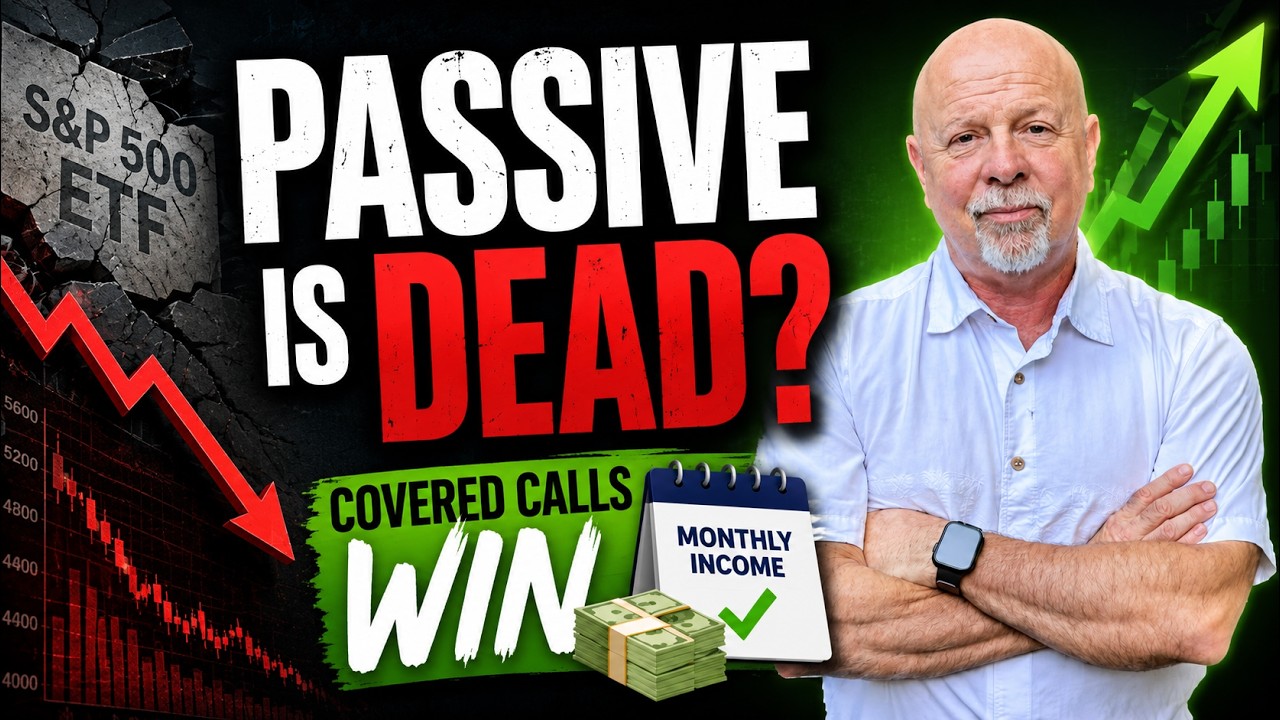
A headline recently hit the financial world arguing that the era of pure passive investing is over. That does not mean index funds are dead. It does not mean every investor should dump ETFs. And it certainly does not mean investors should start gambling on options.
But it does mean something important: the easy assumptions that worked for the last 40 years may not work the same way going forward.
In this lesson, Mark explains why covered call investors may benefit from a more selective market, why education matters more than packaging, and why option income requires more than simply chasing yield.
Key Takeaways
Why the Passive Investing Headline Matters
Mark begins with a headline arguing that the era of pure passive investing is over. He is careful to clarify what that does and does not mean.
It does not mean index funds are useless. It does not mean ETFs should disappear from portfolios. And it does not mean investors should suddenly become aggressive traders.
The real message is that the market environment may be changing. If the background forces that helped broad indexes for decades become weaker, investors may need more skill and more education.
The Old Market Tailwinds
For decades, passive investors benefited from several powerful tailwinds. Falling interest rates helped lift asset prices. Lower corporate taxes supported earnings. Stock buybacks helped reduce share counts and support earnings per share.
At the same time, retirement contributions steadily flowed into the market, creating persistent demand for stocks and index funds.
Those forces helped make buy-and-hold passive investing feel simple. But Mark warns that investors should not assume the next 40 years will automatically look like the last 40 years.
Tailwinds That Helped Passive Investors
- Falling interest rates
- Lower corporate tax rates
- Corporate stock buybacks
- Strong retirement account inflows
- Broad market participation
What Has Changed?
Mark points out that the setup is different today. Interest rates are no longer falling the way they did for much of the prior era. Corporate tax cuts may be harder to repeat. Government debt is much larger.
Demographics are also changing. Baby boomers are moving from accumulation into withdrawal, which may alter the steady flow of capital into markets.
At the same time, some of the largest technology companies are spending enormous amounts of capital on AI infrastructure instead of simply buying back stock.
Index Concentration Is Another Risk
Another issue Mark highlights is concentration. Many investors think they are diversified because they own a broad index, but the largest companies can dominate the index’s performance.
If the biggest index components are under pressure, the entire portfolio can feel that pressure. This is why investors need to understand what they actually own.
Diversification is not just about owning a fund with many tickers. It is about understanding risk exposure, sector weight, company concentration, and market conditions.
Why This Can Be Good News for Covered Call Investors
Mark sees this changing environment as good news for serious covered call investors because covered calls force the investor to think.
A covered call investor cannot simply buy anything and expect income to solve the problem. The investor must ask whether the stock is strong, whether the chart makes sense, whether the option premium is worth the risk, and what the plan is if the stock moves against the position.
That is a completely different mental process from buying an ETF and hoping the long-term chart bails out the position.
The Questions Covered Call Investors Must Ask
A serious covered call investor needs a process. Mark explains that the strategy begins with questions, not with the option chain.
Important Covered Call Questions
- What stock do I own?
- Is the stock in an uptrend, downtrend, or sideways range?
- Where is the stock on the chart?
- Is the option premium worth the risk?
- Should I sell in the money, at the money, or out of the money?
- Am I trying to defend, balance, or grow the position?
- What is my plan if the stock moves against me?
Covered Call ETFs Are Not the Whole Strategy
Mark also talks about the rise of covered call ETFs. These products have become popular because investors want income, retirees want cash flow, and advisors want simple products they can explain quickly.
There is nothing automatically wrong with covered call ETFs. The danger is when investors believe the ETF itself is the strategy.
The real strategy is the thinking behind the trades: what is owned, what is sold, how much upside is capped, how the fund behaves in different markets, and whether the investor understands the trade-off.
Do Not Start With Yield
Many investors look at a covered call ETF and focus only on the yield. Mark says that is the wrong starting point.
High yield can be attractive, but investors need to understand where the income comes from and what is being given up to generate it.
Better Questions Than “What Is the Yield?”
- What does the fund actually own?
- What index or basket is it writing calls against?
- How far out are the calls?
- How much upside is being capped?
- How does it behave in a strong bull market?
- How does it behave in a major selloff?
- Is the income from option premium, return of capital, dividends, or a mix?
The Stock Is Still the Investment
One of Mark’s most important points is that the option premium is not the investment. The stock is still the investment.
If an investor sells a call on a weak stock, the premium may feel good for a few days. But if the stock keeps falling, the premium may not be enough to protect the overall position.
That is why covered call investors should not chase premium alone. They should look for quality, liquidity, trend, institutional interest, and a chart that makes sense.
The Three Covered Call Postures
At Cash Flow Machine, Mark thinks about covered calls in three basic postures: Fortress, Balance Point, and Rocket.
No One Strategy Is Always Best
Mark emphasizes that none of these approaches is automatically best. The right posture depends on the market, the stock, the chart, and the investor’s goal.
If the market is strong and trending, an investor may not want to cap too much upside. If the market is choppy, collecting more premium may make sense. If the market is weak, a more defensive approach may be better, or the investor may decide not to own the stock at all.
This is why education matters. A product follows its mandate, but an educated investor understands the full playbook.
Why Education Beats Packaging
Wall Street often packages strategies into simple products. That can be useful, but it can also make investors dependent on the product without understanding the principles.
Mark argues that the investor who learns the principles can evaluate the product, the stock, the option chain, and the market. That is a more powerful position than simply owning something because it promises income.
This is where Cash Flow Machine fits. The goal is not to say passive investing is dead. The goal is to help investors understand income strategies at a deeper level.
What Investors Should Learn Before Using Covered Calls
Mark says investors should understand the strategy before putting real money at risk. Covered calls can be useful, but they require knowledge and discipline.
Covered Call Skills Worth Learning
- Why stock selection matters
- Why market direction matters
- Why chart position matters
- Why premium is not free money
- How assignment works
- How and when to roll
- How to defend a position
- When to take a small loss
- When to step aside
The Bottom Line
When you see a headline saying passive investing is over, Mark says not to panic and not to blindly jump into active trading.
Use it as a signal. The market may be changing. The assumptions may be changing. And investors who want income may need more education than they used to.
Covered calls can be part of that conversation, but only if the investor understands the trade-off. The strategy depends on stock selection, timing, position management, and discipline.
The easy button may not be enough anymore. When that happens, education becomes valuable again.
Want to learn how to generate income with covered calls?
Watch the free masterclass and learn how disciplined investors use stock selection, chart position, option premium, and trade management to pursue income.
