
SpaceX Covered Call Strategy: $9,842 Profit Explained
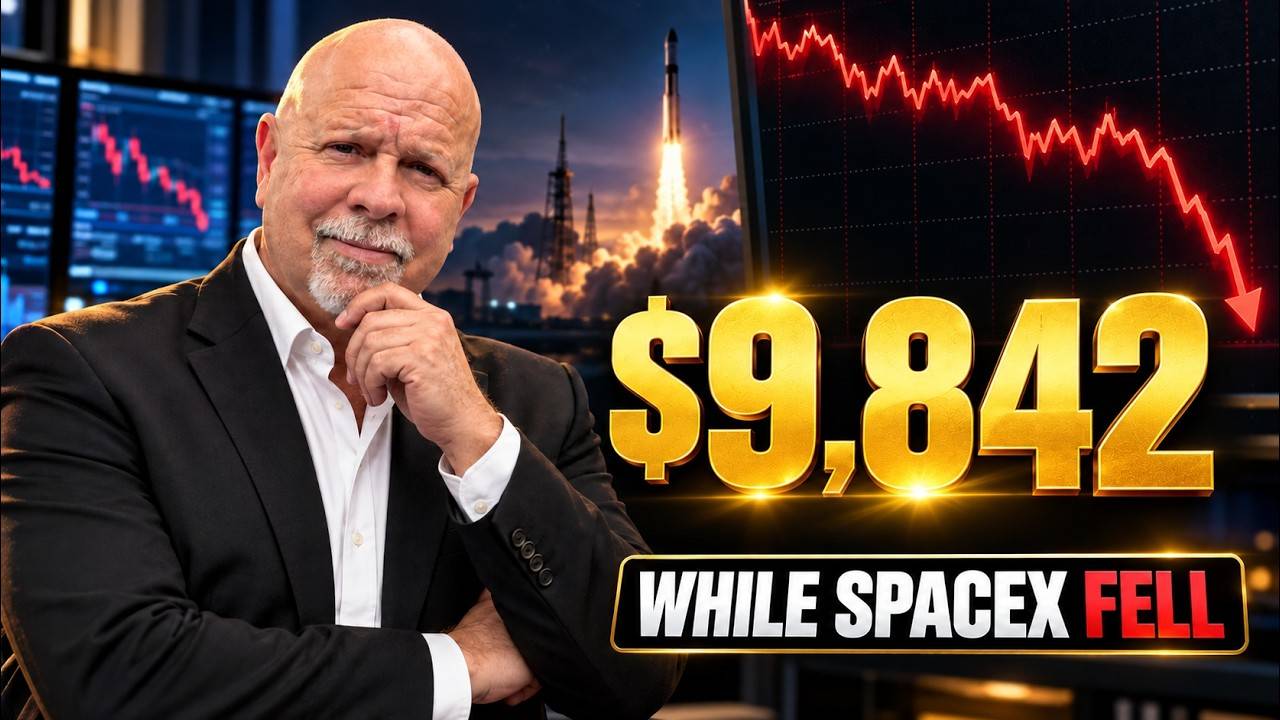
SpaceX Covered Call Strategy: How Mark Yegge Managed a Falling Stock and Reported $9,842 in Profit
SpaceX continues to capture attention through reusable rocket technology, satellite communications, and ambitious plans for the future of global connectivity. But for investors, an exciting business story does not automatically translate into an easy trade.
Mark Yegge recently shared a detailed look at a trading position he identifies as SpaceX. According to his account, the underlying stock experienced a substantial decline, yet he managed the position through covered calls, option adjustments, and disciplined exits.
The result? Mark reported $9,842 in net profit over approximately three months, even as the stock moved sharply against his original entry. His experience offers an important lesson about generating options income, managing risk, and knowing when to step aside.
Key Takeaways
$9,842 in Reported Net Profit
Mark reported approximately 6.8% to 7% in returns over three months through active management of his position.
$13,382 in Realized "Juice"
Covered-call premiums contributed to the trade, while option buybacks and rolling adjustments reduced the final profit.
Risk Management Came First
Mark managed the position as the underlying stock declined rather than relying on an immediate rebound.
Assignment Created an Exit
His $160 covered calls were assigned, closing the stock position and returning him to cash.
Technical Levels Still Matter
A failed breakout, weakening support, and the eight-day moving average influenced his decision to exit.
Re-Entry Remains on the Table
Mark continues to monitor the chart, including a $171.41 level identified by Cashflow IQ.
Why Mark Remains Interested in SpaceX
Mark begins with a broader observation about how dramatically space technology has changed.
He recalls watching the early space shuttle era, when launches were major events separated by long periods of preparation. In contrast, SpaceX has demonstrated a much faster launch cadence through its reusable rocket technology.
In Mark's view, this shift matters because lowering the cost of accessing space could support an entirely new generation of businesses.
Starlink and the Challenge to Traditional Telecom
One development Mark highlights is SpaceX's reported expansion into wireless spectrum that could potentially improve satellite connectivity inside buildings.
He believes combining satellite coverage with mobile connectivity could eventually challenge conventional wireless networks. According to his discussion, the announcement coincided with significant selling pressure in major telecommunications stocks, including Verizon, AT&T, and T-Mobile.
Mark sees potential opportunities beyond satellite internet, including artificial intelligence, semiconductor technology, and possible future relationships with Tesla. These remain possibilities and areas of speculation, not confirmed outcomes.
The Bigger Picture: Mark likes the long-term business story, but his trading approach separates enthusiasm for a company from the decision to hold its stock at any particular price.
The Trade: Managing a Falling Stock With Covered Calls
Mark describes entering the position shortly after what he identifies as the company's public-market debut. He says his initial stock purchase was made around the low $220s.
Rather than simply buying shares and hoping they would appreciate, he sold covered calls, including contracts with strike prices in the $170s that were deep in the money at the time.
Selling a covered call generates option premium in exchange for an obligation to sell the underlying shares at the strike price if assigned. An in-the-money covered call contains both intrinsic and extrinsic value, so the premium collected should not be confused with pure income or guaranteed profit.
Mark describes this ongoing process as collecting the "juice" from the options market.
As the stock continued to decline, he managed the position through multiple option transactions, including rolling contracts and adjusting his exposure. He describes the underlying decline as approaching 35% to 40% during the period.
Despite the unfavorable price movement, Mark says those adjustments allowed him to finish the trade with a positive net result.
How the Trade Was Managed
- Establish an initial stock position.
- Sell covered calls to collect premium.
- Monitor the underlying stock and option exposure.
- Roll or adjust contracts as conditions change.
- Track realized premiums, adjustment costs, and the overall position result.
- Exit when the trade-management conditions are met.
An important distinction is that covered calls do not eliminate downside risk. Option premiums can offset some losses, but a sufficiently large stock decline can still produce a significant negative result. Rolling also introduces additional transaction costs and does not guarantee that a position can be recovered.
Mark's example illustrates one reported outcome from an actively managed trade, rather than a strategy that will necessarily work under every market condition.
Inside Cashflow IQ: The Numbers Behind the Trade
To review his performance, Mark turns to Cashflow IQ, the AI-assisted trading analysis system used within Cash Flow Machine.
The process begins by exporting trading transactions from a brokerage account into a spreadsheet. That transaction history can then be imported into Cashflow IQ for analysis.
Its Trade Ledger organizes activity and helps Mark examine option premiums, buybacks, rolls, and the net result of a position.
Mark reports collecting $13,382 in realized option premium. After accounting for the cost of buying back and rolling contracts, he reports finishing with $9,842 in net profit.
He describes the trade as typically involving approximately five to seven option contracts, and characterizes the overall return as approximately 7% over three months.
The key lesson is not simply the dollar amount. It is the importance of examining the complete trade, including the adjustments required to reach the final result.
Cash Flow Machine Insight: Premium collected is only part of the equation. The real measure of a covered-call trade is the overall result after considering the stock position, option obligations, adjustments, and exit.
Why Mark Exited at the $160 Strike
The trade eventually reached a natural exit point through covered-call assignment.
Mark says his outstanding contracts carried a $160 strike price. After the shares traded above that level during the premarket session, the calls were assigned and the underlying shares were called away.
This closed the stock position and returned him to cash.
By the time of his discussion, he reported the stock trading near $157, after having moved down into the $156 range earlier in the session.
Mark was pleased with the exit because he had already established conditions under which he was willing to let the position go.
The decision also reflected his technical assessment. He believed the stock was beginning to lose momentum after an attempted breakout.
What the Chart Is Saying: Bull Flag, Support, and Momentum
Using the pattern-recognition features within Cashflow IQ, Mark examines several technical developments that influenced his exit.
1. The Bull Flag Breakout Lost Strength
Mark identified a bull-flag formation and an attempted breakout. However, he believed the move lacked sufficient strength to continue advancing.
Rather than sustaining the breakout, the stock began correcting and giving back part of its recent gains.
2. The Eight-Day Moving Average Came Into Focus
Mark observed the stock moving toward a test of its eight-day moving average.
In his assessment, the correction raised questions about whether the short-term advance could maintain its momentum.
3. Price Broke Below His Uptrending Support Line
Mark had drawn an upward-sloping line along important areas of the recent price structure. He used that line as part of his trade-management plan.
Once the stock fell below the line and a nearby support area, he was comfortable allowing the covered-call assignment to close the trade.
What This Means for Traders
A promising chart pattern does not guarantee a successful breakout. When momentum weakens and an established support level fails, reassessing exposure may be more useful than defending an increasingly uncertain technical setup.
The Next Opportunity: Watching $171.41
Although Mark is currently out of the position, he does not believe his involvement with the trade is necessarily finished.
He remains interested in the company's longer-term potential and says he would like another opportunity to establish a position and resume collecting covered-call premium.
During the video, Mark identifies $171.41 as a level highlighted by Cashflow IQ's pattern-recognition system while considering a possible re-entry.
That level is not presented as a guaranteed buying opportunity. It is a reference point within his ongoing technical review.
Mark's plan is to continue monitoring the chart and look for a more attractive setup before taking on additional exposure.
His willingness to wait reinforces an important principle of his approach: liking a company does not require maintaining a position at all times.
What Traders Should Watch Next
Based on Mark's analysis, several developments could help determine whether the stock presents another potential covered-call opportunity.
1. Price Behavior Around the Eight-Day Moving Average
Watch whether the stock stabilizes during its short-term correction or continues to show weakness.
2. Recovery of the Broken Support Structure
A stronger technical recovery could improve the setup after the break below Mark's uptrending line.
3. The $171.41 Reference Level
Mark is monitoring the level identified by Cashflow IQ as part of evaluating a potential new entry.
4. Follow-Through After the Bull Flag Attempt
A renewed advance would need to demonstrate stronger momentum than the previous unsuccessful breakout.
5. Covered-Call Opportunities and Position Risk
If Mark identifies another entry, the available option premiums and the amount of capital at risk will remain important considerations.
The Bigger Lesson: Discipline Over Emotion
One of the most valuable aspects of Mark's discussion is the distinction between investing conviction and trading discipline.
He likes the long-term opportunities associated with SpaceX, appreciates its technology, and expects continued innovation.
Yet when the stock weakened and his exit conditions were met, he accepted the assignment and moved to cash.
The decision was not necessarily a rejection of the company's prospects. It was an acknowledgment that the immediate trading setup had become less attractive.
"You would rather be out of the market wishing you were in than in the market wishing you were out."
A trading saying Mark references in his discussion
That philosophy reflects a willingness to protect capital, accept completed trades, and remain patient rather than pursuing every potential price movement.
Mark also highlights the role of Cashflow IQ in reviewing trading decisions. He plans to discuss the platform, covered-call income techniques, and market analysis at a small-group workshop in Clearwater Beach, Florida.
The Bottom Line
Mark Yegge's SpaceX trade review illustrates how covered-call management can influence the outcome of a position, even when the underlying price moves in an unfavorable direction.
According to his reported results, he collected $13,382 in realized option premium and finished with $9,842 in net profit over approximately three months, after managing the position through multiple adjustments.
More importantly, he maintained an exit plan. When the stock lost momentum and his covered calls were assigned, he accepted the result instead of holding the position indefinitely.
He remains interested in another opportunity but is allowing the chart to help determine his next move.
The lesson is straightforward: successful trade management is not simply about collecting premium. It is about understanding risk, tracking the complete position, and maintaining the discipline to act when conditions change.
Want to Learn How We Generate Income Regardless of Market Direction?
Discover Mark Yegge's approach to covered calls, options income, and disciplined trade management. Watch the free Cash Flow Machine masterclass to learn how the strategy works, the risks involved, and how it fits into a structured investing process.
Watch the Free MasterclassEducational training only. Investing and options trading involve risk, and income is not guaranteed.
Serious Investors Join Us Inside Elite
Ready to develop a more structured investing approach? Explore the Cash Flow Machine Elite program to learn Mark's broader methodology for evaluating stocks, managing covered-call positions, and making disciplined portfolio decisions.
Explore Cash Flow Machine EliteLearn the process. Understand the risks. Build a disciplined approach.
