
Insider Tips - Weekly Stock Market Report - Week May 25, 2026
Insider Tips — May 25, 2026
The market moved back into a constructive posture this week after spending several days in a cautionary “yellow light” phase. That shift matters. A yellow market does not mean investors need to panic, liquidate everything, or slam on the brakes. It means conditions are less forgiving, and it is a good time to review positions, reduce exposure to weaker names, and keep capital focused on stocks that are actually working.
That “weed the garden” mindset is especially useful right now. When the market gives a caution signal, it often reveals which holdings deserve more capital and which ones are draining attention, risk budget, and opportunity. Strong stocks tend to keep acting strong. Weak stocks tend to become even more obvious when leadership narrows.
The overall stance this week is constructive, but not careless. Major indexes are acting bullish, technology has regained leadership, volatility is declining, and several growth and AI-related names continue to show strength. At the same time, breadth is not perfect, some stocks are extended, and earnings season remains a reminder that even great companies can punish traders who take unnecessary event risk.
Technical Analysis
The market pulse has returned to green after several sessions of caution. That tells us the weight of evidence has improved. The Nasdaq is pushing near all-time highs, the S&P 500 is also pressing higher, and the Dow Jones has reached new-high territory. Those are bullish developments and suggest institutional money is still flowing into major indexes.
One important nuance is breadth. The New York Stock Exchange Composite has not shown the same clean all-time-high behavior as the smaller, more concentrated major indexes. That matters because it suggests leadership is still somewhat concentrated. The strongest stocks are pulling the market higher, but not every part of the market is participating equally.
Volatility is also moving in the right direction. A declining volatility index typically supports risk assets because it reflects calmer market conditions and less demand for downside protection. In plain English, investors are not pricing in as much fear as they were before.
The practical takeaway: this is a market where buying strength makes more sense than bottom-fishing weakness. The green signal supports putting capital back to work, but only in names that are showing real leadership, clean patterns, and favorable risk-reward setups.
Market Trends I’m Calling Out
The biggest trend this week is the return of technology leadership. Six months ago, many tech stocks were struggling to gain traction. Now, that tone has changed. Apple, AMD, semiconductor-related names, AI infrastructure plays, and certain computer hardware stocks are all acting much stronger.
A second theme is the continued importance of AI infrastructure. The market is rewarding companies connected to computing power, data centers, semiconductors, energy supply, and next-generation technology. That does not mean every AI stock is a buy at any price, but it does mean this remains one of the clearest areas of institutional interest.
A third theme is discipline around earnings. Nvidia’s action after a strong report is a reminder that great numbers do not always produce great stock reactions. Earnings are binary events. Even if the company is excellent, the stock can still sell off if expectations were too high or if traders were positioned too aggressively.
Finally, investors should keep watch lists current. Several of the best moves discussed this week started from recognizable chart setups before they became obvious. By the time a stock gaps higher on huge volume, the easy entry may already be gone.
Individual Stocks: What I’m Seeing
Apple
Apple remains one of the cleaner leadership names in this update. The stock has moved into all-time-high territory after several weeks of constructive action. Relative strength is improving, momentum is building, and the seasonal product-cycle narrative may become more relevant as the year progresses.
The key point is not just that Apple is a great company. It is that the chart is confirming demand. In this market, that distinction matters.
Nvidia
Nvidia remains a premier AI company, but the stock’s reaction around earnings is a risk-management lesson. Even when a company reports strong numbers, the stock can still pull back if expectations are already elevated.
This is why taking large positions into earnings can be dangerous. The better approach is to respect the event risk, protect capital, and look for cleaner entries after the market has digested the news.
Tesla
Tesla continues to be volatile, but the chart is becoming more interesting. The stock has been forming what looks like a cup-with-handle structure, with the handle developing after a prior move higher. The key area discussed is roughly the mid-$450s, where a potential breakout pivot may be forming.
The strategy here is not to “back up the truck.” Tesla is too volatile for that. A more disciplined approach is to start small, test the position, and only add if the stock proves the trade right. That is the difference between scaling into weakness and pyramiding into strength.
SanDisk
SanDisk is a strong example of why chart study matters. The stock has produced a powerful move after breaking out from prior consolidations. It is also benefiting from strength in its industry group.
That industry-group point matters. A meaningful portion of a stock’s performance often comes from the behavior of its group. When the group is strong and the stock is strong, the odds are better than when a stock is trying to move alone.
Micron
Micron is showing similar strength in the memory and semiconductor-related space. It is trading near high ground and continues to reflect the market’s appetite for chip and data-center-related exposure.
The setup is constructive, but as always, the entry matters. Strong stocks can become risky when they are too extended, so the focus should be on pullbacks, consolidations, and proper buy points.
AMD
AMD is one of the standout names this week. The stock is acting very strong and has moved into new-high territory. It also appears to be in the kind of powerful move where investors who caught the earlier breakout may be rewarded for patience.
That said, large gaps often get revisited eventually. A pullback or gap-fill attempt would not automatically damage the bigger picture, but it would be a place to watch how buyers respond.
Bloom Energy
Bloom Energy is another stock benefiting from the AI infrastructure theme. The market appears to be rewarding companies that can help power data centers and support the energy demands of AI expansion.
The stock has broken out sharply from consolidation, but the move has been fast. That means new buyers need to be careful. The ideal entry was earlier in the base, not after the stock had already run aggressively.
Gold and Silver
Gold and silver are not showing the same kind of momentum as technology. Both are hovering near key moving-average areas, with gold struggling below a flattening or drooping 50-day moving average.
The longer-term hard-asset argument remains intact for investors who believe monetary policy will become easier over time. But technically, metals look more like they are resting than leading.
SOXL
SOXL, the 3x leveraged semiconductor ETF, is moving aggressively and has reached new-high territory. That reflects the strength in semiconductors, but leverage cuts both ways.
This is not a casual holding. Because it is designed to move at a multiple of the semiconductor index, gains and losses can accelerate quickly. Position sizing and risk control are essential.
MicroStrategy
MicroStrategy has quietly improved after a long period of weakness. The stock has nearly doubled from its early-year lows, which is exactly the kind of move investors can miss if they stop tracking names that have fallen out of favor.
Relative strength is still not perfect, but the recovery is notable. It belongs on a watch list for investors who follow Bitcoin-related equities and high-volatility momentum names.
Dell and Quantum-Related Computer Stocks
Computer hardware and quantum-related names are showing strong action, with Dell discussed as a key example. The stock has gapped higher on heavy volume and is now extended.
This is a classic watch-list lesson. The best buy area came earlier, before the move became obvious. Once a stock has doubled from its proper entry area, chasing it becomes much riskier. The goal is to identify these names before they explode, not after everyone is already talking about them.
Key Takeaways
- The market has moved back to green, which supports a more constructive stance.
- Technology has reclaimed leadership, especially in AI, semiconductors, and infrastructure-related areas.
- Breadth is positive but not perfect, so investors should stay selective.
- Earnings remain a major risk event, even for elite companies like Nvidia.
- Strong stocks deserve attention, while weak stocks should be reviewed and possibly removed.
- Extended stocks may still be strong, but poor entries can turn good ideas into bad trades.
- Covered calls and income strategies can help investors shift from hoping for price movement to building a more repeatable process.
Conclusion
This is a healthier market than it was earlier in the week, but it is not a market that rewards laziness. The right approach is to stay aligned with leadership, respect the green signal, and avoid forcing trades in weak stocks just because the story sounds appealing.
The best opportunities are still coming from stocks with strong relative strength, clean bases, improving momentum, and supportive industry groups. At the same time, risk management remains the foundation. Avoid oversized earnings bets, be careful with leveraged products, and do not chase stocks that have already moved too far from proper entry points.
A disciplined investor does not need to predict every market turn. The job is to watch the evidence, manage risk, and keep capital focused on the strongest opportunities.
Current Market Condition
The market is constructive, but selective. Major indexes are strong, volatility is falling, and technology is leading. However, not every stock is participating, and some of the best names are already extended. This is a green-light environment for disciplined investors, not a free pass to buy anything.
Stock Tips This Week

Meta’s AI Pivot: Why Mark Yegge Says the Chart Still Looks Weak
In this video, the focus is on Meta’s AI-driven restructuring and why the stock chart still deserves caution. The broader lesson is that a strong business story is not enough by itself. Investors should wait for price action, moving averages, and relative strength to confirm the thesis before forcing a bullish trade.

How to Calculate Annualized Return on Covered Calls
In this blog, the key lesson is that covered call traders need to measure returns correctly. The article emphasizes using premium divided by capital at risk, adjusted for days to expiration, rather than relying on rough premium estimates. It also reminds investors to track total return, including dividends, capital gains, and unrealized stock movement.
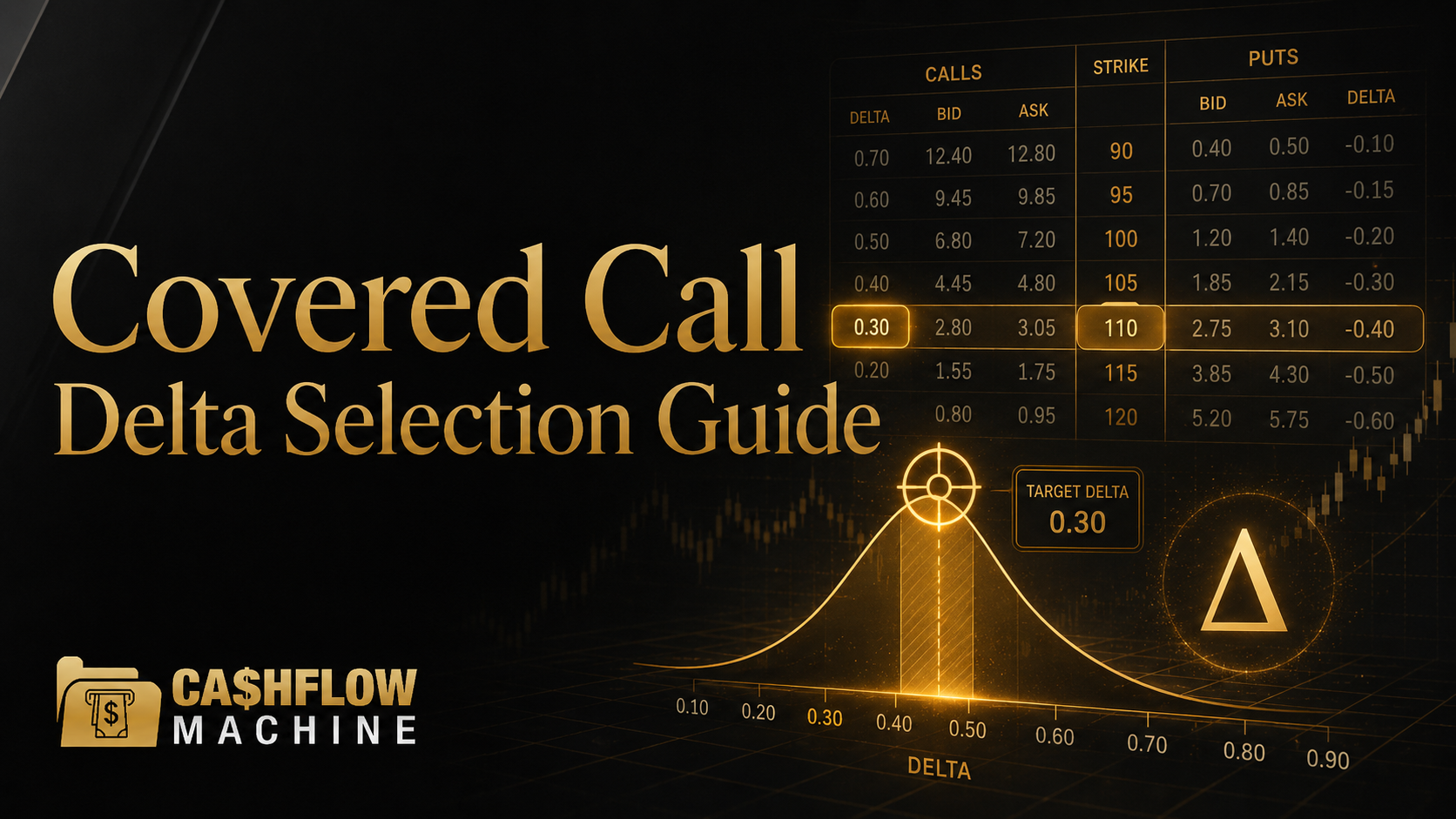
Covered Call Delta Selection Guide
In this blog, the main takeaway is that delta selection should match your conviction and risk tolerance. Lower deltas may fit more bullish views, while higher deltas can generate more premium but increase assignment risk. The article frames the 0.15 to 0.30 delta range as a practical zone for many covered call income trades.

Covered Call Tax-Loss Harvesting
In this blog, the strategy centers on managing losing short calls in a tax-aware way while keeping the underlying stock position intact. The lesson is that options can create their own tax outcomes, and investors should be careful with wash-sale rules, strike selection, and documentation before using tax-loss harvesting strategies.

Covered Calls vs. Annuities for Retirement Income
In this blog, the comparison is between flexible market-based income and guaranteed insurance-based income. The article’s practical takeaway is that many retirees may benefit from blending tools: using an annuity for a basic income floor while using a covered call portfolio for flexibility, growth potential, and ongoing cash flow.

The Hidden Tax Cost of 0DTE Covered Calls
In this blog, the warning is that 0DTE covered calls can look attractive before taxes but less compelling after taxes and execution risk. The article encourages investors to compare after-tax income, not just gross premium, and to consider whether longer-duration covered call cycles may create a better balance between income, risk, and tax efficiency.
