
Insider Tips - Weekly Stock Market Report - Week June 15, 2026
Insider Tips — June 15, 2026
SpaceX Makes History, But the Market Is Sending a Caution Signal
This week brought one of the biggest market stories in years: the SpaceX IPO. The stock opened with intense attention, strong early demand, and the kind of excitement that can pull investors into a trade before they have a real plan. It was a historic moment for markets, employees, early investors, and the broader Elon Musk ecosystem.
But while SpaceX grabbed the spotlight, the broader market picture was less clean. The market timing model has shifted red, the Nasdaq has been under pressure, and volatility is beginning to rise. That does not mean the market is broken, but it does mean this is not the time to chase weak setups or buy stocks simply because the story sounds exciting.
The key message this week is discipline. There are still strong areas of the market, especially in semiconductors and AI-related names, but the tape is mixed. When the market turns red, the job is not to panic. The job is to protect capital, study leadership, clean up weak positions, and wait for higher-probability entries.
Technical Analysis
The Nasdaq remains the main concern. It has been selling off for several sessions and recently bounced near the 50-day moving average. That bounce is constructive, but it still needs follow-through. If buyers do not defend that area with conviction, the index could remain under pressure.
The S&P 500 is showing a similar pattern. It pulled back, filled a prior gap, and is attempting to stabilize. That type of action can be normal after a strong run, but it becomes more important when technology leadership starts to weaken.
The Dow Jones Industrial Average looks healthier by comparison. It recently made an all-time high and has pulled back in a more controlled way. The NYSE Composite also appears stronger than the technology-heavy indexes, which tells us this is not a full market breakdown. It is more of a rotation and risk reset.
The VIX is also worth watching. It has moved above its mean, which signals rising concern. It is not at panic levels, but it is high enough to remind investors that volatility is returning. In this kind of environment, entries matter more, position size matters more, and weak charts deserve less patience.
Market Trends I’m Calling Out
The first major theme is the split between excitement and discipline. SpaceX may be an extraordinary company with a powerful long-term story, but IPO enthusiasm can create emotional buying. A great company does not automatically mean a great entry.
The second theme is technology fatigue. Apple, Nvidia, and Palantir are all showing different versions of the same lesson: hot names can punish investors who chase them at the wrong spot on the chart.
The third theme is sector leadership. Semiconductors are still one of the strongest areas of the market, but the group is not completely clean. AMD, Micron, and SanDisk are acting better than many names, while Nvidia is sending a more cautious message.
The final theme is risk management. In a red market, the priority is not aggressive buying. It is portfolio maintenance: trim weak positions, avoid low-quality names, keep cash available, and wait for the right stock in the right market at the right spot on the chart.
Current Market Condition
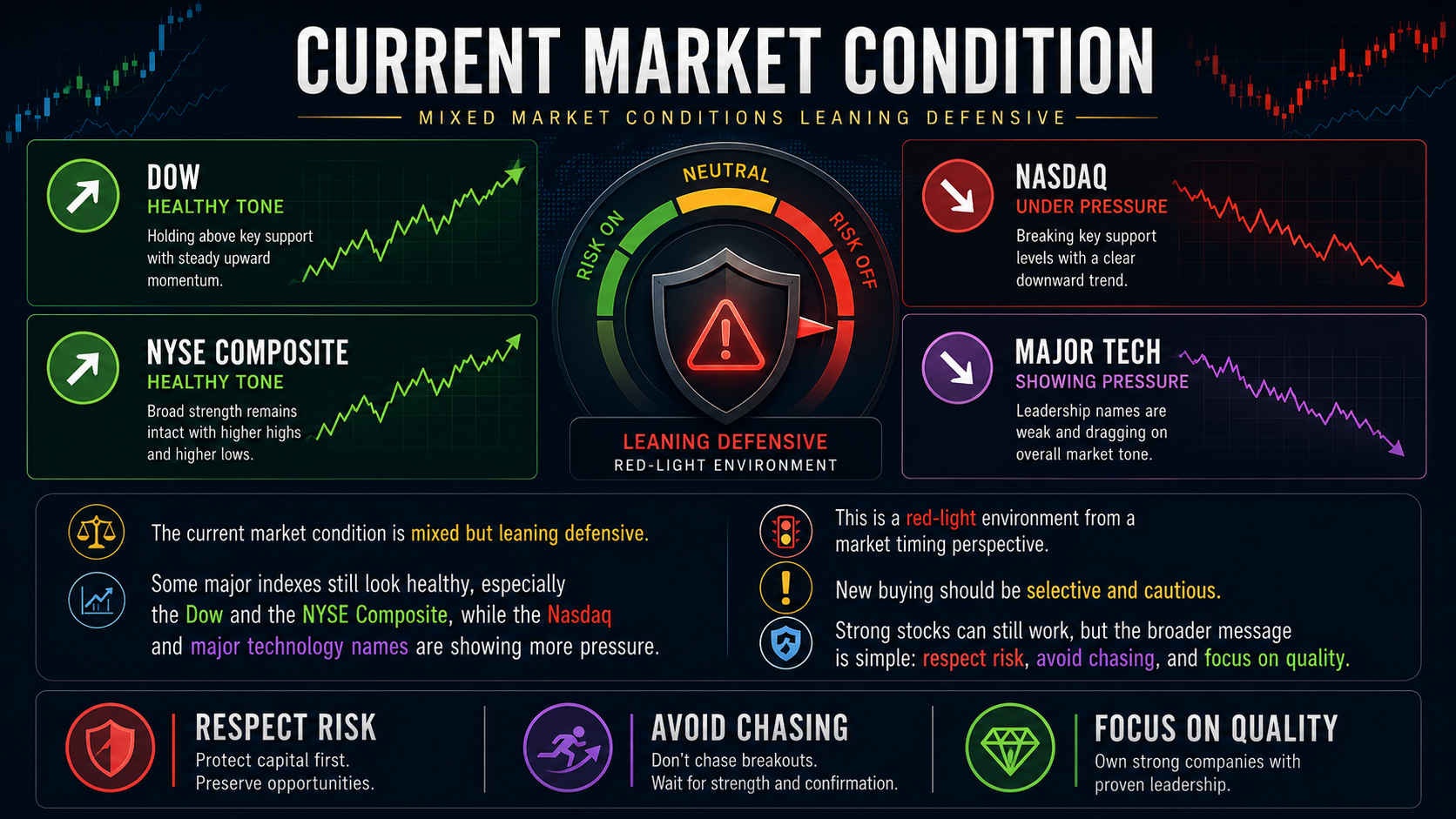
The current market condition is mixed but leaning defensive. Some major indexes still look healthy, especially the Dow and the NYSE Composite, while the Nasdaq and major technology names are showing more pressure.
This is a red-light environment from a market timing perspective, which means new buying should be selective and cautious. Strong stocks can still work, but the broader message is simple: respect risk, avoid chasing, and focus on quality.
Individual Stocks: What I’m Seeing
SpaceX
SpaceX was the headline event of the week. The IPO opened with major demand and quickly became one of the most closely watched trades in the market. The long-term story is powerful: Starlink, reusable rockets, satellite infrastructure, AI potential, and Elon Musk’s broader ecosystem all support investor interest.
But the trading lesson is more important than the excitement. IPOs can move fast because supply is limited and demand is emotional. That can create big upside, but it can also create sharp reversals once the first wave of buyers is exhausted. SpaceX may become a great long-term company, but disciplined investors should still wait for a real chart pattern before chasing the opening move.
Apple
Apple sold off after investors reacted negatively to its AI-related direction and its approach to improving Siri through outside technology. The stock is now testing an area that may become more interesting, but the chart still suggests some caution.
Apple remains a high-quality business, but quality does not remove timing risk. The better approach is to watch whether buyers defend support instead of assuming the first pullback is automatically a buying opportunity.
Nvidia
Nvidia remains the poster child for AI, but the chart is not acting as cleanly as investors would want from a market leader. The stock pushed into a selling zone, failed to hold momentum, and is now back near a buy zone while sitting under the 50-day moving average.
That combination deserves respect. Nvidia can still recover, but repeated selling near highs is a warning sign. In a red market, buying stocks below the 50-day moving average carries extra risk.
Palantir
Palantir is a clear example of why chasing hot stocks can be dangerous. Buyers who entered near the highs have had to sit through a painful decline, and the stock has struggled to reclaim leadership.
The lesson is not that Palantir is a bad company. The lesson is that even strong stories can become poor trades when investors buy too extended. Price, trend, and timing still matter.
Broadcom
Broadcom delivered strong earnings, but the stock still sold off hard after the report. That is an important reminder that good numbers do not always protect a stock from downside.
A large gap down on volume takes time to repair. Earnings events can create unnecessary risk, especially when expectations are already high. Preparation matters before the report, not after the damage is done.
SanDisk
SanDisk continues to show strong relative strength and recently pushed toward the $2,000 level. The chart remains impressive, but the same rule applies: do not chase all-time highs without a plan.
Round numbers often attract attention, and short-term pullbacks near those levels are common. The stock is strong, but the entry still has to make sense.
Micron
Micron also remains strong, although it has pulled back with the broader market. The chart still looks constructive compared with weaker technology names, but it is also trading near elevated levels.
This is a stock to watch, not blindly chase. If the semiconductor group continues to lead, Micron could remain important, but risk management should stay front and center.
AMD
AMD looks healthier than many of the large-cap tech leaders. It has corrected with the market, but the pullback has not shown excessive selling volume and the stock has not broken down to the 50-day moving average.
That relative strength matters. In a mixed market, the best stocks often reveal themselves by how well they hold up during weakness. AMD remains one of the stronger charts to monitor.
Key Takeaways
-
SpaceX was the biggest story of the week, but IPO excitement should not replace risk management.
-
The market timing model is red, which means new buying should be cautious and selective.
-
The Nasdaq is weaker than the Dow and NYSE Composite, showing rotation rather than a full market collapse.
-
The VIX is rising, which means volatility and emotional trading are becoming more important risks.
-
Apple may be approaching an interesting area, but buyers still need to prove support.
-
Nvidia’s action under the 50-day moving average is a warning for AI leadership.
-
Semiconductors remain a strong sector, but investors should still avoid chasing extended charts.
Conclusion
This week gave investors a perfect contrast: SpaceX delivered historic excitement, while the broader market reminded us that enthusiasm and risk can exist at the same time.
The right posture now is not fear, but discipline. Watch the Nasdaq, watch volatility, watch whether semiconductors can continue to lead, and pay close attention to whether major stocks reclaim or lose key moving averages.
The best investors do not need to trade every headline. They wait for the right stock, in the right market, at the right spot on the chart. In a red-light market, patience is not weakness. It is strategy.
Stock Tips This Week
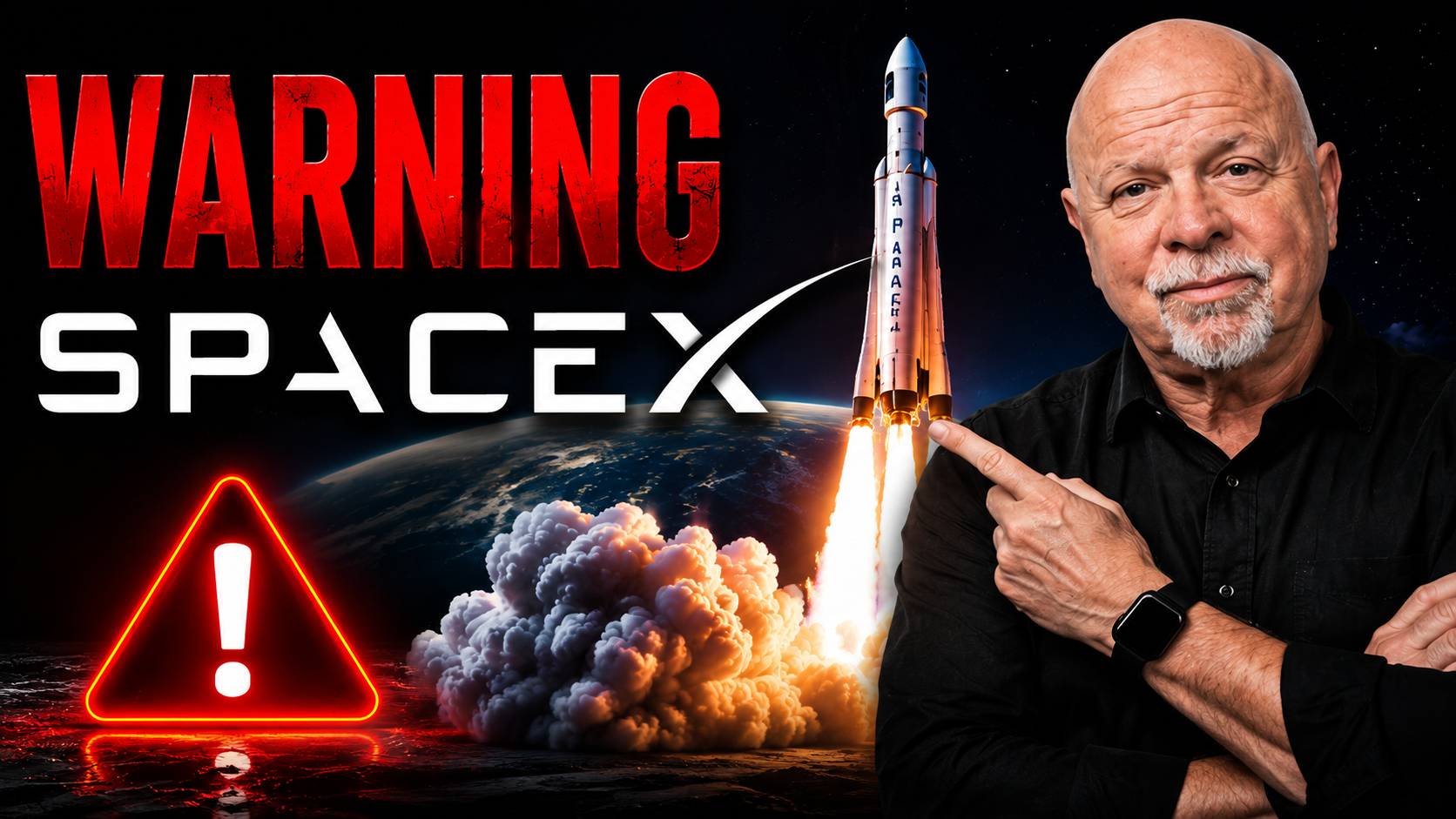
SpaceX IPO Warning: Hype, Valuation, and the Exit Liquidity Risk
In this video, the key lesson is that IPO excitement is not a strategy. SpaceX may have a powerful business story, but investors still need to think about valuation, early investor selling, limited trading history, and the risk of becoming exit liquidity for insiders who already own large gains.

SpaceX IPO Update: FOMO, Forced Buying, and the Risk of Chasing the Future
In this video, the focus is on how FOMO and forced buying can distort early IPO trading. If index-related demand or limited float creates pressure, the stock can move sharply, but that does not mean the move is safe. The bigger lesson is to decide your plan before the stock opens, not after emotions take over.

SpaceX IPO Bull Case: Why the Stock Could Rise After Launch
In this video, the bullish side of the SpaceX story gets more attention. Limited supply, strong investor demand, possible index flows, Starlink growth, reusable rockets, and AI-related optionality could all support the stock. Still, the bullish case does not remove the need for discipline.

Covered Call On REITs For Monthly Income
In this blog, the lesson is about using REITs as income-producing assets and adding covered calls as a second layer of cash flow. The strategy works best when investors focus on quality REITs, stable or improving rate conditions, and a clear exit plan instead of simply chasing high dividend yields.
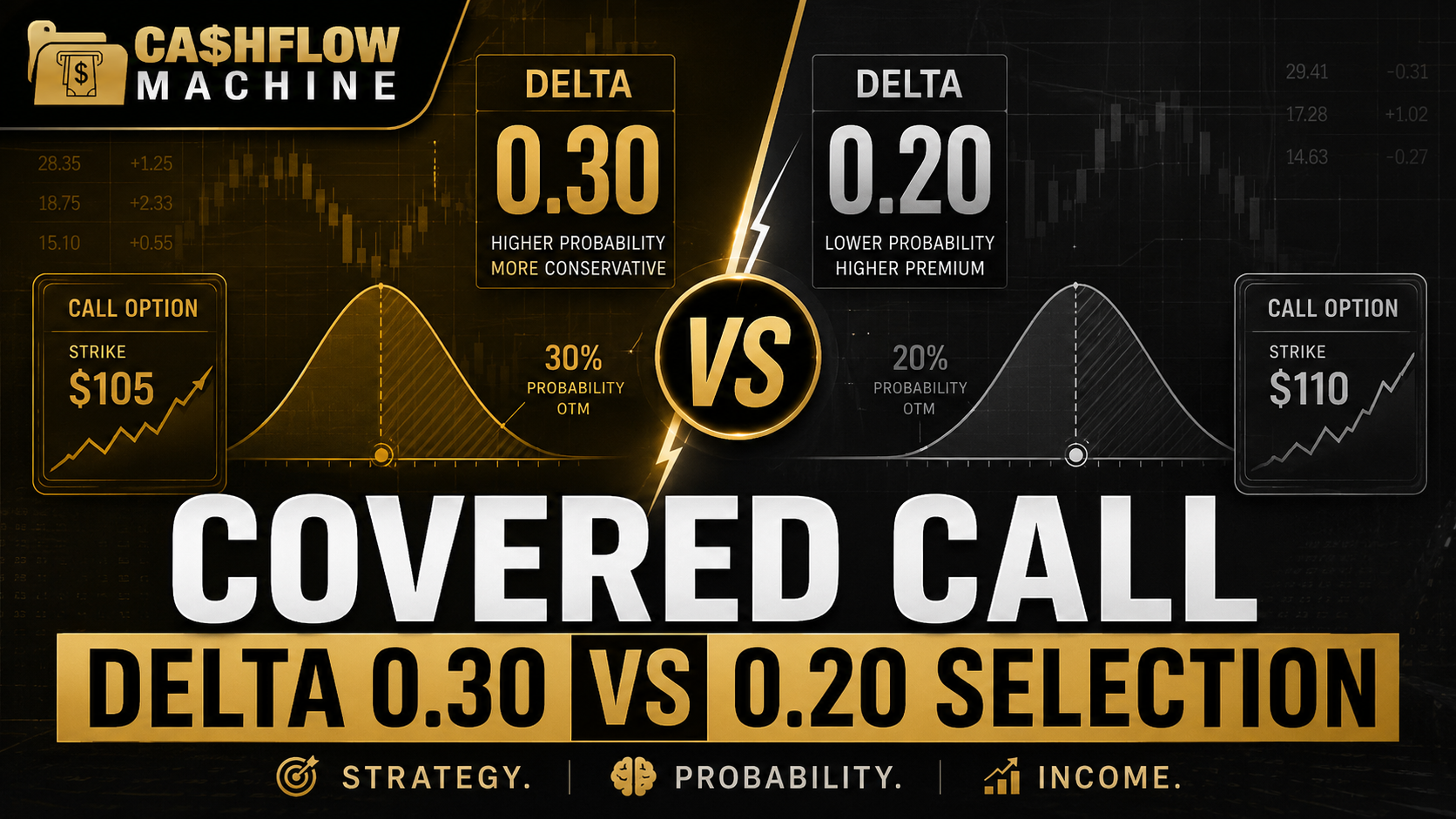
Covered Call Delta 0.30 Vs 0.20 Selection
In this blog, the focus is on choosing the right covered-call delta for the market environment. A 0.30 delta allows more upside participation in strong trends, while a 0.20 delta provides more income cushion in choppy or defensive markets. The key is matching the strike to the market, not just chasing the biggest premium.
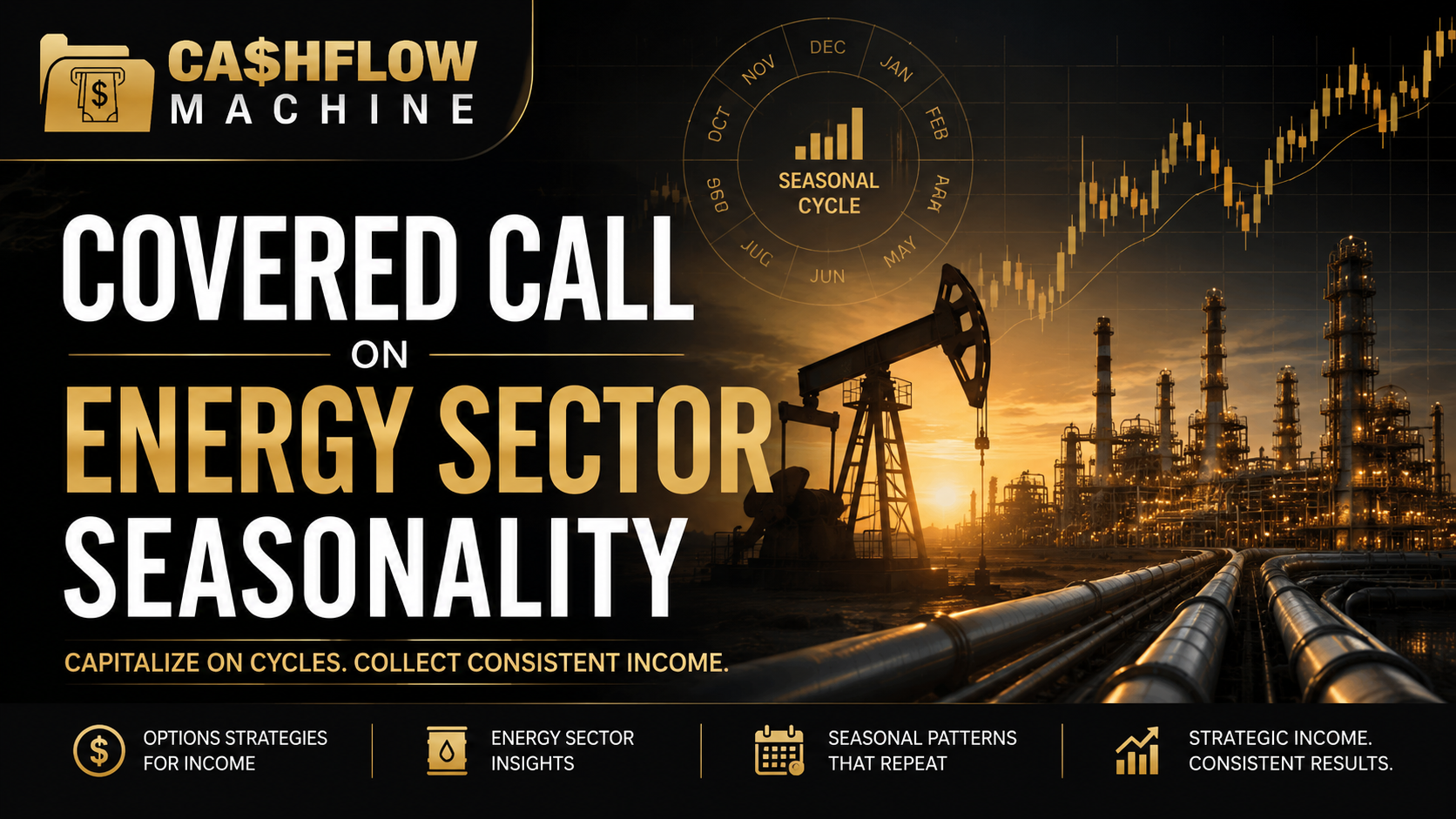
Covered Call On Energy Sector Seasonality
In this blog, the main idea is using energy’s seasonal tendencies with a covered-call framework. Energy stocks often have stronger periods earlier in the year and softer periods later, so selling calls during slower phases can help generate income while maintaining a risk-managed approach.
Podcast Episode This Week

In this podcast, the discussion centers on why real wealth starts with a plan. The episode is valuable for investors because it shifts the focus away from chasing the latest idea and back toward systems, discipline, saving, growth, protection, and defining what “enough” actually means.
CashFlowIQ Has Arrived

Cash Flow Machine is now moving deeper into AI with the launch of CashFlowIQ, a new AI-powered trading companion built to help members learn faster, think more clearly through trades, and strengthen their execution process.
The goal of CashFlowIQ is not to replace discipline or decision-making. Instead, it is designed to support the CFM framework by helping investors review setups, reinforce key trading principles, and build more confidence in how they approach the market.
For Elite and Mastermind members, CashFlowIQ is available inside the Elite Course Library under:
Module 2 → Toolbox
There, members can find an overview of the platform along with details on the available monthly and annual membership options.
At this time, CashFlowIQ is available exclusively to Elite and Mastermind members. Investors who are not yet Elite members can learn more about upgrading and gaining access to CashFlowIQ, along with the full Cash Flow Machine training system, here:
As AI continues to evolve, tools like CashFlowIQ can become a valuable part of the learning process—helping investors stay more organized, improve their trade review process, and make more disciplined decisions over time.
