
Palantir Is a Great Company. That Doesn’t Mean It’s a Great Buy Right Now
Palantir Is a Great Company. That Doesn’t Mean It’s a Great Buy Right Now
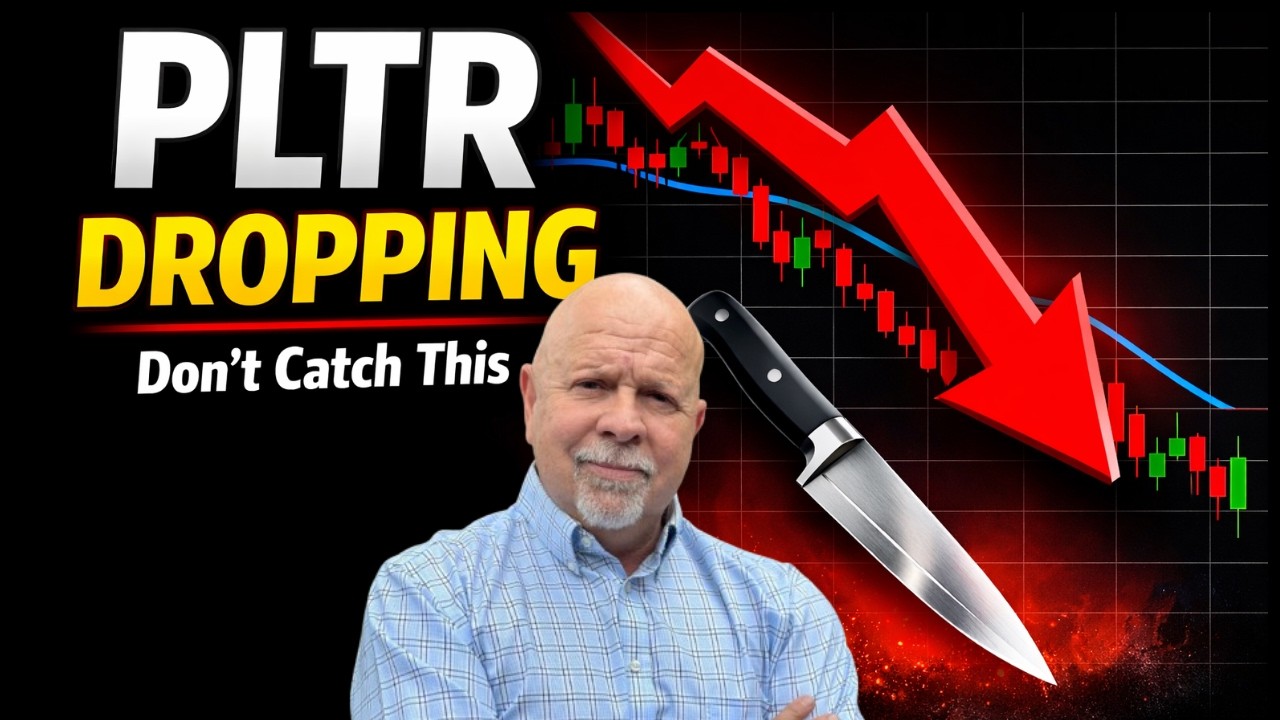
In this week’s Market News, Mark Yegge breaks down a mistake too many investors make: confusing a great company with a great stock setup.
Using Palantir as the case study, Mark walks through why the chart has been flashing warning signs for weeks, why momentum matters more than the story, and how income-focused investors can think differently when a stock starts breaking down.
Key Takeaways
A Great Business Can Still Be a Bad Entry
For the last several months, Mark Yegge has been consistent on one point: he did not like Palantir as an investment at these levels.
That stance drew plenty of pushback. After all, Palantir has a powerful story, strong revenue growth, and exposure to major themes like defense, AI, and government contracts. To many investors, that sounds like exactly the kind of stock you should own.
But as Mark explains, the story and the stock are two different things. And right now, the chart matters more than the narrative.
Why the Chart Matters More Than the Story
One of the most important lessons in trading and investing is that business quality does not automatically translate into a good buy point.
Palantir may be executing well as a company. Earnings growth has improved dramatically, and the business continues to attract attention in hot sectors. But a stock can still become overextended, lose momentum, and enter a dangerous phase even while the underlying company looks impressive.
That is what Mark believes has happened here. As Palantir moved from much lower levels into a much more mature advance, the setup became riskier. Instead of forming fresh, healthy momentum patterns, the stock began showing signs of late-stage weakness. In Mark’s view, that is where many investors got pulled in by the story rather than paying attention to the actual price action.
Charts Are Not Magic. They Are Human Emotion on Display
Mark makes a point that every investor should remember: charts are not voodoo. They are not tarot cards. They are simply a visual representation of human emotion.
Fear, greed, conviction, hesitation, momentum, exhaustion — all of it shows up on the chart.
That is why he relies so heavily on technical analysis. The chart does not care how exciting a company sounds. It reflects what buyers and sellers are actually doing with real money.
And on Palantir, the message has not been encouraging. On the weekly chart, the stock had already begun to look extended and vulnerable. On the daily chart, the weakness became even more obvious. Lower price action, fading momentum, and failed attempts to hold key levels all pointed to a stock that was struggling to maintain leadership.
Why the 50-Day Moving Average Matters
One of the biggest technical signals Mark focused on was the stock’s inability to hold above the 50-day moving average.
That matters because the 50-day line often acts as an important marker of intermediate trend strength. When a stock repeatedly fails to reclaim or hold that level, it can signal that institutions are no longer supporting the move with conviction.
That appears to be what Palantir has been showing. According to Mark, the stock tried to stabilize around the 50-day moving average, but the attempts lacked real strength. Volume did not show strong conviction, and the most recent candle was especially ugly — a sharp move lower on a day when the broader market was strong.
Relative Strength Is Heading the Wrong Way
That kind of relative weakness stands out.
When the market is rallying but a popular stock is falling hard, that is not usually the behavior of a leader.
Mark also points to deteriorating relative strength as a major warning sign. This is critical because strong stocks tend to outperform the broader market, especially on strong market days. Weak stocks do the opposite. They lag, fade, and fail to attract buyers even when conditions are favorable.
That is what makes Palantir’s recent action more concerning. The stock market was having a strong day, but Palantir was down significantly. In Mark’s view, that tells you sentiment is shifting. Buyers are less aggressive. Momentum is fading. And investors trying to call the exact bottom may be stepping in too early. That does not mean Palantir can never recover. It means the chart is not yet giving a high-probability reason to jump in.
The Problem With “It’s a Great Company”
Mark has seen the same pattern for decades.
A stock starts falling, investors get uncomfortable, and the defense becomes automatic: “It’s a great company. It’ll come back.”
Sometimes that is true. But it is not a strategy.
Investors say the same thing about every popular name when the stock is dropping. They say it about Tesla. They say it about Apple during weak periods. They say it about any company with a charismatic CEO and a compelling story. But none of that changes what the chart is saying right now. For Mark, the more useful question is not whether Palantir is a great company. It is whether the chart offers an attractive risk-reward setup at this moment. His answer is no.
What the Chart Suggests Could Happen Next
Based on the recent breakdown, Mark believes Palantir may still want to move lower toward a significant prior swing point.
He notes that earlier support levels had already been identified, and the stock broke through them on heavy volume. While there was a bounce attempt afterward, it did not carry the kind of conviction he wanted to see.
That leaves him skeptical of the rebound. Rather than seeing a healthy reset, he sees a chart that still looks vulnerable. Failed rallies, gap-down action, fading volume support, and repeated trouble around the 50-day average all reinforce the same idea: this may not be the moment to be aggressive on the long side.
The “Fade 50” Pattern
Mark also ties Palantir’s behavior to a pattern he discusses in his book, The Short Seller’s Edge.
He calls it the “fade 50” pattern — when a stock rallies toward the 50-day moving average but cannot hold above it, then fades lower again. If that keeps repeating, it can become a clear sign that sellers remain in control.
That is one reason he is not interested in trying to force a bullish case here. In fact, he suggests that if someone is going to be active around the setup, they may want to think in the opposite direction rather than trying to catch a falling knife. His larger point is simple: do not let hope override evidence.
A Different Way to Think: Income Instead of Prediction
This is where Mark shifts from chart analysis into strategy.
Rather than obsessing over whether a stock will go up or down tomorrow, he prefers to think in terms of generating income. That is why covered calls play such a central role in his approach.
Covered calls allow an investor to collect premium income from stocks they own. In Mark’s framework, this changes the entire game because the goal is no longer just capital appreciation. It becomes cash flow.
That matters in flat markets. It matters in choppy markets. And it can matter even when a stock is drifting lower.
Mark explains that on the way down, investors can sometimes sell deeper in-the-money calls and use intrinsic value to cushion downside risk while still generating premium. On stronger stocks, they can use covered calls to create recurring income while maintaining defined expectations. Instead of trying to predict the perfect top or bottom, the investor focuses on getting paid.
Why Apple Looks More Interesting Right Now
To help illustrate the contrast, Mark points to Apple.
He is not pounding the table to buy it immediately. In fact, he says it still belongs on a watch list because it is not yet back above the 50-day moving average with strength. But compared with Palantir, the chart structure looks healthier.
Apple’s pullback has been shallower. It has tested key levels multiple times. Shorter-term moving averages are improving. And it appears to be getting closer to a potentially actionable setup rather than a breakdown.
That difference is important. Mark likes to buy stocks that are showing strength, reclaiming important moving averages, and offering conditions where covered calls can be layered on top of a stronger technical foundation. For him, that is a much better profile than trying to bottom-fish a stock with declining momentum.
The Real Lesson for Investors
The biggest takeaway from this video is not just about Palantir.
It is about discipline.
Too many investors fall in love with stories, headlines, CEOs, and themes. They want the company to be a winner so badly that they stop listening to what the chart is telling them.
Mark’s view is much more practical:
- A great company is not always a great buy
- Weak charts deserve caution
- Relative strength matters
- The 50-day moving average matters
- Income strategies can reduce the pressure to predict perfectly
That mindset can help investors avoid chasing hype and focus instead on probability, positioning, and process.
Final Thoughts
Palantir may still be an impressive business. But according to Mark Yegge, that is not enough to justify buying the stock in its current condition.
The chart has weakened. The momentum has faded. Relative strength is deteriorating. And repeated failures around the 50-day moving average suggest that buyers have not regained control.
For investors willing to stay patient, that matters.
And for investors focused on building income instead of guessing the next big move, it may open the door to a more consistent approach altogether. The lesson is not to stop believing in good companies. It is to stop ignoring bad charts.
Want to learn how we generate income from stocks instead of relying only on price appreciation?
Watch the free training and learn how disciplined investors use covered calls, adjustments, and chart-based income strategies to generate cash flow in different market conditions.
Join Elite for the Full System
Serious investors can go deeper inside Cashflow Machine Elite, where Mark teaches covered calls, adjustments, and chart-based income strategies in detail.
