
Insider Tips - Weekly Stock Market Report - Week April 06, 2026
Insider Tips — April 06, 2026
This week’s market tone improved from outright defense to cautious observation. The main message from the update was that the market is transitioning from a “red” environment to a “yellow” one. That does not mean the all-clear has arrived. It means the worst of the immediate damage may be easing, and investors can begin preparing again, but with restraint. The market’s weak initial reaction to political headlines, followed by a bounce, suggests sellers may be losing some control at the margin.
That distinction matters. A yellow market is not a green market. It is a market where watch lists start to matter again, where relative strength becomes more important, and where the best opportunities tend to emerge from patience rather than urgency. The opportunity this week is not in guessing the exact bottom. It is in identifying which names are quietly improving while the broader tape is still repairing itself.
The risk, however, is still very real. A bounce can be constructive without being durable. Major indexes remain under technical pressure, volatility has not fully normalized, and several popular growth names still look damaged. For now, this looks more like a market for discipline, smaller pilot positions, and selective setups than for aggressive buying.
Technical analysis
The technical backdrop has improved, but only modestly. The update described the market as moving from four red lights last week to a more balanced setup this week, with two green lights and two red lights. That shift reflects a market coming off the lows with a few constructive sessions, including what was described as a three-day move higher after a retest-type pattern near the bottom. That is encouraging, but not enough on its own to confirm a durable trend change.
The Nasdaq still looks like the weakest of the major indexes. It has been under sustained pressure since January and, while it is trying to bounce and fill gaps, it still looks like a market in repair rather than a market in leadership mode. The S&P 500 has also bounced into a technical zone highlighted in the update, but it still needs stronger follow-through up the right side of the pattern. The Dow is acting somewhat better, in part because it is at least interacting with its 200-day moving average, but it too remains below the 50-day line.
One of the more important caution flags is volatility. The VIX came in off its highs, but the broader trend remains elevated. As long as volatility stays firm and the major indexes remain below key moving averages, the message is the same: improvement is real, but confirmation is incomplete. This is the stage where disciplined investors prepare for opportunity, not the stage where they assume the danger is over.
Market trends I’m calling out
The first theme is that the market is becoming more selective. This is no longer a moment where investors can assume that every bounce deserves trust. Some charts are stabilizing. Some are not. That puts a premium on relative strength, cleaner structure, and stocks that are already beginning to repair while the indexes are still uncertain.
The second theme is that geopolitics and energy are still feeding into market behavior. Energy-related moves remain highly sensitive to headlines around war, oil flows, and ceasefire expectations. That creates opportunity in some corners of the tape, but it also means investors need to be careful about chasing sharp moves that may be headline-driven rather than trend-driven.
The third theme is the growing split inside technology. Not all semiconductor and AI-linked stocks are behaving the same way anymore. Some are still making fresh lows or sitting below important moving averages, while others are quietly building rounded bottoms or improving relative strength. That is exactly the kind of divergence investors should pay attention to in a yellow market.
Individual stocks (what I’m seeing)
Apple
Apple looks weak, but not broken. The stock has been holding around its 200-day moving average and, importantly, avoided a deeper breakdown level referenced in the update. It was described as being on the “strong side of weak,” which feels right here. This is not leadership yet, but it does look more stable than many investors may assume at first glance.
Nvidia
Nvidia still needs work. The stock has been making fresh lows relative to prior levels mentioned in the update, and while it is trying to bounce, the message was clear: this is not the kind of name to force while it is still proving itself. In this environment, waiting for visible strength is more prudent than trying to catch a turn early.
Tesla
Tesla remains a stock to avoid for now. The chart is still in a downtrend, and the update made the point that there is no compelling technical reason to step in yet. Whether an investor leans valuation-based or story-based, the practical takeaway is the same: there is no need to fight a weak chart when better setups are starting to appear elsewhere.
AMD
AMD is one of the more constructive names in the group. The rounded-bottom look, move back above the 50-day moving average, and stronger relative strength profile all make it more interesting than many other large-cap tech names right now. That does not make it a clear breakout yet, but it does put it firmly in the “watch closely” category.
Broadcom
Broadcom is weaker than it may appear at a glance. It is still below its 50-day moving average and had recently made a fresh low. That matters, because a lot of failed rallies happen below declining or flat 50-day lines. Until that changes, this looks more like a stock in recovery mode than one ready to lead.
Taiwan Semiconductor
Taiwan Semiconductor is a sleeper name worth tracking. The update noted improving relative strength and a setup that could become more compelling if the stock can reclaim the 50-day moving average. In a market that is rewarding selectivity, TSM stands out as a name that could quietly improve before the crowd fully notices.
Micron, SanDisk, and Seagate
This group is separating into leaders and laggards. Micron still looks like it needs more time, particularly after heavy selling tied to earnings-related weakness. SanDisk and Seagate, by contrast, were presented as healthier-looking charts, each showing more constructive repair and better short-term action. That makes them more usable watch-list candidates in the storage space.
Energy, BYD, and specialty themes
Energy remains volatile and headline-sensitive. XLE was described as having a “hockey stick” look that may now be unwinding, especially if geopolitical tension cools. BYD, meanwhile, was highlighted as a possible watch-list name with a rounded base taking shape. Other areas like uranium and nuclear-related names were treated more cautiously, with the practical warning that investors should avoid marrying broken themes simply because the long-term story sounds exciting.
SolarEdge, Silicon Labs, Equinix, and Costco
A few quieter names are beginning to stand out. SolarEdge was noted as acting well despite being in a weaker solar group. Silicon Labs and Equinix were both near important breakout areas, and Costco was discussed as a steadier, fundamentally reliable name that may offer an earlier entry if it can continue to tighten and improve. These are the kinds of setups that matter in a yellow market: not necessarily flashy, but potentially actionable if the tape improves further.
Key takeaways
- The market is no longer deep red, but it is not green either. Treat this as a preparation phase.
- A three-day bounce is constructive, but it is not yet proof of a durable trend reversal.
- Major indexes still need stronger follow-through above key moving averages.
- Relative strength matters more now than headline narratives.
- AMD and Taiwan Semiconductor look more constructive than several other large-cap tech names.
- Nvidia, Tesla, and Broadcom still do not look ready for aggressive buying.
- This is a good market for building watch lists, tightening risk management, and waiting for strength to confirm.
Conclusion
This week’s message is not bearish panic and it is not bullish certainty. It is disciplined caution. The market is acting better than it was, and that matters. But the technical evidence still argues for patience over prediction. Investors do not need to be first. They need to be right enough, with risk controlled.
That means focusing on cleaner charts, respecting moving averages, and refusing to confuse a bounce with a full repair. If the market continues to improve, there will be time to get more aggressive. For now, the smarter posture is simple: stay prepared, stay selective, and let strength prove itself before committing meaningful capital.
Current Market Condition

The market has stopped acting like it is in freefall, but it has not yet proved it can sustain a healthy uptrend. This is a watch-list market, not a chase market. Investors should stay alert, keep position sizes sensible, and let confirmation lead the way.
Stock Tips This Week
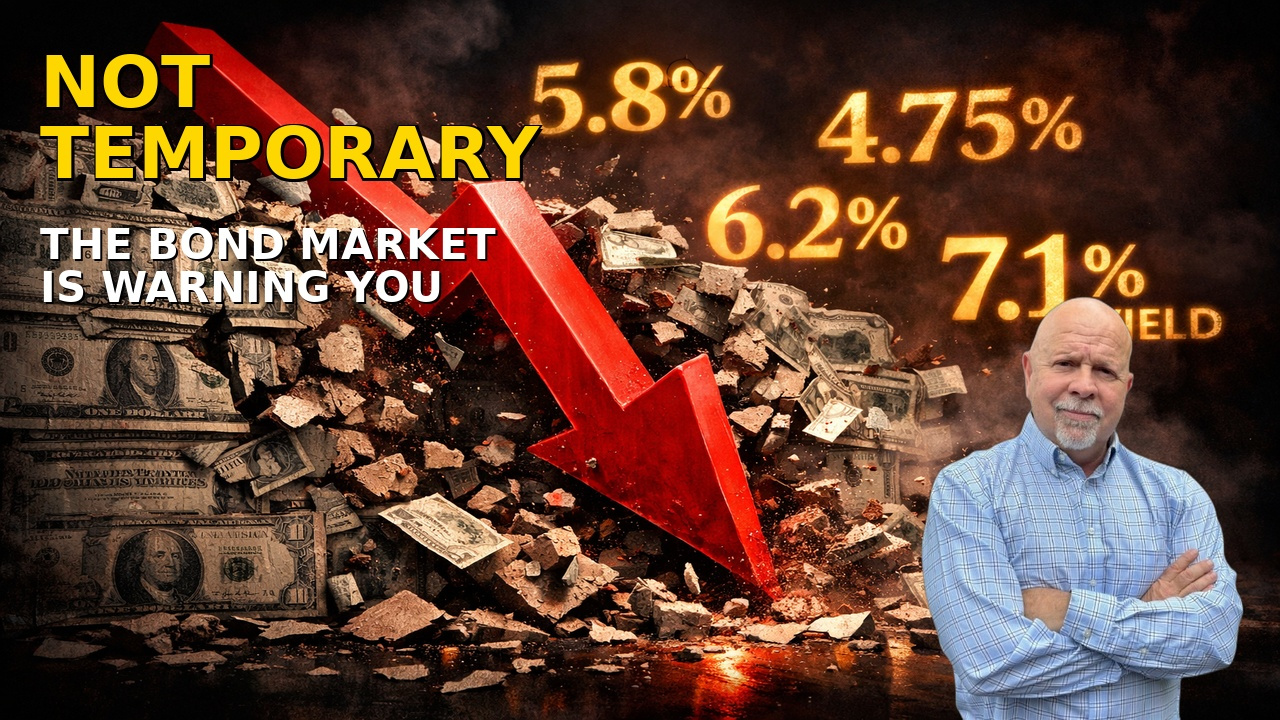
Bond Market Inflation Warning: Why Inflation May Stay Higher for Longer
In this video, this inflation-focused piece is a useful reminder that investors should watch the bond market, not just the headlines. Rising Treasury yields, firmer inflation expectations, and the possibility of more persistent price pressure all point to a market that may be less confident about easy Fed relief than many assume.

Trump’s Speech Tonight Could Be a Sell-the-News Event
In this video, this piece makes a disciplined point about event risk: even “good” news can disappoint if the market has already priced in the best-case outcome. The emphasis on weak volume, fragile rebounds, retest risk, and elevated implied volatility is a strong reminder not to mistake a headline-driven bounce for confirmed strength.

The Complete Guide to Covered Call Risk Management
In this blog, the main lesson is that covered calls are not just about collecting premium; they are about managing the position after entry. The article highlights practical discipline, including stop-loss frameworks on the underlying and the importance of rolling when conditions change.
5 Options Income Strategies That Actually Work for Conservative Investors
In this blog, the article frames options income as a toolkit rather than a one-size-fits-all answer. The most useful idea is the emphasis on simple, repeatable structures like covered calls, cash-secured puts, and the wheel strategy, where premium collection stays systematic rather than emotional.

Covered Call Tax Strategy: 5 Ways to Keep More of Your Premium Income
In this blog, this is a timely reminder that after-tax results matter just as much as gross premium. The central point is that covered call income can look attractive until poor tax positioning erodes a meaningful share of the return.
Best ETFs for Covered Calls: SPY, QQQ, IWM Compared
In this blog, this ETF comparison is useful for investors who prefer broader exposure over single-stock risk. The takeaway is straightforward: SPY offers consistency and liquidity, QQQ offers higher premium potential with more tech-driven volatility, and IWM offers higher yield potential with greater downside risk.
Upcoming Event
Podcast Episode This Week

In this podcast, “EP-183 – Business Brokerage Is an Art with Richard Green” looks valuable for readers who want to think beyond public markets. The episode appears to explore how buying and selling businesses really works, making it a useful listen for anyone interested in business ownership, deal structure, and the private side of wealth building.
