
SpaceX Covered Call Update: Rolling Down, Delta, and Defending the Trade
SpaceX Covered Call Update: Rolling Down, Delta, and Defending the Trade
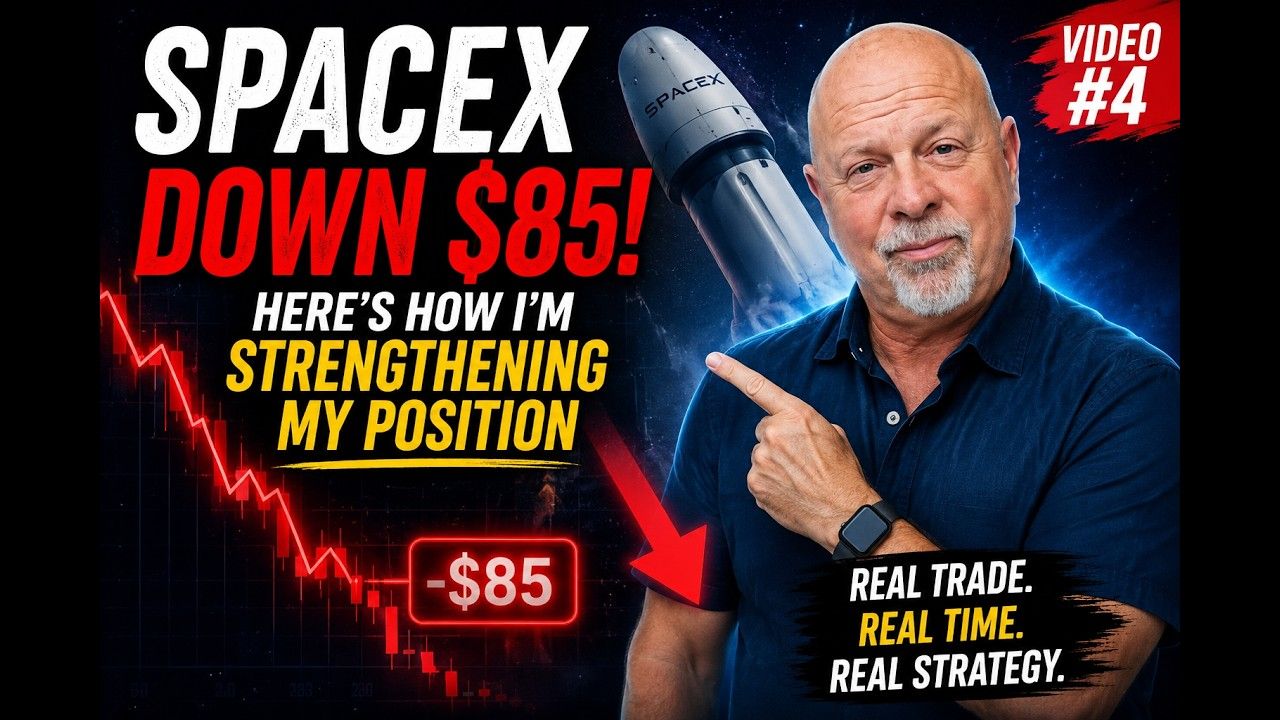
SpaceX continued to pull back after its post-IPO surge, creating another live teaching moment for covered call traders.
In this update, Mark explains why traders cannot simply sit and hope when a fast-moving stock drops sharply. He shows how defending a covered call position can reduce damage, protect capital, and prepare for a possible rebound.
The key lesson is simple: covered calls are not just about collecting premium. They require active defense, clear rolling rules, and a strong understanding of delta when the stock moves quickly.
Key Takeaways
Why This Update Matters
Mark opens the video by explaining that he did not plan to make another SpaceX update so quickly. But the stock continued to drop, creating another real-time example of covered call management.
The main point is that traders cannot simply wait for the market to come back. When a stock drops sharply, especially after an IPO surge, position management becomes critical.
SpaceX had been praised heavily during the IPO excitement, but Mark had already warned that many IPOs can pop early and then sell off. This update shows how he tries to stay bullish without allowing the pullback to destroy the position.
The Covered Call Defense So Far
Mark explains that the position started when SpaceX was trading above the 220 area. As the stock moved lower, he had already used defensive rolls to keep the position protected.
The short call moved from the 170 strike to the 155 strike, and then later down to the 145 strike. Each roll was designed to move the protective line lower as the stock declined.
The purpose was not to maximize upside during the decline. The purpose was to reduce damage and keep the position alive without turning it into dead money.
The Defensive Roll Path
- Original short call near the 170 strike
- Rolled down to the 155 strike for added cushion
- Rolled again to the 145 strike as the stock continued lower
- Focused on protecting the account before chasing upside
- Used premium and intrinsic value to offset part of the decline
Why the Loss Was Much Smaller Than Stock Ownership Alone
One of the most important comparisons Mark makes is between owning the stock outright and using a defended covered call structure.
If an investor owned a large unprotected position while SpaceX dropped sharply, the decline could have been severe. In Mark’s structure, the short calls helped offset much of that downside movement.
This is the practical value of in-the-money covered calls. They do not eliminate risk, but they can meaningfully reduce the damage when the stock moves against the trader.
Understanding In-the-Money Protection
Mark explains that the in-the-money amount on the short call can offset the movement in the base position.
If the stock is far above the short strike and then falls toward that strike, the base position loses value. But the short call also loses intrinsic value, which can create a gain on the short side.
That is why Mark likes in-the-money covered calls when there is a clear risk of a pullback. The in-the-money amount acts like a buffer against the first part of the decline.
Why Juice Can Still Create a Temporary Loss
Even though the intrinsic value offsets much of the stock decline, Mark notes that the trade can still show a temporary loss because of extrinsic value, or what he calls juice.
As SpaceX moved closer to the short strike, the extrinsic value in the option increased. That means buying back the short call became more expensive than it would have been when the strike was much deeper in the money.
That temporary loss does not necessarily mean the strategy has failed. It means the trader must understand how option pricing changes as the stock moves and as time passes.
Waiting for Time Decay to Work
Mark explains that time decay should eventually help the short call position if the trade remains properly structured.
The juice in the short option can decay over time, which may allow the income component to come back into the account as expiration approaches.
However, the trader still has to monitor the stock price relative to the strike. If the stock falls below the protected zone, more defense may be needed.
Introducing Delta
A major teaching point in this video is delta. Mark explains delta as the approximate percentage of the stock’s movement that an option captures.
For example, if a call option has a 70 delta and the stock rises $10, that option may gain roughly $7. If the stock falls $10, it may lose roughly $7.
Delta can also be used as a rough estimate of the probability that an option remains in the money at expiration, though it should not be treated as a guarantee.
Two Ways Mark Uses Delta
- To estimate how much of the stock’s move the option may capture
- To roughly estimate the probability of staying in the money
- To decide when the base position may need to be strengthened
- To prepare for a potential rebound after a sell-off
Why the Long Call Delta Matters
As SpaceX fell, the delta on Mark’s long call position also fell. That means the base position would participate less if the stock rebounded.
That can become a problem. If the trader has reduced downside risk but now owns a lower-delta base position, the rebound may not recover as quickly as expected.
This is why Mark began looking at rolling the long call down. The goal was to increase the delta and create better upside participation if the stock bounced.
Rolling the Base Position Down
Later in the video, Mark decides to roll the long call down. He sells the existing 135 call and buys a deeper in-the-money 100 call.
That move costs additional capital, but it increases the delta of the base position. In simple terms, it gives the trade more stock-like exposure again.
For Mark, this is part of trade management. When the position has been defended on the downside and the stock may be stabilizing, he wants the base position to be strong enough to participate in a bounce.
The Base Position Adjustment
- Sell the 135 long call
- Buy the deeper in-the-money 100 long call
- Spend additional debit to strengthen the base position
- Raise the delta for better rebound participation
- Keep the covered call structure in place
The Compensator Concept
Mark also introduces a concept he calls the compensator. The idea is to add or adjust contracts so the overall position better matches the exposure the trader wants.
For example, if the base position has less than full stock-like movement because the delta is below 100, adding exposure can help compensate for that difference.
This is a more advanced concept, and Mark only introduces it briefly. The main point is that covered call traders need to understand how their real exposure changes as the stock and options move.
Why This Is More Than a Simple Covered Call
Many people learn covered calls as a simple income strategy: buy stock, sell a call, collect premium. But Mark explains that this is not enough when a stock is highly volatile.
With SpaceX, the trade required defending the short strike, monitoring juice, watching delta, and strengthening the base position.
That is why this series is educational. It shows that real covered call management involves adjustments, decisions, and active risk control.
The Bottom Line
This SpaceX update shows the next stage of defending a covered call trade. The stock continued to fall, but the in-the-money short calls helped reduce the damage compared with unprotected stock ownership.
Mark’s focus then shifted from pure defense to recovery positioning. Because the long call delta had dropped, he rolled the base position lower to regain stronger upside participation if SpaceX bounced.
The lesson is not that every roll or adjustment will be perfect. The lesson is that covered call traders need to understand defense, delta, juice, and trade structure before volatility arrives.
In a fast-moving stock like SpaceX, the trader who manages risk has a better chance than the trader who simply hopes the market comes back.
Want to learn how to generate income with covered calls?
Join the Income Accelerator and learn how to use covered calls, rolling rules, trade adjustments, and income-focused portfolio management.
