
Why Market Volatility Is Your Best Friend for Covered Calls
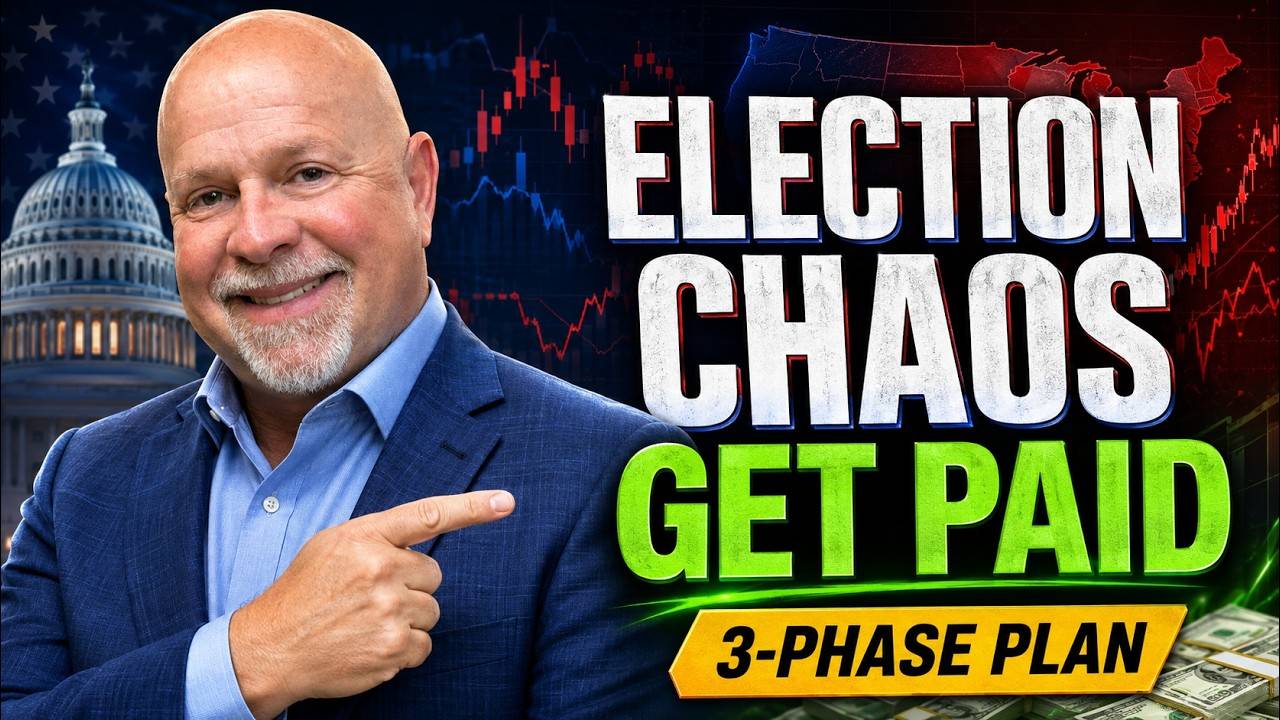
Election-Year Volatility: How Covered Calls Can Turn Market Uncertainty Into Monthly Income
Election years often bring uncertainty, headlines, and bigger market swings. While many investors see volatility as something to fear, Mark Yegge sees another possibility: higher option premiums for disciplined covered call investors.
The opportunity is not about predicting every political outcome. It is about having a system that uses volatility, manages positions, and generates income while investors wait for clarity.
Key Takeaways
Volatility Can Create Opportunity
Higher uncertainty often increases option demand, which can create larger premiums for investors selling covered calls.
Covered Calls Require Management
The strategy is not simply selling a call and forgetting about it. Strike selection, rolling, and adjustments matter.
Election Volatility Comes in Phases
Mark describes different approaches before elections, after volatility settles, and during longer election cycles.
Assignment Is Not Failure
Having shares called away can represent the maximum planned profit on a covered call position.
A System Beats Emotion
Mark emphasizes tracking positions, collecting data, and following rules instead of reacting to headlines.
Why Election Volatility Can Benefit Covered Call Investors
Mark’s argument starts with a simple idea: uncertainty creates demand for options. During election periods, traders often buy options as protection because they do not know how policies, markets, or sectors may react.
That increased demand can push option premiums higher. For someone selling covered calls, higher premiums can create an opportunity to collect more income from stocks they already own.
Mark’s core message: volatility is not automatically a problem. In a covered call strategy, volatility can become the source of higher premium income when managed correctly.
The Election-Year Covered Call Playbook
Mark explains that many investors make the mistake of treating covered calls as a one-time decision. They sell the same strike repeatedly, ignore changing conditions, and then panic when the stock moves.
His approach is different. He describes a three-phase framework that adjusts based on volatility, time, and market conditions.
Phase One: Before the Midterms
Mark describes the period before the midterms as a time when volatility may remain elevated. During this phase, he suggests using more aggressive strikes, such as calls around 5% to 7% out of the money.
The goal is to take advantage of higher premiums while collecting income each month.
Phase Two: The Consolidation Period
After the election, Mark expects volatility may settle temporarily. This becomes an adjustment period where investors can roll calls out in time and potentially adjust strike prices.
The objective is not necessarily to avoid assignment at all costs. It is to adapt the position to the new market reality.
Phase Three: The Longer Election Cycle
Looking toward the next presidential election cycle, Mark describes a more strategic approach. Investors may use calls further out of the money, perhaps 10% to 15% above the stock price, allowing more room for upside while still collecting premium.
A Covered Call Example
Mark provides a simple example. An investor owns 100 shares of a stock trading at $100. They sell a call option at a $106 strike price and collect $3 per share in premium.
That creates $300 of income from one position. Over twelve months, that could represent $3,600 in collected premium if similar monthly opportunities continue.
Mark emphasizes that this example is about understanding the mechanics. Actual results depend on the stock, option pricing, volatility, and market conditions.
Assignment Is Part of the Strategy
If a stock moves above the strike price and shares are called away, Mark views that as a planned outcome. The investor sold at the target price and collected premium along the way.
How to Handle Assignment Risk
One of the biggest concerns investors have with covered calls is assignment. Mark explains that assignment is not automatically a mistake.
If a stock is trading near the strike price with time remaining before expiration, investors have several choices:
- Roll the call up and out.
- Take the profit and redeploy capital.
- Allow assignment and move to another opportunity.
The correct choice depends on the stock, the investor’s goals, and whether they still want to own the position.
Where Volatility May Be Highest
Mark points out that different sectors can react differently during election years. Areas such as healthcare, financials, and energy may experience larger swings because policy changes can directly affect them.
Technology and consumer discretionary stocks can also experience uncertainty. For covered call investors, the idea is to focus on quality companies where volatility creates attractive premium opportunities.
Earnings and Implied Volatility
Mark also highlights earnings announcements as another period where implied volatility can increase. Before earnings, option premiums may rise because traders are preparing for a potentially larger move.
However, investors need to be comfortable with the strike price they choose. A large earnings move can change the position quickly, so planning matters.
The Mindset Difference
According to Mark, the biggest difference between successful and unsuccessful covered call investors is not the strategy itself. It is the mindset.
When markets decline and fear rises, many investors stop selling covered calls. Mark believes that is often when premiums become more attractive.
His approach is to do the opposite of emotional investors: stay systematic, track positions, and use volatility instead of fearing it.
Building a Covered Call Tracking System
Mark recommends keeping records of every position:
- The stock owned.
- The strike price sold.
- The premium collected.
- Whether the position was rolled or assigned.
Over time, this information can reveal patterns about which stocks, strikes, and approaches work best for an investor.
Mark also discusses Cash Flow IQ as a tool he uses to help organize and analyze trading decisions.
What Investors Should Watch
Volatility Levels
Higher implied volatility can create larger option premiums.
Election Headlines
Political uncertainty can influence sectors and market movement.
Strike Selection
The distance between the stock price and strike price affects income and assignment risk.
Earnings Dates
Earnings announcements can increase implied volatility and change option pricing.
Portfolio Management
Rolling, assignment decisions, and tax considerations require planning.
The Bottom Line
Election-year volatility can make investors nervous, but Mark believes uncertainty can create opportunities for disciplined covered call investors.
The key is not trying to predict every political outcome. It is building a process: choose quality stocks, sell calls based on volatility, adjust positions when needed, and track the results.
In Mark’s view, volatility is not the enemy of an income strategy. With the right system and discipline, it can become the source of opportunity.
Want to Learn How We Generate Income Regardless of Market Direction?
Watch the free masterclass to learn how the Cash Flow Machine approach helps investors build disciplined income strategies using stocks and options.
Watch the Free MasterclassSerious Investors Join Us Inside Elite
Elite teaches the broader Cash Flow Machine system, including stock selection, options income strategy, position management, and disciplined portfolio planning.
Learn More About Elite