
Insider Tips - Weekly Stock Market Report - Week March 30, 2026
Insider Tips — March 30, 2026
This week’s market message is straightforward: conditions remain defensive, and investors should treat the current tape with respect. The tone from this week’s update is not one of panic, but of realism. Major indexes are under pressure, volatility is rising, and many of the market’s leadership names are no longer acting like leaders. In that kind of environment, discipline matters more than conviction.
The biggest risk right now is trying to outguess the bottom. That temptation shows up every time the market sells off sharply, especially when quality names start to look “cheap.” But weak markets can stay weak longer than most investors expect, and buying too early in a falling tape can do real damage to capital. The more practical stance here is patience: protect your downside, manage risk aggressively, and wait for clearer evidence that the market has actually turned.
That does not mean opportunity has disappeared. It means opportunity is shifting. Instead of forcing upside trades, the better setup may be in capital preservation, covered call positioning, tighter stops, and building a watch list of strong businesses you may want later when conditions improve.
Technical analysis
From a technical standpoint, the market still looks unhealthy.
The Nasdaq has rolled over hard and, according to this week’s commentary, has now given back gains stretching back to roughly late summer. That matters because it tells us this is not a shallow pullback. It is a meaningful reset in risk appetite, and it is happening with enough consistency to keep traders from assuming a quick recovery.
The S&P 500 and the Dow are both trading below their 200-day moving averages, which is a clear sign that the longer-term trend has weakened. The New York Stock Exchange Composite is holding up a little better, still sitting above its 200-day moving average, but even there the short-term pattern has been ugly, with a persistent decline over the last several weeks.
Volatility is also moving in the wrong direction. The VIX, or panic index, has been trending higher, which reinforces the message coming from price: fear is building, not fading. That does not mean volatility will rise forever, but it does mean the market is not yet signaling a healthy, low-stress environment for aggressive buying.
Bond action adds another layer of caution. Treasury prices have been falling, which suggests the market is repricing risk and becoming less comfortable with the usual “safe haven” trade. When both equities and bonds are under pressure, investors have to be especially careful about assuming traditional defensive positioning will automatically protect them.
Market trends I’m calling out
One of the most important themes this week is the value of having a circuit breaker in your plan. That means knowing in advance where you will cut a losing position before a manageable decline turns into a major portfolio problem. In this kind of market, hope is not a strategy. Investors who refuse to sell weaker names often end up tying up capital for months or even years just trying to get back to even.
Another important trend is the breakdown in former leadership areas, especially around large-cap technology and AI-related names. The AI story may still be powerful over the long term, but right now the charts are not confirming it. That distinction matters. A compelling narrative does not override deteriorating price action.
There is also a growing disconnect between selective long-term optimism and short-term market reality. It may very well become a great time to buy quality companies, but this week’s update argues that investors do not need to rush that process. In weak markets, timing still matters. Waiting for better price confirmation is not cowardice. It is discipline.
Finally, one of the few areas still showing strength is energy, but even there the move looks extended. Strength alone is not enough. If a chart has already gone near-vertical, the better trade may be to monitor it rather than chase it.
Individual stocks and sectors: what I’m seeing
Energy ETF
Energy remains one of the standout areas of relative strength, which is notable in a market where so many charts are deteriorating. That said, the move now looks stretched. The easier part of the trade appears to have happened earlier, and at this stage the setup looks more like something to watch than something to chase. Extended charts can stay strong, but they can also reverse quickly.
Treasury market
Treasuries are worth watching less as a trade idea and more as a signal. Falling bond prices suggest that investors are demanding more compensation for risk and are not treating the market backdrop as especially stable. When the “safe” side of the market is under pressure too, it reinforces the need for caution across the board.
Apple
Apple looks relatively healthy compared with much of the market. It recently tested its 50-day moving average and has managed to bounce, which is a constructive sign. The chart is not perfect, and a retest of the 200-day moving average would not be surprising, but compared with other large-cap names, Apple still looks more orderly than broken. The main missing ingredient is stronger volume.
Nvidia
Nvidia continues to be one of the market’s most important stocks, but the chart has weakened. The recent rollover suggests that the market is no longer rewarding the AI narrative the way it did before. That does not make Nvidia a bad company, but it does make it a more difficult technical setup. For now, this looks like a stock that deserves caution rather than aggressive upside betting.
Micron Technology
Micron’s post-earnings action has not been reassuring. Although it initially recovered after earnings, the stock has since faded and slipped below the 50-day moving average. That puts the chart in a more vulnerable position. If weakness persists, lower support zones could come into play quickly. This is the kind of chart that can look manageable until it suddenly is not.
Amazon
Amazon is approaching an important area on the chart, with a bearish “H” pattern developing in the analysis from this week’s update. If the stock breaks lower from here, the setup could worsen in a hurry. Amazon remains a major long-term name, but near term, the chart is sending a warning rather than an invitation.
Meta Platforms
Meta looks vulnerable. The stock appears to be trying to consolidate, but the action under the surface is not especially convincing. Gap-down behavior combined with weak follow-through volume creates a fragile technical picture. This does not look like a chart to force. If anything, it is one that argues for patience and respect for downside risk.
Ciena
Ciena has been one of the stronger names, but even stronger charts can flash caution signals near the top. This week’s update pointed to a reversal pattern that could mark short-term trouble after a run higher. In a red market, even relative strength needs to be evaluated carefully because leadership can change fast.
Key takeaways
- This is still a defensive market, and the burden of proof remains on the bulls.
- Trying to catch the exact bottom is less important than protecting capital.
- Major indexes below key moving averages are a warning, not a minor detail.
- Rising volatility and weak bond action both support a more cautious stance.
- Large-cap tech and AI names are not offering the same upside leadership they once did.
- Relative strength matters, but extended charts should not be chased blindly.
- A clear exit strategy, including stops or circuit breakers, is essential in this environment.
Conclusion
The most useful mindset for this week is calm, disciplined, and selective. Markets like this can pressure even strong investors into doing too much, too soon. But the goal is not to be the first person buying the turn. The goal is to preserve capital, stay flexible, and be ready when the market starts offering higher-probability setups again.
Until that happens, the right move may be to keep risk tighter, avoid emotional trades, and let the market prove that conditions are improving. Falling knives eventually stop falling. The job is to wait until that is actually happening, not assume it in advance.
Current Market Condition

This is a weak market with rising stress and fewer safe places to hide. Big indexes are under pressure, leadership stocks are wobbling, and volatility is creeping higher. That means investors should stay cautious, focus on defense, and avoid forcing trades just because prices have already fallen.
Stock Tips This Week

How Peter Thiel Built a Tax-Free Roth IRA Fortune
In this video, the lesson is less about chasing an extraordinary outcome and more about understanding structure. The core takeaway is that long-term wealth is shaped not only by returns, but by where those returns compound. The piece uses Peter Thiel’s Roth IRA story to highlight tax-aware investing, asymmetric upside, and the importance of setting up the right vehicle early so more of your gains stay intact over time.

How to Generate Portfolio Income in Volatile Markets
In this video, the focus shifts from pure appreciation to building a portfolio that can still produce cash flow during choppy markets. The article frames covered calls as a rules-based income strategy rather than a one-off trade, emphasizing that the real value comes from having a framework for defense, balance, or growth depending on market conditions. It is a useful reminder that income can help cushion drawdowns and reduce emotional decision-making when volatility rises.

How to Defend Covered Calls in a Red Market
In this video, the main strategy centers on rolling covered calls down when stocks weaken. The idea is to use short-term rallies or improved option pricing to reset strikes, restore premium income, and gradually reduce cost basis instead of leaving a stagnant position untouched. The broader lesson is that weak markets reward proactive management, not passive hope.
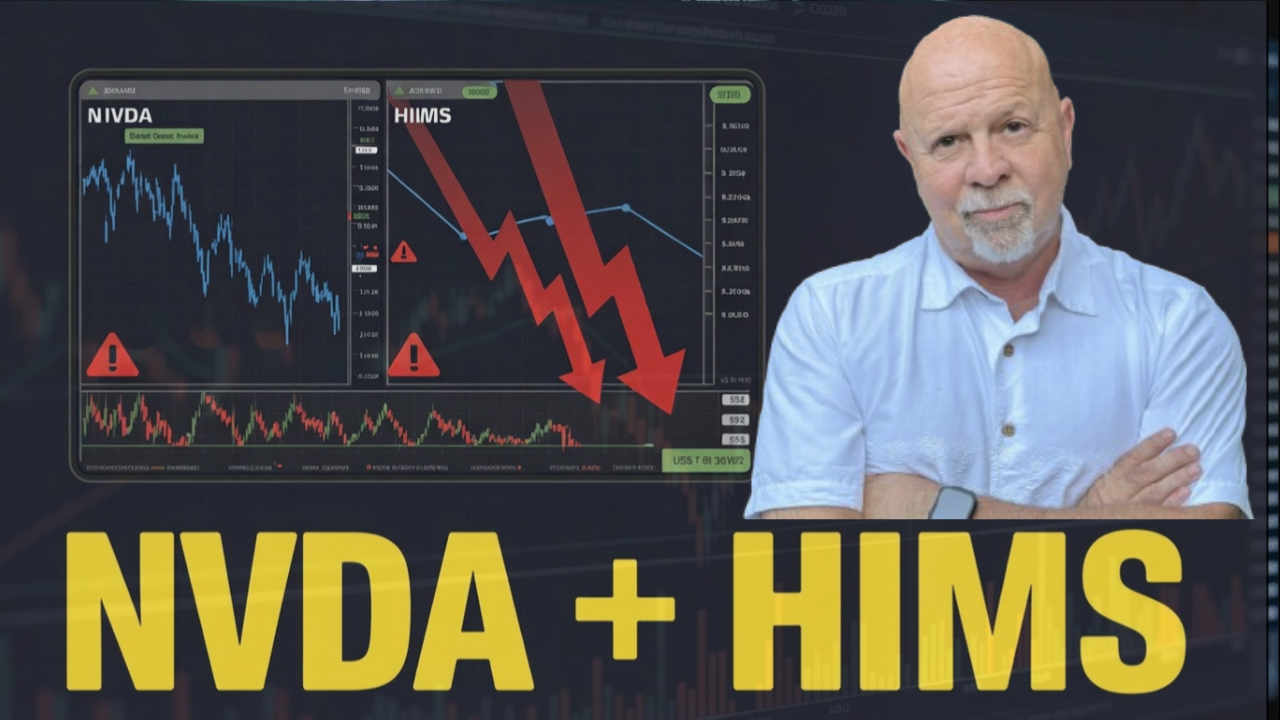
Hims & Hers and Nvidia: Two Popular Stocks Showing Warning Signs
In this video, the main lesson is to separate a strong story from a strong chart. The analysis argues that Hims & Hers is showing technical weakness through failed rallies, lower highs, and pressure around key moving averages, while Nvidia may still be a great business but is not yet showing decisive price strength. For readers, the takeaway is simple: popularity alone is not a buy signal, and patience matters when charts are not confirming the narrative.

What Traders Should Do When Markets Turn Unstable
In this video, the message is that unstable markets require a shift from offense to defense. Instead of trying to pick the exact bottom or chase every bounce, the emphasis is on protecting capital, creating income where possible, and preparing watch lists for when conditions improve. It is a disciplined reminder that structure and patience matter more than bravery in a volatile tape.

Big Market Bounce, But Is the Red Market Really Over?
In this video, the key point is that one sharp rally does not necessarily change the broader market trend. The analysis treats bear-market bounces as potentially misleading and suggests that elevated volatility may still favor income-oriented tactics rather than aggressive risk-taking. The practical takeaway is to stay flexible and let the market prove that conditions have genuinely improved before assuming the danger has passed.

The Retirement Income Strategy Wall Street Rarely Talks About
In this video, the focus is on turning existing stock holdings into recurring income, especially for retirees or income-focused investors. Rather than relying only on dividends, bonds, or periodic withdrawals, it presents covered calls as a structured way to create weekly or monthly cash flow, with trade adjustments and in-the-money calls helping add consistency and downside cushion. The broader value is psychological as well as financial: a portfolio that pays you can feel more stable than one that depends entirely on market appreciation.
Upcoming Event:

Strategy Intensive — Chandler, Arizona | April 17–19
In just a few weeks we’re hosting an exclusive 3-day Strategy Intensive for investors who are serious about refining execution, strengthening decision-making, and applying the system at a higher level in real time. Wealth Accelerator Live: The Strategy Room will take place April 17–19, 2026 at the Crowne Plaza San Marcos Resort in Chandler, Arizona.
This is not a traditional conference, nor is it a passive sit-and-listen event. It is a private, high-focus working session designed for investors who want a closer look at the strategy, greater precision in their process, and a more disciplined approach to how they operate day to day.
Throughout the three days, Mark and the team will guide attendees through the system in a practical, hands-on environment—helping them identify gaps, simplify execution, and build a more consistent and repeatable way to perform.
To preserve the quality of the experience, attendance is limited to just 60 participants. Once capacity is reached, registration will officially close.
Podcast Episode This Week

EP-182 – Know Your TYKR with Sean Tepper
In this episode, Sean Tepper, founder and CEO of TYKR, discusses a more systematic approach to stock investing through data, process, and disciplined decision-making. The conversation explores value investing, reducing emotion in buy-and-sell decisions, and using a clearer framework to cut through market noise, making it especially relevant for readers who want a more structured approach to long-term investing.
