
Insider Tips - Weekly Stock Market Report - Week June 01, 2026
Insider Tips — June 01, 2026
The market tone this week remains firmly constructive. Major indexes continue to push toward or into new-high territory, volatility has cooled, and the overall backdrop still favors staying aligned with the trend rather than trying to outsmart it. When markets are green, the temptation is often to call them “too expensive” and step aside too early. But the better discipline is to respect price action, follow the evidence, and let the market prove when conditions have changed.
The main opportunity right now is that leadership stocks are still working. Breakouts are showing up, strong names are extending, and the market timing backdrop remains supportive. The main risk is that optimism is becoming broad enough that discipline matters more, not less. A strong market can reward participation, but it can also punish late entries, emotional chasing, and weak risk control.
The stance this week is straightforward: stay bullish while the indicators remain bullish, but be selective. The best setups are not simply the stocks going up the fastest. They are the stocks with strong charts, improving relative strength, clean pivots, and enough structure to manage risk.
Technical Analysis
The market timing indicator remains on four green lights, which keeps the probability skewed toward higher prices. The primary trend turned positive in early April, and the market has continued to follow through into the end of May. That does not guarantee every stock will rise, but it does mean the wind is still generally at the market’s back.
The Nasdaq is leading with repeated all-time highs. The S&P 500 is showing a similar “check mark” recovery pattern, with a strong move off the lows and continued pressure toward higher levels. The Dow has also pushed to new highs, confirming that strength is not limited to one narrow corner of the market.
The one area that deserves caution is the broader New York Stock Exchange Composite, which has not confirmed with fresh highs. That does not invalidate the rally, but it does suggest breadth is not perfect. When three major indexes are confirming and one broader measure is lagging, the message is not “sell everything.” The message is “participate, but pay attention.”
Volatility also supports the bullish case for now. The VIX has dropped into the 15s, showing that panic has come out of the market. Lower volatility often means sidelined money is more willing to come back into risk assets. Still, low volatility can also lead to complacency, so this is a time to stay engaged without becoming careless.
Market Trends I’m Calling Out
The biggest theme this week is momentum with selectivity. The market is rewarding stocks with strong technical structures, clear breakouts, and leadership-quality relative strength. It is not rewarding every large-cap name equally.
The second theme is liquidity. The market continues to act as though risk assets are receiving a bid, even while parts of the bond market remain under pressure. Whether that support comes from liquidity, institutional positioning, or simple momentum, the practical takeaway is the same: price is confirming strength.
The third theme is rotation. Nvidia remains important, but it is not acting like the strongest semiconductor name on the screen. Capital appears to be rotating into other AI, chip, infrastructure, and data-center-related names. This is why relative strength matters. In a bull market, owning the right names can matter more than simply being bullish.
The final theme is income while waiting. Not every stock is going to move like AMD or Micron. Some stocks, such as Meta, may go sideways for long stretches. For investors using covered calls, those periods can still create opportunity through option premium, or what we often call “the juice.”
Individual Stocks: What I’m Seeing
Apple
Apple continues to act well after a clean breakout. The chart had been setting up for weeks, with shorter-term moving averages beginning to align and the stock pushing into new-high territory. The recent pullback on lighter volume is not a major red flag by itself. For now, Apple remains one of the cleaner leadership names, especially for investors who are comfortable using covered calls against strength.
Nvidia
Nvidia is still an important market stock, but the chart is less convincing than it was earlier in the move. After spending several months in consolidation, it built a cup-style pattern and broke out, but the post-earnings action has been underwhelming. The stock has drifted back toward a prior breakout zone, and the relative strength line has weakened. That does not mean Nvidia is broken, but it does mean other names currently have stronger momentum.
AMD
AMD is one of the standout leadership names. The stock has shown powerful relative strength and has continued higher after its gap-up move. This is the kind of action that shows real institutional interest. That said, after a major advance, the key is not to chase blindly. Strong stocks can stay strong, but entries still matter.
Broadcom
Broadcom is sitting near a viable breakout area. The stock has spent time building a base and is now attracting renewed buying interest. This is one to keep on the watchlist, especially because it is close enough to a potential buy zone to be actionable without being wildly extended. The key is patience: do not chase a breakout after it has already moved too far from the pivot.
Micron
Micron has had a major move and is now too extended for a fresh entry. The stock broke out after a difficult stretch, recovered sharply, and then moved significantly higher. That is excellent action for those already in the trade, but not every good chart is a good buy at any price. At this point, Micron is a watch-and-wait name rather than a chase.
IREN
IREN is tied to the data-center, crypto, and AI-infrastructure theme, and the chart is starting to look stronger. The stock has moved back above key moving averages and is testing prior breakout levels. It remains more speculative than many large-cap leaders, but technically, it is showing improvement. This is a name where risk control matters because the theme can move quickly in both directions.
OKLO
OKLO is not showing the same level of strength. The stock remains below its 200-day moving average while sitting above the 50-day, which creates a mixed technical picture. With weak relative strength and no clear leadership signal, there is not a strong reason to force a trade here. It is not necessarily a sell, but it is also not a high-conviction buy.
Tesla
Tesla has one of the more interesting technical setups on the board. The stock has been building a long cup-and-handle pattern, with a potential pivot near the prior high area. The handle gives the stock a cleaner structure and could provide a launch point if the market gets the right catalyst. This is still a name that needs follow-through, but the pattern itself is compelling.
Amazon
Amazon is near a buy zone and attempting to break out, but volume has not been especially convincing. The company’s numbers remain solid, though not necessarily exciting enough to make the chart a clear leader. Amazon may work, but compared with stronger charts elsewhere, it is not the most compelling setup this week.
Rocket Lab
Rocket Lab is attracting attention as a space-related proxy ahead of the reported SpaceX IPO timeline. The stock has already moved, so the risk is chasing after enthusiasm has already built. Still, the broader space theme is likely to remain active as investors look for public-market ways to participate in the sector. Treat this as a watchlist idea that requires careful entries.
Microsoft
Microsoft is not showing the same excitement as other large-cap technology names. There was some improvement in the recent move, including a gap higher, but the broader chart does not stand out compared with stronger leadership stocks. Microsoft may remain a quality company, but from a trading perspective, there appear to be better charts elsewhere.
Meta
Meta remains flat and undecided. The market does not seem fully convinced about the company’s AI direction, even though Mark Zuckerberg has a long history of executing well in social media. For now, the stock looks more like a sideways candidate than a momentum leader. That can make it less appealing for breakout traders, but potentially more interesting for covered call investors looking to collect income while the stock ranges.
Key Takeaways
- The market remains bullish while the timing indicator stays on four green lights.
- Nasdaq, S&P 500, and Dow strength continue to support the rally.
- The NYSE Composite lag is a caution signal, not a reason to abandon the trend.
- Low volatility shows fear has cooled, but it also raises the risk of complacency.
- Strong charts such as Apple, AMD, Broadcom, and Tesla deserve more attention than laggards.
- Extended winners like Micron should be respected, not chased.
- Covered calls remain useful for quality stocks that move sideways or grind higher.
Conclusion
This is a market where discipline matters. The trend is bullish, leadership is visible, and there are plenty of opportunities for traders who know how to read charts and manage entries. But a green market is not permission to buy anything at any price.
The best approach is to stay aligned with the market while remaining selective. Focus on stocks with strong fundamentals, strong charts, improving relative strength, and clear risk points. When stocks move sideways, consider whether covered calls can turn waiting time into income. When stocks become extended, be patient enough to let the next setup come to you.
The market is still giving investors opportunities. The goal is to take them with structure, not emotion.
Current Market Condition
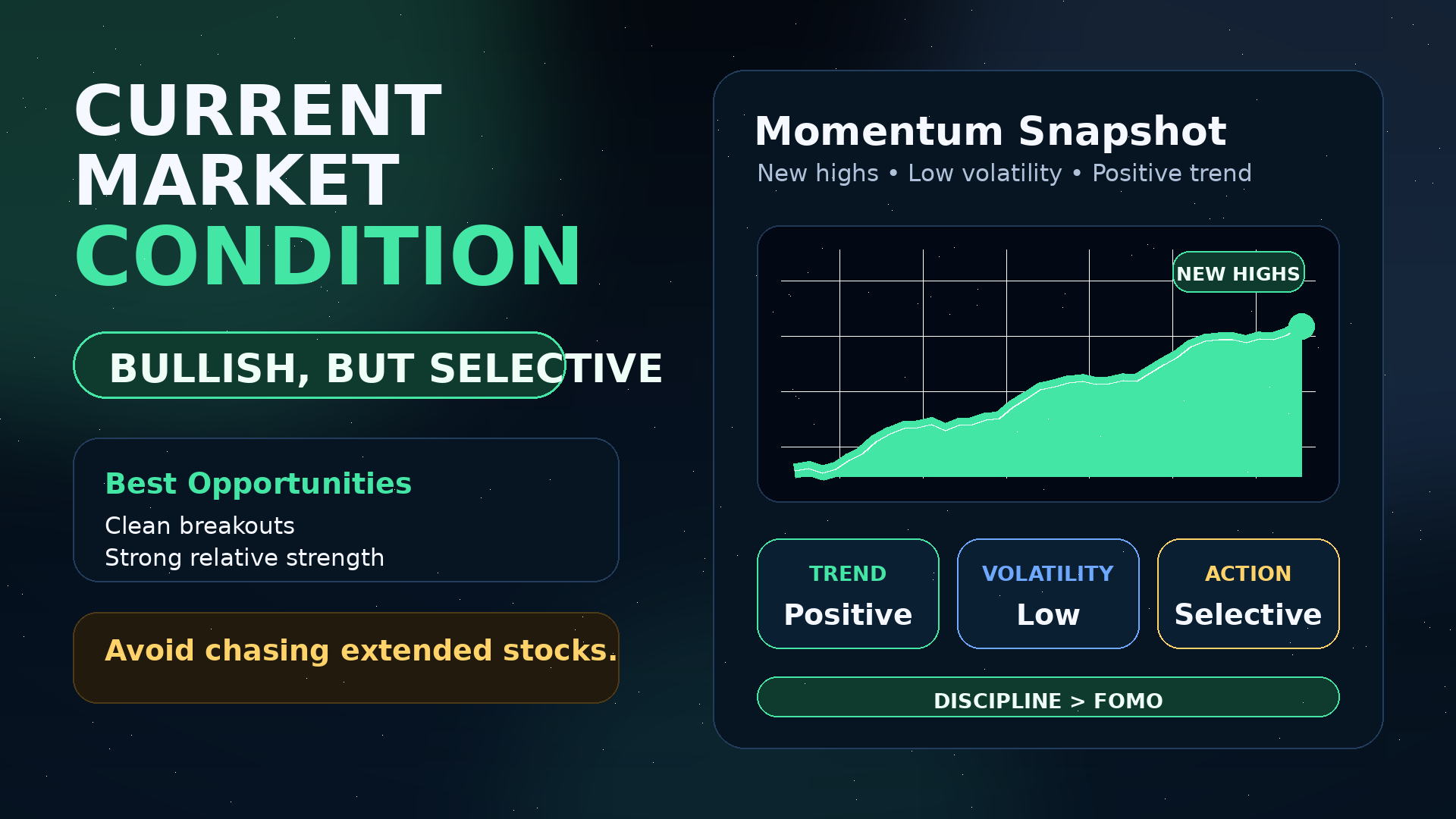
The current market environment is bullish but selective. Major indexes are pressing into new highs, volatility is low, and momentum remains positive. At the same time, not every stock is participating equally. The strongest opportunities are in names with clean breakouts, strong relative strength, and clear institutional demand. The biggest mistake right now is either sitting out because the market “feels too high” or chasing extended stocks without a plan.
Stock Tips This Week
The VIX Crush Trade: How Implied Volatility Can Create Two Paydays
In this video, the key lesson is that volatility spikes can create opportunity for disciplined options sellers. When fear rises, option premiums often expand, and traders may be able to collect premium while also benefiting if implied volatility later contracts. The important takeaway is that this is not “free money.” It requires defined risk, position sizing, and a clear exit plan.

ETF vs. Single-Stock Covered Calls: Which Strategy Fits Your Income Plan?
In this video, the key lesson is that ETF covered calls and single-stock covered calls may both generate income, but they carry very different risk profiles. Broad ETFs such as SPY or QQQ can offer a more diversified and manageable foundation, while individual stocks may provide higher premiums but also bring more concentrated company-specific risk. The practical takeaway is not to chase the largest premium. Investors should focus on liquidity, position sizing, earnings risk, and whether they would be comfortable owning the underlying stock or ETF even without the option income.

Options for Beginners: The First Five Concepts Every New Trader Must Master
In this blog, beginners are introduced to the core building blocks of options trading: calls, puts, strike prices, expiration, risk graphs, and position sizing. The message is simple but important: options should not be treated like lottery tickets. Traders need to understand the contract, the obligation, the risk, and the exit before placing real capital at work.

Sequence-of-Returns Risk in a High-CAPE Environment
In this blog, the focus is on why the order of investment returns matters so much, especially for investors near or in retirement. A bad market sequence early in retirement can damage a portfolio even if long-term average returns look acceptable. Covered call income is presented as one way to reduce the pressure to sell shares during flat or weak markets, though it still requires strict risk management.
When Not to Use Covered Calls
In this blog, the lesson is that covered calls are useful, but not always appropriate. They work best on stocks that are moving sideways or modestly higher, not on names with explosive upside potential or binary event risk. The key question before selling a call is simple: would you be comfortable losing the shares at the strike price?
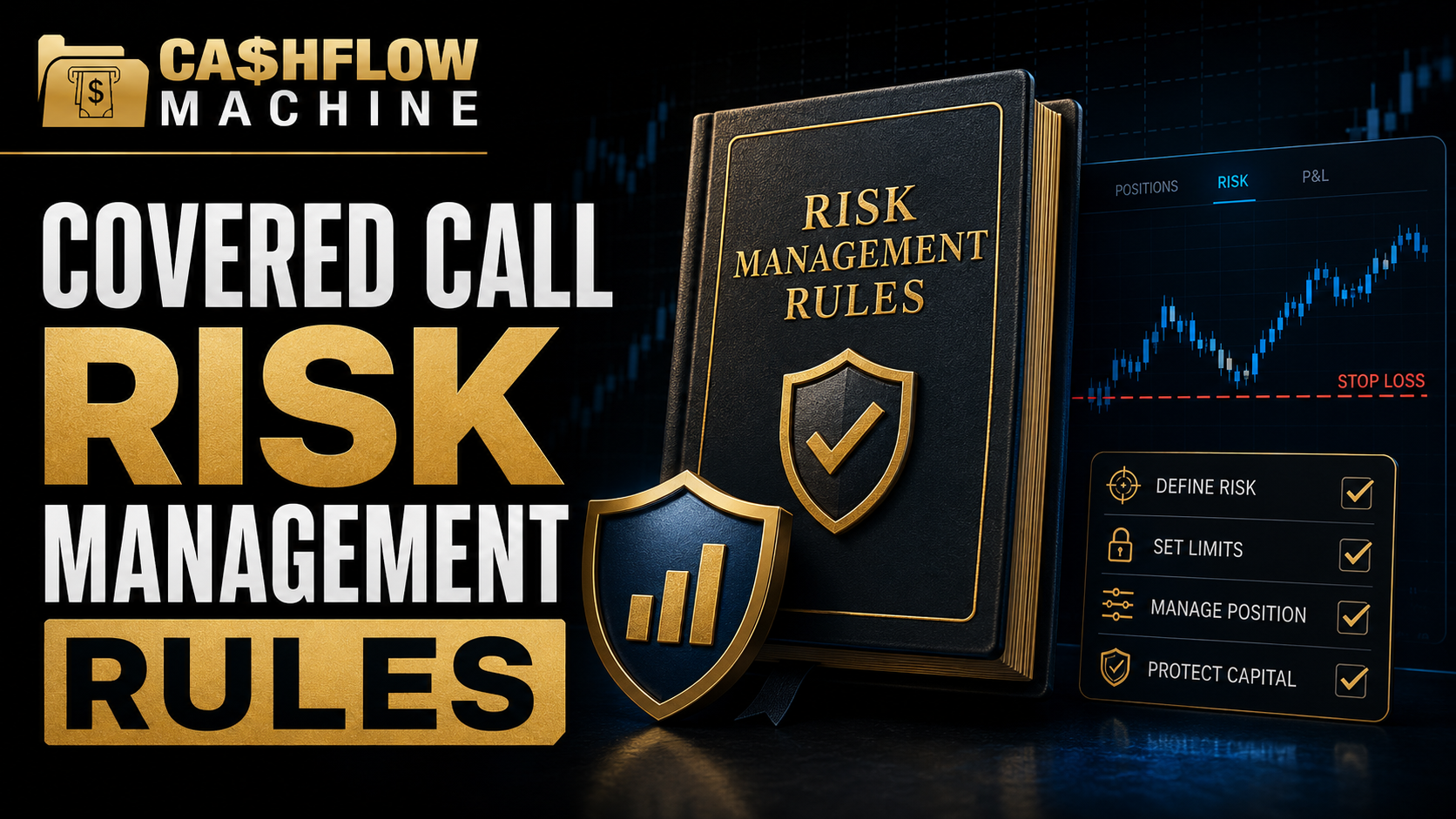
Covered Call Risk Management Rules
In this blog, the emphasis is on risk controls that keep covered call strategies from becoming dangerous. The most important rules include defining a stop before selling the call, limiting position size, rolling only when the trend still supports it, and keeping a written plan. Income strategies only work over time if losses are contained.
Podcast Episode This Week

In this podcast, Mark Yegge sits down with AI strategist Sam Sova, co-founder of Subatomic, for a conversation focused on how AI is reshaping business operations, automation, and the future of work. For readers interested in the bigger picture beyond weekly market movements, the episode offers a timely complement to the market update by showing how AI co-workers, agentic workflows, and smarter systems are helping companies save time, strengthen client relationships, and unlock new opportunities for growth.
