
Insider Tips - Weekly Stock Market Report - Week June 22, 2026
Insider Tips — June 22, 2026
A Green Market, But Not a Free Pass: Rotation, AI Leadership, and Income Opportunities
This week’s market tone is constructive, but not wildly bullish. The market timing signal has moved back into green after spending time in yellow and red, which means investors should be paying closer attention to new opportunities. That does not mean the market is suddenly easy. It means probabilities have improved enough to begin looking more seriously at quality setups, relative strength, and income opportunities.
The major indexes are still dealing with the same wall of worry: geopolitical tension, oil prices, interest-rate uncertainty, and Federal Reserve expectations. Yet despite those concerns, the market continues to grind higher. It is climbing the wall of worry, but not aggressively. The move is steady, selective, and somewhat uneven.
That is the key message this week: the market is improving, but leadership is not perfectly clean. Some areas are acting very well, especially AI infrastructure, chips, energy, and select industrial names. Other former leaders are lagging or struggling below key moving averages. This is a market that rewards selectivity, not blind optimism.
Technical Analysis
The Nasdaq has been bouncing around its 50-day moving average and recently started to push higher again. After a gap up, it has been trying to work its way back toward prior highs. The move is encouraging, but it is not explosive. For a market that is trying to regain momentum, the Nasdaq needs to keep building above the 50-day and show stronger leadership from the major technology names.
The S&P 500 is showing a similar pattern. It remains constructive, but not overwhelmingly strong. It is close enough to its highs to keep investors engaged, but the price action still feels more like a controlled advance than a broad, high-energy breakout.
The Dow Jones Industrial Average appears stronger relative to some of the other major averages. It is trading close to its highs and showing better stability. That matters because it suggests the market is not only relying on a handful of technology names. Broader participation from industrial and traditional large-cap areas can help support the overall market.
The New York Stock Exchange Index, which gives a broader read on the market, also remains important. Even after some rough action, it is still holding up reasonably well. A strong broad index would confirm that the green-market signal has deeper support beyond just mega-cap technology.
Volatility is also helping the market’s case. The VIX is sitting around a calmer zone near the mid-teens, which suggests there is not much panic in the tape right now. A quiet VIX does not guarantee upside, but it does create a better environment for disciplined option sellers and income-focused traders.
Market Trends I’m Calling Out
The first major theme is that the market is green, but not euphoric. That is actually useful. When the market improves without excessive excitement, there can be room for disciplined entries. The focus should be on stocks showing relative strength, clean technical structure, and strong sector support.
The second theme is rotation inside the AI trade. AI is still a dominant market narrative, but the leadership is not as simple as “buy the biggest AI name.” Some of the strongest action is showing up in the supporting infrastructure: memory, chips, storage, data centers, and energy. That tells us the market may be shifting from pure AI excitement into the companies that help power and build the AI ecosystem.
The third theme is energy for data centers. As AI demand grows, power demand becomes a real investment theme. That is why energy-related and infrastructure-adjacent names are becoming more important. The market is not only rewarding software or chip design. It is also rewarding companies connected to electricity, power generation, and industrial infrastructure.
The fourth theme is the uneven performance of the Magnificent Seven. Some of the biggest technology stocks are not leading with the same strength investors may expect. When major names trade below important moving averages or fail to reclaim leadership, it is a warning that the market’s strength is more selective than broad-based.
The final theme is income discipline. In a green market, investors can look for opportunity, but the best approach is still structured. Covered calls, premium harvesting, and risk-defined income strategies can work well when volatility is controlled, but position selection and execution matter.
Current Market Condition
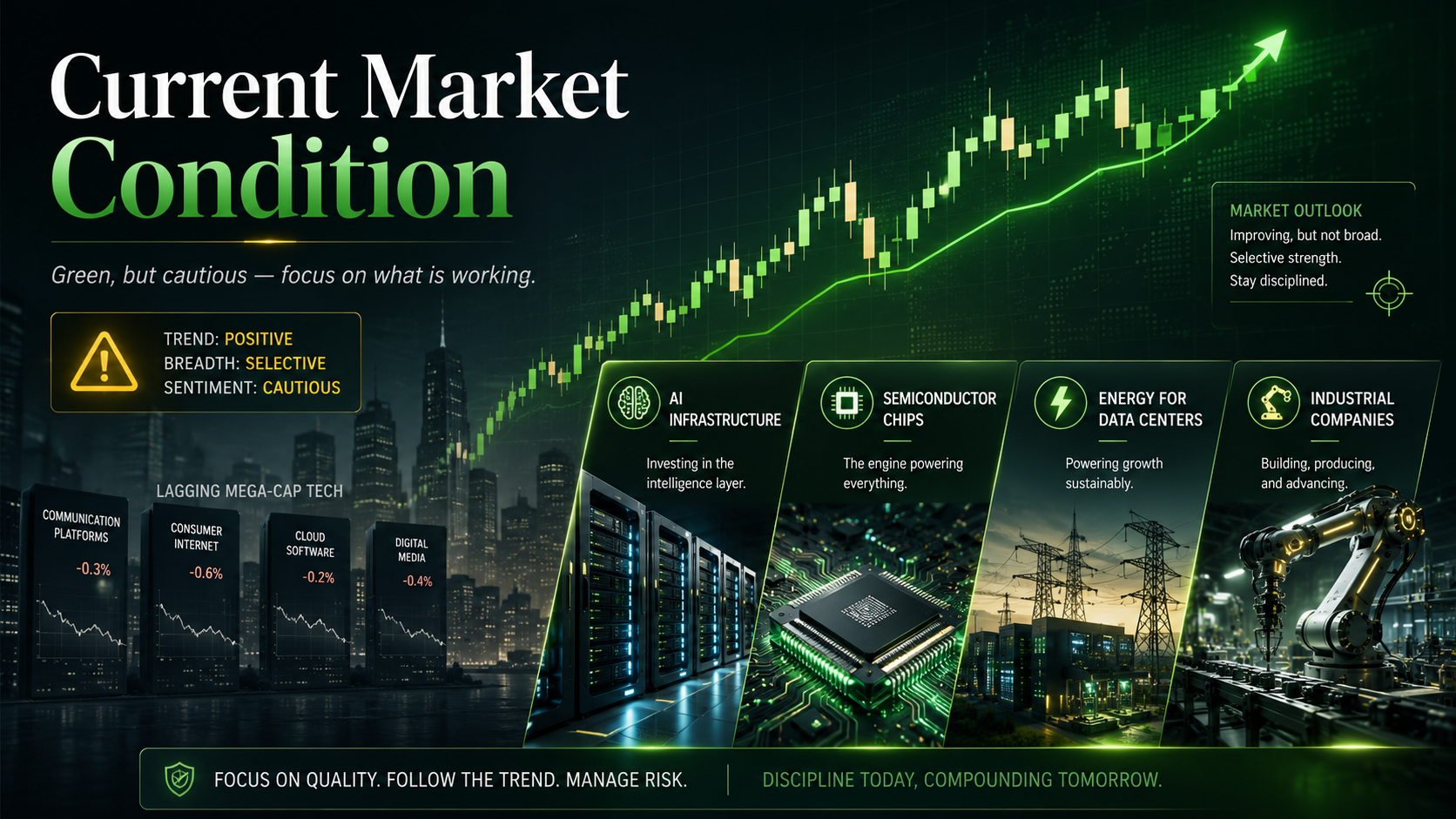
The current market condition is green, but cautious. The market is improving and investors should be engaged, but this is not a broad, easy, high-energy rally yet. Selectivity matters. The strongest areas are AI infrastructure, chips, energy for data centers, and certain industrial names. Some mega-cap technology leaders are still lagging, so investors should focus on what is working rather than forcing trades in familiar names.
Individual Stocks: What I’m Seeing
Apple
Apple’s chart remains one of the more constructive large-cap setups. The stock has pulled back recently, but the broader trend still appears intact. The key point is that Apple remains in a reasonable technical zone rather than breaking down in a dramatic way.
For income investors, Apple can still be a name to monitor because it has liquidity, option volume, and institutional interest. The important question is whether the recent pullback turns into a healthy reset or develops into a deeper loss of momentum.
Nvidia
Nvidia is the stock that deserves close attention, but not necessarily for bullish reasons. For a company expected to lead the AI trade, the chart is not acting as powerfully as many investors might expect. It is near the 50-day moving average, but it is not clearly leading the market back to new highs.
That does not mean Nvidia is broken, but it does mean investors should watch it carefully. If AI remains the dominant market theme, Nvidia should ideally be one of the strongest names on the board. If it continues to lag while other AI infrastructure names lead, that rotation becomes important.
SanDisk
SanDisk is one of the standout names in the AI infrastructure theme. The stock has shown powerful momentum and is trading near high ground. This is the kind of chart that shows where money is actively flowing.
The bigger lesson is not simply that one stock is strong. The lesson is that the market is rewarding “picks and shovels” companies tied to storage, memory, chips, data centers, and infrastructure. That theme may continue to matter as long as AI demand remains strong.
Micron
Micron is showing similar strength within the chip and memory space. The chart reflects strong institutional interest and supports the broader idea that AI infrastructure remains one of the market’s more active themes.
For traders, the lesson is to respect relative strength. When a stock is moving better than the broader market and belongs to a strong theme, it deserves attention. The risk is chasing extended moves, so patience around pullbacks and support levels remains important.
AMD
AMD is also participating in the semiconductor strength. The stock is close to its highs and remains part of the broader chip leadership group. While it may not be as dominant as some other names, the chart still reflects improving momentum.
The key is follow-through. If AMD continues to hold near highs while the market stays green, it can remain on the watchlist. If it loses relative strength, that would be a signal to shift focus toward stronger names in the group.
Intel
Intel has been showing renewed strength and is pushing into an important technical area. The chart suggests a possible comeback attempt, with strong relative strength compared with where the stock has been historically.
However, investors should be careful around double-top areas or extended moves. A stock can look strong and still need time to digest gains. Intel is worth watching, but clean entries matter.
GE
GE continues to perform well after breaking out from a larger technical pattern. The move has been strong, and relative strength is improving. However, after a sharp advance, it may no longer be an ideal fresh entry point.
This is an important distinction. A stock can be acting well without being buyable at the current moment. For disciplined investors, the better opportunity often comes on a controlled pullback or consolidation rather than chasing strength after the fact.
Bloom Energy
Bloom Energy is another strong name tied to the energy and data-center power theme. The stock is trading near high ground and has shown strong price action. Its renewable energy angle gives it a place within the broader AI infrastructure conversation.
The key takeaway is that energy is not just a defensive sector in this market. Certain energy and power-related names are becoming growth-adjacent because of the demand created by AI, data centers, and industrial electrification.
Oklo
Oklo represents the more speculative side of the power theme. The company is tied to small-footprint nuclear reactor technology, which could become relevant for factories, data centers, and large-scale power needs.
The chart, however, has already had a major move and then a significant decline. That makes it a more complicated setup. The story is interesting, but the stock needs to prove itself technically before it deserves the same confidence as stronger leaders.
Amazon
Amazon’s chart is not especially impressive right now. The stock has weaker relative strength and is trading below its 50-day moving average. That usually calls for caution.
Great companies do not always make great stocks at every moment. If Amazon cannot regain its 50-day moving average and improve relative strength, there may be better opportunities elsewhere.
Microsoft
Microsoft remains technically weak compared with what many investors may expect from such a high-quality business. The stock has been under pressure and remains below key moving averages.
This is a reminder that brand strength and chart strength are not the same thing. Until Microsoft begins to reclaim important moving averages and show better relative strength, it belongs in the watch-and-wait category.
Google appears better positioned than some of the other mega-cap technology names, but it is still not showing a clean leadership breakout. The stock is hanging around its 50-day moving average and remains one of the more relevant AI-related large caps.
The key question is whether it can turn that stability into stronger upside momentum. If it does, Google could regain leadership status. If it fails, it becomes another example of a major tech name struggling to drive the market higher.
Meta
Meta is trying to position itself as an AI company, but the chart does not yet show the same level of conviction as the strongest AI infrastructure names. The market seems less enthusiastic about Meta’s AI story compared with other companies more directly tied to chips, models, or infrastructure.
That does not mean Meta lacks long-term potential. It simply means the current price action is not confirming strong leadership yet.
MicroStrategy
MicroStrategy remains heavily tied to Bitcoin sentiment, and the chart has been under pressure. After a major recovery earlier in the year, the stock has weakened again and struggled to hold key moving averages.
This is a high-conviction, high-volatility type of name. If Bitcoin sentiment improves, MicroStrategy can respond quickly. But when confidence fades, the downside can also be aggressive. This is not a casual income stock. It requires strong conviction, sizing discipline, and a clear plan.
STRC
STRC, the preferred stock connected to the MicroStrategy ecosystem, has become interesting because of its high yield profile. As the price declines, the effective yield rises, which can attract income-focused investors.
The risk is that the yield is tied to confidence in the underlying structure and Bitcoin-related exposure. A high yield is not automatically a bargain. Investors need to understand why the yield is high and whether the dividend can realistically be maintained.
Key Takeaways
- The market has moved back into a green condition, but the advance1. The market has moved back into a green condition, but the advance is still selective.
- The Nasdaq and S&P 500 are constructive, but they need stronger leadership to confirm a more powerful bull phase.
- The VIX remains calm, which supports a better environment for disciplined option-income strategies.
- AI infrastructure is showing stronger leadership than some of the headline AI mega-cap names.
- Energy, data-center power, chips, memory, and industrial infrastructure remain important themes.
- Several mega-cap technology stocks are lagging, which means investors should not assume all big tech is healthy.
- Covered-call traders should focus on liquidity, relative strength, spread control, and clear risk rules.
Conclusion
This is a better market than it was, but it is not a market for careless trading. A green signal means investors should pay attention, not abandon discipline. The strongest opportunities are likely to come from stocks and sectors showing real relative strength, not from names that merely sound attractive.
The market is still dealing with meaningful uncertainty, but price action is improving. That creates a practical stance: participate selectively, manage risk tightly, and avoid chasing extended stocks without a plan.
For income-focused investors, the current environment can be useful. Calm volatility, improving indexes, and strong sector themes can create opportunities for covered calls and premium strategies. But the edge still comes from structure: choosing the right stock, using liquid options, respecting support levels, and knowing when to step aside.
Stock Tips This Week

SpaceX Options Are Now Trading: What Covered Call Investors Should Know
In this video, the focus is on the launch of SpaceX options and what that means for covered-call investors. The big lesson is that rich option premium can create income opportunity, but it exists because the stock is volatile. Newly listed options can also have wide bid-ask spreads, so traders need patience, limit orders, and a clear understanding of downside risk before selling premium.
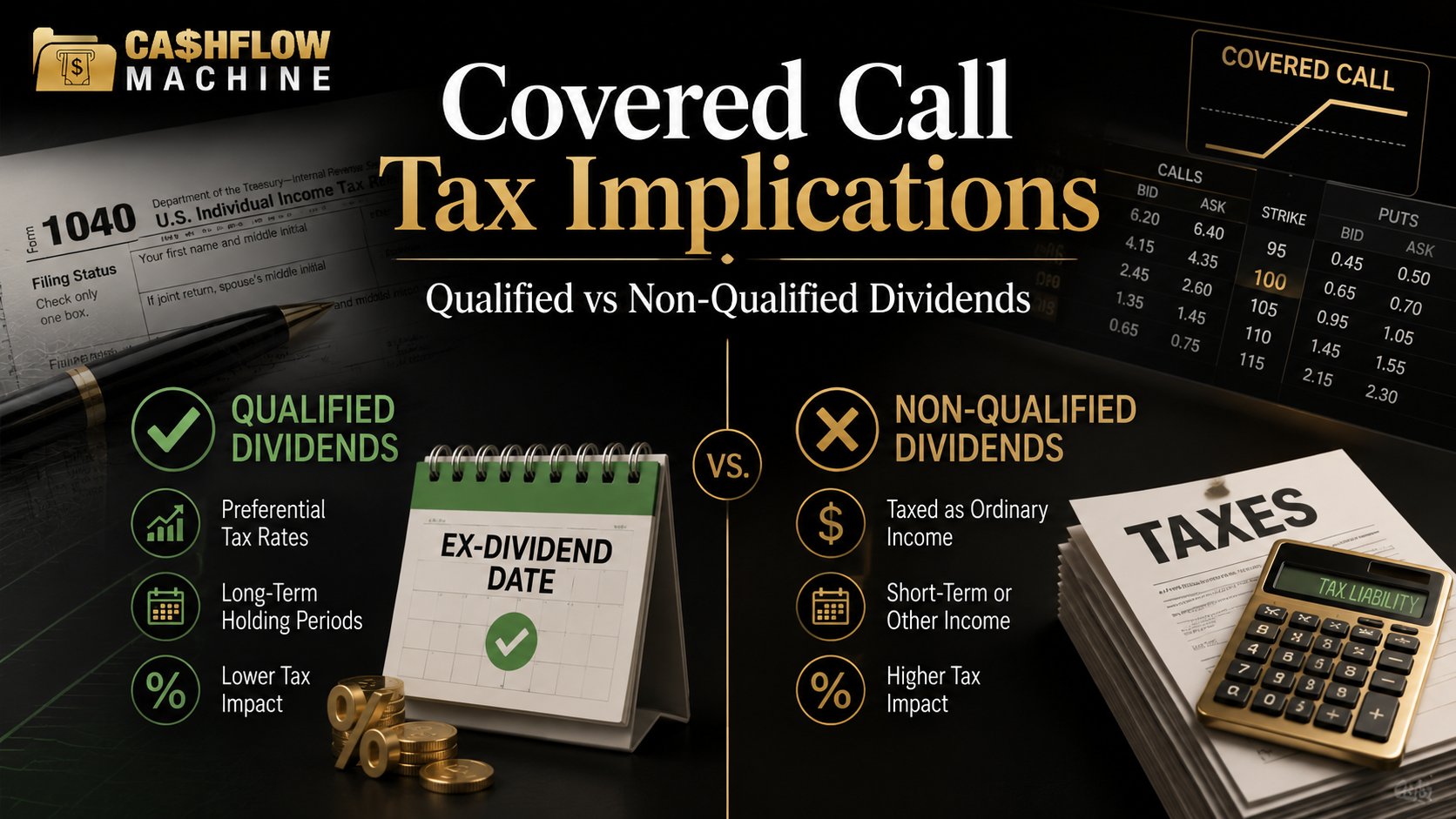
Covered Call Tax Implications: Qualified vs. Non-Qualified Dividends
In this blog, the key lesson is that covered-call income is not only about premium. Taxes can materially affect results, especially when dividends are involved. Qualified dividends may receive favorable tax treatment if holding-period rules are met, while option premium is generally treated differently. The practical takeaway is to check ex-dividend dates, holding periods, and assignment risk before writing calls on dividend stocks.
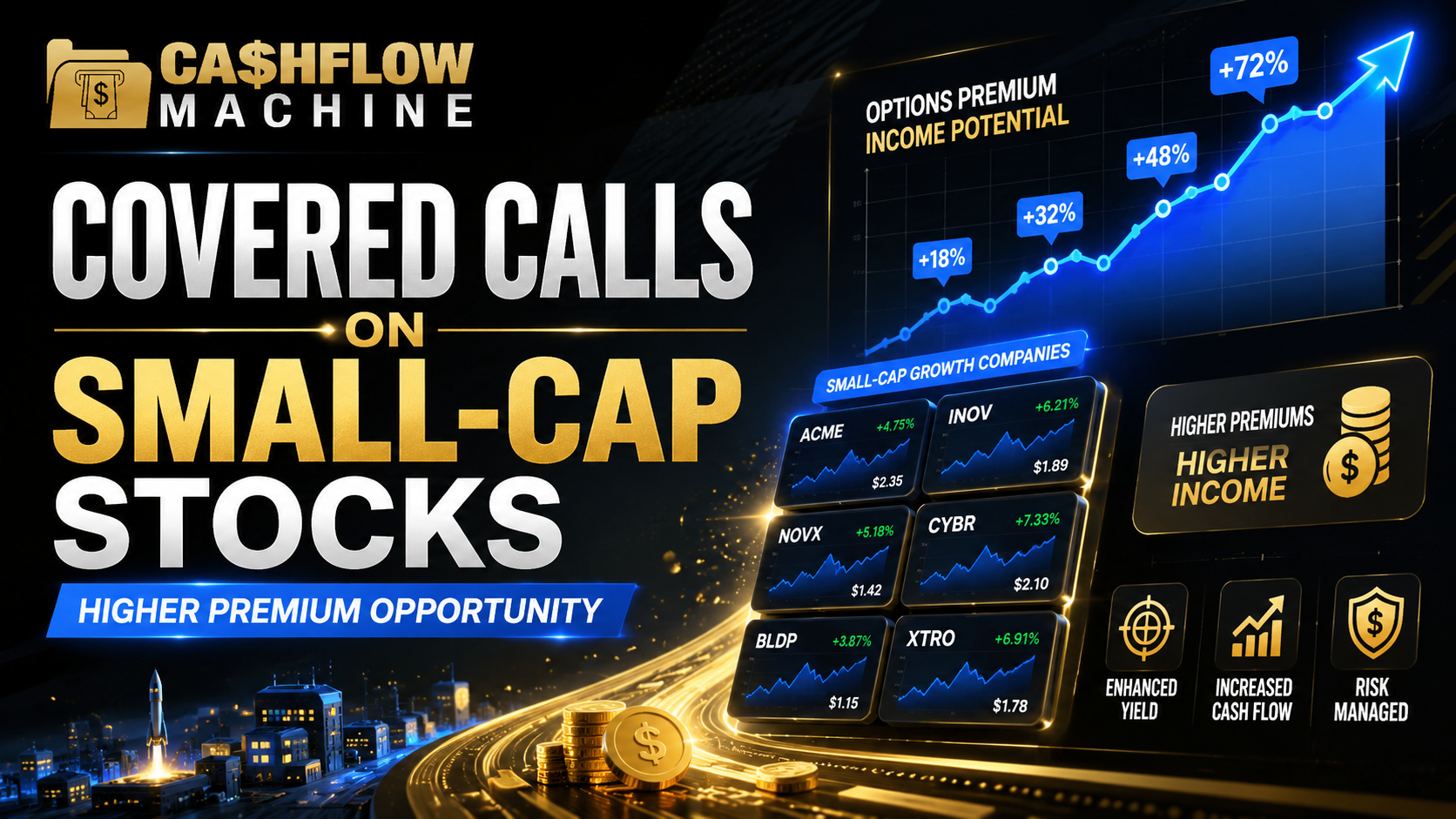
Covered Call on Small-Cap Stocks: Higher Premium Opportunity
In this blog, the focus is on using small-cap stocks for higher covered-call premium. Small caps often carry more volatility, which can increase option income potential, but that same volatility also increases capital risk. The useful framework is to screen for quality, liquidity, institutional support, tight option spreads, and a clear circuit breaker before using small caps for income.

Covered Call on Healthcare Stocks: Defensive Income Approach
In this blog, healthcare stocks are presented as a more defensive covered-call category. Large healthcare companies often have stable demand, strong cash flow, and relatively lower volatility. That can make them attractive for investors who want income without relying on high-growth momentum. The strategy still requires chart discipline, option liquidity, and awareness of earnings or regulatory events.
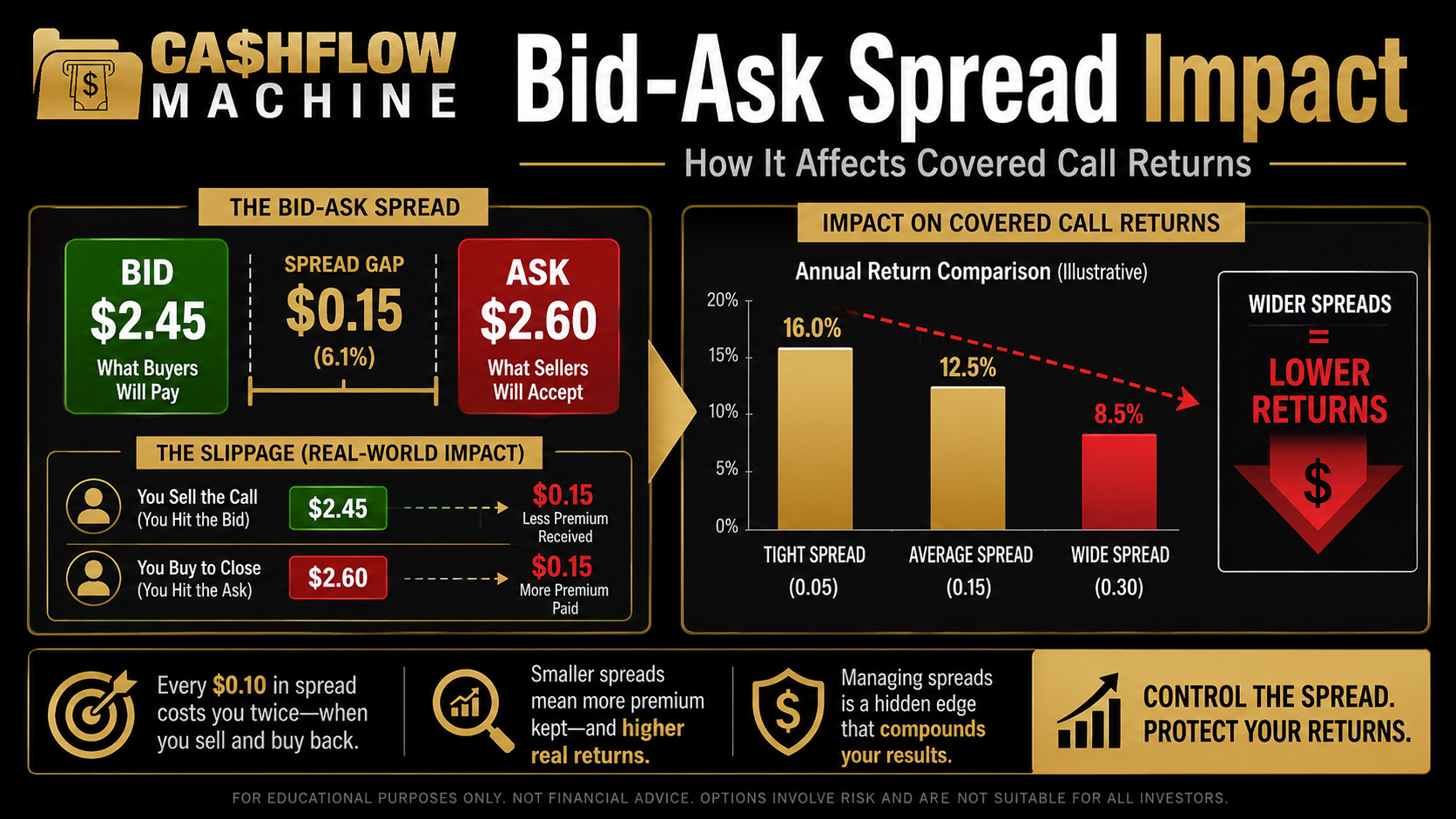
Covered Call Bid-Ask Spread: Impact on Returns
In this blog, the main lesson is that bid-ask spreads quietly reduce covered-call returns. Even small amounts of slippage can add up when trades are repeated weekly or monthly. The practical takeaway is to focus on liquid underlyings, use limit orders, avoid poor fills, and consider monthly or quarterly options when weekly spreads are too wide.
Covered Call on Utility Stocks: Low-Volatility Steady Income
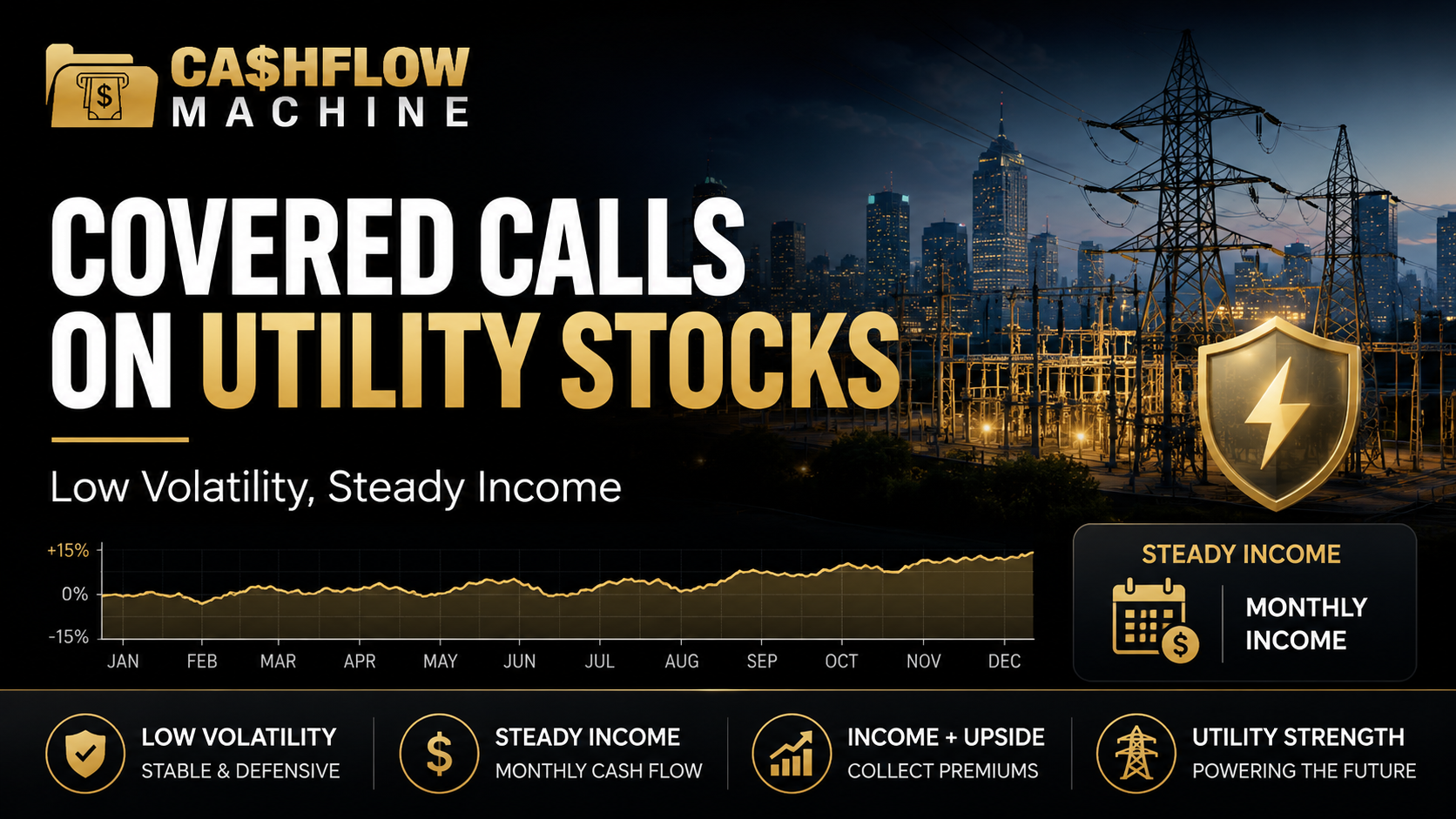
In this blog, utility stocks are framed as a low-volatility income category. Utilities tend to have predictable revenue, steady dividends, and less dramatic price movement than high-growth stocks. That can make them suitable for covered calls when the goal is steady income rather than aggressive upside. The key is to avoid selling calls too close to ex-dividend dates and to manage interest-rate risk carefully.
Upcoming Event

The Income Accelerator live program begins July 22. It is a four-week live program focused on covered calls, income strategy, strike selection, adjustments, and portfolio management. For investors who want a more structured approach to generating option income, this may be worth reviewing, especially if the goal is to build a repeatable process rather than trade from emotion. Learn more here.
