
Why Mark Yegge Avoids Cheap Stocks Like SoFi and Robinhood
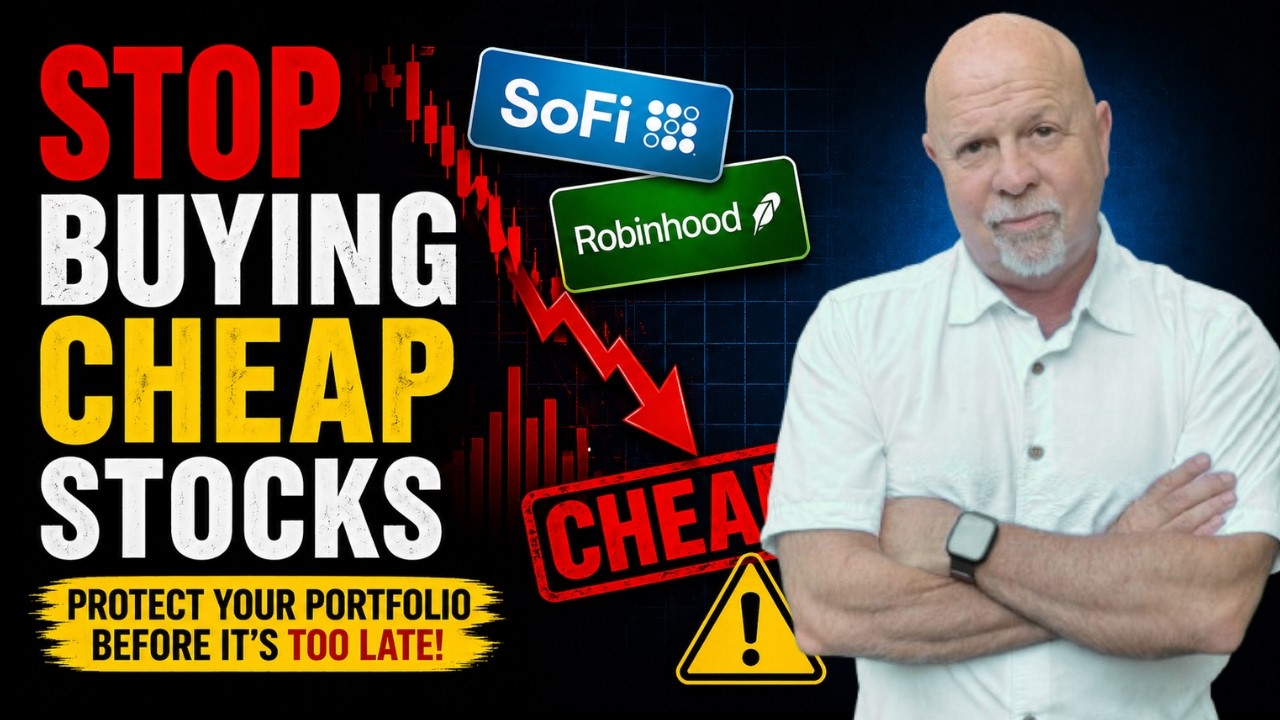
Why Mark Yegge Avoids Cheap Stocks Even When the Story Looks Good
In this market update, Mark Yegge explains why he avoids cheap stocks, even when the underlying company looks exciting on paper.
Using SoFi and Robinhood as examples, Mark shows how earnings risk, weak chart structure, and failing support levels can hurt investors who confuse a good company with a good stock.
Key Takeaways
Cheap Stocks Often Become Expensive Lessons
A lot of investors are drawn to cheap stocks for one simple reason: they look like a bargain.
If a stock used to trade much higher and is now selling at a far lower price, it feels like an opportunity. Add in a popular brand name, a big revenue number, or a few bullish YouTube personalities, and the temptation gets even stronger.
That is exactly why Mark Yegge is warning investors to be careful. In this update, Mark explains why he does not like cheap stocks and uses SoFi and Robinhood as two examples of how quickly things can go wrong when investors focus on the story instead of the chart.
Why Falling Stocks Are Not Automatically Better Buys
One of the most dangerous ideas in investing is thinking a falling stock is automatically becoming a better buy.
Sometimes a stock drops because it is undervalued. But many times, it drops because something is wrong with the setup, the sentiment, the expectations, or the market’s appetite for risk.
That is where investors get trapped.
They see a stock that once ran from $8 to $30, or from $10 to $150, and assume the decline is creating value. In reality, the market may be signaling the exact opposite. Mark’s point is simple: cheap stocks often do not have the same institutional support as higher-quality names, and when they start falling, they can fall a lot farther than most investors expect.
SoFi: Good Numbers, Bad Stock Reaction
Mark starts with SoFi, a company that many investors still talk about as a strong long-term opportunity.
On the surface, the company’s results looked impressive. SoFi reported $1.1 billion in first-quarter revenue, representing 41% year-over-year growth. For many investors, that kind of growth should be bullish.
But the stock still fell sharply.
That is the lesson. A strong company report does not always lead to a strong stock reaction because stock prices do not move only on absolute performance. They move on expectations, sentiment, positioning, and whether buyers are still willing to pay up. In SoFi’s case, the market responded by pushing the shares lower anyway.
Earnings Risk Is Real
That is why Mark repeatedly teaches his students not to take unnecessary risks into earnings.
There are only a handful of earnings events each year, but those few dates can do serious damage if a position moves hard against you.
For investors using covered calls, downside is still the primary risk. If the stock drops sharply, the premium collected may not be enough to offset the loss.
That is why Mark prefers to protect accounts or go to cash before earnings rather than gamble on a favorable surprise.
Many investors treat earnings season like a chance to score a quick win. Mark sees it differently. He views earnings as one of the few times each year when a stock can inflict catastrophic downside very quickly. Even if the company beats expectations on paper, the stock can still drop hard if the market was expecting even more, if guidance disappoints, or if traders simply decide to lock in profits.
The Chart Still Tells the Truth
Mark then shifts from fundamentals to chart analysis, which is where his real conviction comes from.
On the daily chart, SoFi had shown a brief attempt to recover above the 50-day moving average, but the move did not come with convincing volume. Meanwhile, the selling that pushed the stock lower was far heavier and more aggressive.
That matters.
When a stock cannot reclaim and hold the 50-day line with strength, it often signals that institutions are not stepping in with conviction. And when earnings then trigger a fresh gap down, it adds another layer of weakness. Mark also points out that gaps tend to get filled. The prior gap-up move had already lost momentum, and now the stock was filling that gap while creating yet another one lower. To him, that increases the probability that the stock will continue gravitating toward prior support levels rather than suddenly turning into a strong buy.
Why You Should Not Try to Catch the Bottom
One of the strongest messages in the video is Mark’s warning against trying to pick the exact bottom.
Investors love to believe they are getting in at the perfect moment. They tell themselves the stock is “on sale,” that the worst is over, or that the market is overreacting.
Mark rejects that mindset.
His argument is that bottoms are rarely a single event. They are usually a process. Sellers need time to give up. Buyers need time to step in. Weak holders need time to capitulate. Volume needs to shift. Patterns need to develop. That takes time. Trying to rush in too early often means stepping in front of a falling stock and learning the hard way that cheap can always get cheaper.
Robinhood: A Similar Story
Mark then turns to Robinhood, and the chart tells a similar story.
Robinhood had once staged a huge run, climbing from around $10 to well over $140. But after that powerful move, the stock began to roll over. Then came the latest earnings reaction, where the company missed estimates and the stock dropped sharply again.
Part of the weakness was tied to a reported 47% decline in crypto revenue, which hurt sentiment around the name. But Mark’s analysis is less about the headline and more about what the chart has been saying for months.
Like SoFi, Robinhood had been showing persistent weakness around the 50-day moving average. The stock would rally toward that line, fail to hold it, and then break lower again. That is not the behavior of a strong leader. It is the behavior of a stock struggling to attract consistent institutional demand. And once a stock repeatedly fails at the 50-day line, investors need to stop making excuses.
Stop Confusing the Company With the Stock
This is the core lesson of the entire video.
A company may have a good business model. It may have a well-known CEO. It may operate in a fast-growing sector. It may have long-term potential.
None of that guarantees the stock is a buy right now.
Mark emphasizes that investors must separate the quality of the company from the behavior of the stock price. He has seen too many people stay in losing positions because they love the story, admire the CEO, or believe the stock “has to come back.” That thinking can be expensive. Tesla may be a great company. Robinhood may have future potential. SoFi may continue growing revenue. But if the chart is breaking down, the stock can still punish investors who ignore the signals.
Why Institutional Support Matters
Mark also makes a broader point about market structure: better stocks tend to attract better sponsorship.
Cheap stocks often do not have the same kind of institutional support as larger, higher-quality names. That matters because institutions move size, and their buying or selling often shows up clearly on charts through volume, trend behavior, and the way a stock reacts around key moving averages.
When a stock is dropping on heavy volume, failing at resistance, and showing a series of down days with increasing pressure, that is often a clue that larger money is leaving. That clue matters far more than social media hype or bullish commentary.
What Investors Should Do Instead
Mark’s solution is not complicated.
He wants investors to:
- Avoid taking unnecessary risk into earnings
- Stop chasing cheap stocks just because they have fallen
- Learn to read charts more objectively
- Use protective rules like stop losses or circuit breakers
- Focus on higher-quality stocks with stronger support
In his framework, the goal is not to predict perfectly. It is to avoid obvious damage and to stay aligned with probability instead of emotion. That is what helps investors survive long enough to take better trades later.
Final Thoughts
SoFi and Robinhood may still have stories that attract investors. But Mark Yegge’s message is clear: that does not make them good stocks to own right now.
SoFi showed how even strong revenue growth can still lead to a sharp post-earnings drop. Robinhood showed how a once-powerful winner can lose momentum, fail at the 50-day moving average, and keep punishing investors who refuse to let go.
The bigger lesson is about discipline.
Cheap stocks are often cheap for a reason. Earnings can create unnecessary risk. And the chart will usually tell you more than the story if you are willing to read it without emotion. That is why Mark avoids cheap stocks. And for investors who want to stay out of trouble, that may be the most important takeaway of all.
Want to learn how we generate income from stocks while managing downside risk more carefully?
Watch the free masterclass and learn how disciplined traders use income strategies, chart reading, and risk control to stay more consistent in changing markets.
Join Elite for the Full System
Serious investors can go deeper inside Elite, where we teach chart reading, covered calls, and disciplined income strategies.
