
Apple Earnings Tonight: Why Mark Yegge Is Focused on Protection, Not Prediction
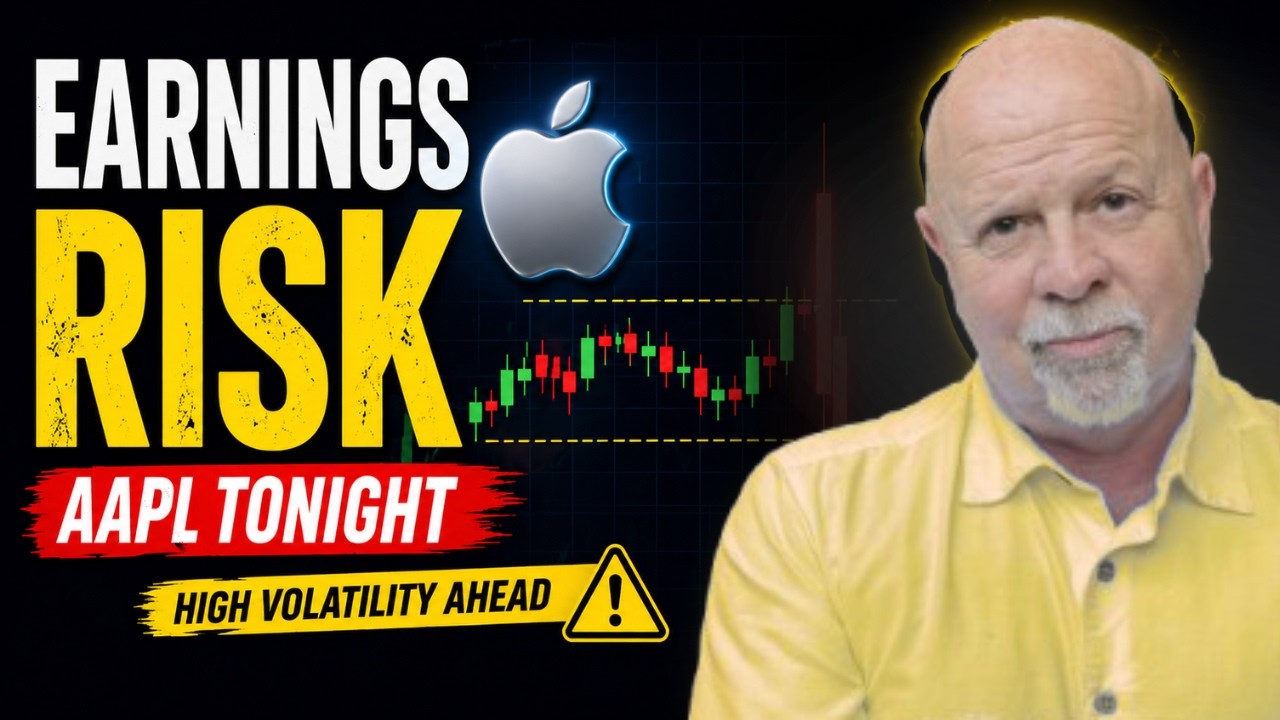
Apple Ahead of Earnings: Why Protection Matters More Than Prediction
In this market update, Mark Yegge breaks down Apple ahead of earnings and explains why investors should focus more on protecting their accounts than trying to guess the stock’s next move.
While Apple’s chart still looks constructive and the company remains a powerful force in the market, Mark reminds investors that earnings can change everything in a single session. That is why risk management matters most on days like this.
Key Takeaways
Earnings Are Not a Time for Overconfidence
Apple reports earnings tonight, and for many investors that immediately creates the same temptation: try to predict what happens next.
Mark Yegge wants no part of that game.
His message is simple. Earnings are one of the few moments each year when even the best stocks can become unpredictable in an instant. That is why, instead of trying to guess whether Apple will gap up or sell off, he focuses on protecting capital first. For investors, that may be the most important lesson of all.
Why Protection Matters More Than Prediction
Every quarter, investors talk themselves into believing they know what a stock will do after earnings.
Sometimes the logic sounds convincing. Other big tech names reported strong numbers. The sector has momentum. Analysts are optimistic. Buybacks are in place. The company is profitable.
But Mark’s point is that none of this guarantees the stock will go higher after the report.
Apple may post strong results. It may not. The stock may rise. It may fall. And even when the report looks good on paper, the market can still react negatively if expectations were too high. That is why Mark says earnings are not the time to take big chances. At Cash Flow Machine, his approach is built around protecting the account going into these events rather than making bold predictions.
The Deep In-the-Money Call Strategy
Mark explains that one of the tools he uses during earnings periods is selling deep in-the-money calls.
The reason is straightforward. When puts become expensive, they can act as costly insurance. Selling a deep in-the-money covered call can create a different kind of protection because the intrinsic value can help offset part of the downside if the stock drops sharply.
The larger principle matters even more than the tactic itself. There are only a few major earnings dates each year for a company like Apple, but those are the exact days when investors can face outsized risk. A stock can move dramatically overnight, and no chart pattern or analyst target can fully protect against that kind of event risk. Mark’s philosophy is clear: you do not need to be right all the time. You need to survive the moments when the market becomes least predictable.
Apple the Company vs. Apple the Stock
Another major point in this update is one Mark returns to often: the company and the stock are not the same thing.
In the short term, stock prices can disconnect from fundamentals. He gives the example of other companies that posted strong results but still saw their shares fall. That is because stock prices move on sentiment, expectations, positioning, and market psychology, not just business performance.
Apple is no exception. Fundamentally, Apple is still a very strong company. Earnings have grown steadily, even if growth is no longer explosive. That is normal for a mature business of this size. Apple is not an early-stage hypergrowth story anymore. It is a dominant global company with a huge installed base, strong brand loyalty, and massive financial resources. That creates long-term strength. But in the short term, the stock can still react unpredictably around earnings.
Apple’s Growth Is Solid, But Mature
Mark points out that Apple’s earnings growth remains respectable, though far from dramatic. Analysts expect earnings to continue rising over the next several years, but the pace is more measured than what investors see in younger, faster-growing names.
That is simply the nature of a mature giant.
Revenue growth is modest. Earnings growth is steady. And much of the bullish case depends on Apple’s next product cycle, continued ecosystem strength, and its ability to turn new trends into revenue opportunities. That is what makes Apple different from some of the more speculative names in the market. It is not about explosive upside from nowhere. It is about whether a powerful business with a deep moat can keep finding its next engine of relevance.
Apple’s Hidden AI Opportunity
One of the more interesting parts of Mark’s analysis is his view that Apple may have stumbled into an unexpected AI advantage.
For years, Apple looked behind in consumer AI. Siri never became the kind of intelligent assistant many expected. Meanwhile, tools like ChatGPT changed user expectations and made Apple’s own offering look dated.
But Mark believes Apple still has something many others do not: distribution.
Millions of people already live inside the Apple ecosystem. They use iPhones, iPads, Macs, AirPods, and other Apple hardware. That hardware loyalty creates a powerful moat, even if Apple relies partly on outside AI partnerships rather than building every layer internally. He also points to growing interest in Apple hardware tied to AI workflows, especially around Mac Minis and related devices. In his view, that hardware side of the AI story may be helping Apple more than many investors realize. This does not mean Apple has solved AI perfectly. It means Apple still has multiple ways to benefit from it because of where it sits in the consumer technology landscape.
The Chart Still Looks Constructive
From a technical perspective, Mark says he does not see anything clearly wrong with Apple’s chart right now.
That is important.
Apple remains above the 50-day moving average, and the major moving averages he follows are trending upward. In his framework, that is usually a healthier place to be than a stock breaking down below support.
The stock has also been working through a long consolidation, which can matter a lot. Mark often says the longer the consolidation, the stronger the eventual spring can be if the breakout occurs. That does not guarantee success, but it does suggest there is stored energy in the pattern. At the same time, the stock has not yet broken free. Buyers and sellers are still in a battle, and earnings could determine which side wins next.
Key Levels Mark Is Watching
Mark identifies a few important levels on the chart.
He sees 276 as the first key swing point Apple needs to reclaim with strength. After that, 280 becomes another important level. If the stock can break through those areas convincingly, he believes it may start working toward a larger breakout point around 289.
That is the area he believes the stock ultimately wants to test. But that path is not automatic. If Apple cannot push through those intermediate resistance levels, the stock may simply remain stuck in consolidation or even weaken after earnings. That is why Mark refuses to treat the current setup as a certainty. He sees potential. He does not see certainty.
Relative Strength Is Not Elite, But the Setup Is Still Healthy
Mark also notes that Apple’s relative strength rating of 68 is not especially impressive. It is better than many stocks, but it is not putting Apple among the market’s strongest leaders right now.
Still, he does not view that as a deal breaker.
Why? Because the chart structure itself remains fairly healthy. The stock is above key support, the trend is constructive, and the consolidation is orderly rather than chaotic. For Mark, that is enough to keep Apple interesting. But once again, earnings can rewrite the chart in one night.
The Real Lesson for Investors
The deeper lesson in this video is not just about Apple.
It is about discipline.
Too many investors feel pressure to predict every move, especially when a major stock is about to report earnings. They want to sound smart. They want to call the gap up. They want to guess the exact reaction.
Mark rejects that mindset.
He is far more interested in asking better questions:
- Is the chart constructive?
- Where are the important resistance levels?
- What is my downside risk?
- How can I protect the account if the report goes the wrong way?
- Am I trading probabilities, or am I gambling on an event?
That approach creates a more professional mindset.
Final Thoughts
Apple may very well report strong earnings. It may continue benefiting from its ecosystem, share buybacks, hardware strength, and long-term AI positioning. The chart also looks healthier than many weaker names in the market.
But none of that changes Mark Yegge’s main message.
Do not confuse a promising setup with a guaranteed earnings outcome.
Apple’s stock may want to move higher over time, especially if it can break through the resistance levels around 276, 280, and eventually 289. But earnings can still introduce sharp short-term volatility, and investors who fail to protect themselves can pay the price quickly. That is why Mark is not trying to predict. He is trying to protect. And ahead of a major earnings report, that may be the smartest position of all.
Want to learn how we generate income while managing downside risk around earnings and market volatility?
Watch the free masterclass and learn how disciplined traders use income strategies, chart reading, and risk management to stay consistent in uncertain markets.
Join Elite for the Full System
Serious investors can go deeper inside Elite, where we teach covered calls, chart reading, and account protection strategies in detail.
