
Get Paid in Volatile Markets: 3 Covered Call Trades
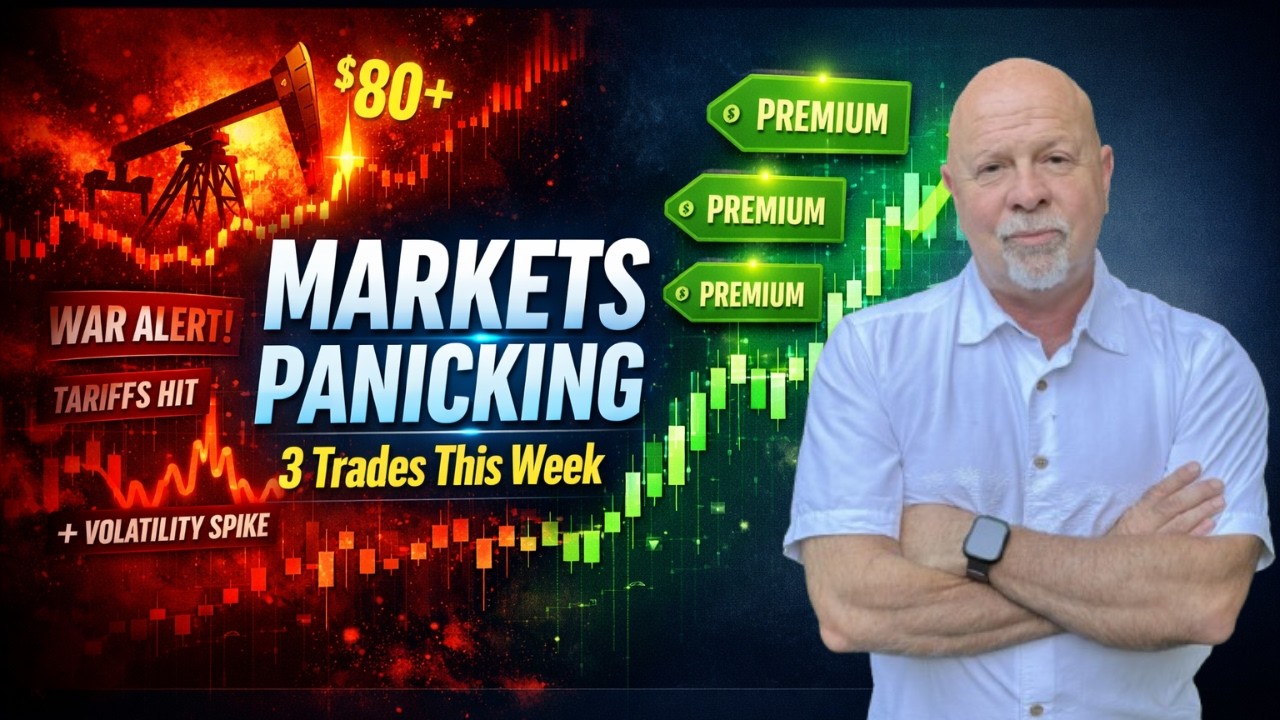
Oil is pushing higher. War headlines are flashing. Tariffs are kicking in. Open any financial news app and it’s easy to feel like the sky is falling.
Most investors respond the same way: they do nothing. They sit on cash, refresh headlines, and wait for someone to say it’s safe.
In a recent market update, veteran trader Mark Yei shared a different approach: show up with a system and place three specific covered call trades. His message is simple—weeks like this aren’t a time to hide. They’re a time to get paid.
Image suggestion: a quick chart-style graphic showing “Volatility up → premiums up,” plus a screenshot of an options chain highlighting the covered call premium.
This article turns that transcript into a practical guide for Investing with Covered Calls, with a focus on building Passive Income and supporting Retirement Income.
Understanding Covered Calls (in plain English)
A covered call is a two-part trade:
- You own shares of a stock (usually 100 shares per options contract).
- You sell a call option against those shares.
When you sell the call, you collect cash up front (the “premium”). That premium is yours to keep.
The trade-off: if the stock rallies above your call strike price, your upside is capped. You may sell your shares at that strike. In exchange, you get paid today.
Covered Calls aren’t about perfect prediction. They’re about systematic income.
Why fear makes covered call premiums bigger
Options prices rise when the market expects bigger moves. That expectation is called implied volatility. A popular “fear gauge” is the VIX. When volatility jumps, premiums often get fatter.
Mark’s point: you don’t need to guess where the market goes next. You can run your system and collect expanded premium while other investors freeze.
He cited weeks where premiums may be 20%–40% higher than calmer periods. Your exact numbers will vary, but the principle matters: more fear often means more pay for option sellers.
Trade #1: Semiconductor volatility (example: Nvidia)
The first trade theme is semiconductors. In the transcript, Mark described a volatility week: tech sold off on geopolitical fear, then bounced hard midweek. That whip-saw can inflate premiums.
He used Nvidia as a chart example—months of consolidation, support in the low 160s, a bounce off the 200-day moving average, and relative strength improving.
His income play: if you already own a quality semiconductor name, consider selling a slightly in-the-money covered call to capture the higher premium.
Mark suggested premiums could be 25%–35% higher than a calmer week, and that on a $1 million portfolio the difference could mean roughly $2,000–$4,000 more income for the week.
Trade #2: Energy headlines without chasing
The second theme is energy. When oil spikes, many investors rush to buy energy stocks after the move. That’s chasing.
Mark’s approach is to monetize uncertainty instead: sell covered calls on existing energy positions while premiums are inflated.
The logic is clean:
- If oil keeps climbing, you profit up to your strike.
- If oil stalls or pulls back, you keep the premium.
He also described what he likes on a chart: a long uptrend, high relative strength, and repeated bounces off key moving averages. The goal is not to guess the headline. The goal is to sell premium into it.
Trade #3: The tariff volatility play (sell calls across the portfolio)
The third theme is broad-based. Big policy changes (like tariffs) can keep markets choppy. When the market can’t decide, implied volatility often stays elevated across many stocks.
So Mark’s “tariff volatility play” is simple: go through your diversified positions and sell covered calls across the portfolio.
He gave an example income comparison:
- Normal week on a $1 million portfolio: about $8,000–$12,000 in premium.
- Volatile week: about $12,000–$16,000.
You didn’t change your portfolio size. You just showed up when premiums were higher.
The Role of Covered Calls in Passive Income and Retirement Income
Passive Income is about repeatability. Retirement Income is about reliability. Covered Calls can support both because premium is paid up front and can be collected on a schedule (weekly or monthly).
Used responsibly, covered calls may help you create cash flow without selling shares every time you need money and bring structure to your Investing plan. Many investors also like that the premium arrives upfront, which can help with budgeting and consistency.
Important reality check: covered calls don’t remove downside risk. If the stock drops hard, you can still lose money. Premium is a cushion, not a shield—so risk rules matter.
Best Practices for Investing in Covered Calls
Pick liquid, quality positions
Tight bid/ask spreads and strong volume make it easier to enter, exit, and adjust.
Choose strikes you can live with
If you’d be upset selling at the strike, you chose the wrong strike.
Match the time frame to your life
Weeklies pay more often, but require more attention. Monthlies are simpler for many investors.
Have an adjustment plan
Know what you’ll do if the stock drops, and what you’ll do if shares get called away.
Size down when headlines are hot
Smaller size can keep you consistent when the market is jumpy.
10 Life-Improving Tips for Covered Call Sellers
- Write a simple trading plan (entry, strike, exit).
- Keep position sizes small enough to sleep at night.
- Track premiums weekly so you know what’s working.
- Avoid calls on stocks you don’t want to own in a dip.
- Don’t chase the biggest premium—respect the risk.
- Learn rolling basics before you need them.
- Diversify calls across sectors, not just one theme.
- Treat assignment as normal, not a mistake.
- Tighten rules when volatility spikes.
- Build a cash buffer so you’re not forced to sell at bad times.
FAQs
Are covered calls good in volatile markets?
They can be, because higher volatility often means higher premiums. But volatility also increases stock risk, so risk management matters more.
What does “slightly in the money” mean?
It means the call strike is a little below the current stock price. It can pay more premium, but assignment becomes more likely.
Can covered calls support Retirement Income?
They can contribute by producing regular premium that may supplement dividends and reduce reliance on selling shares.
What’s the biggest risk with covered calls?
A sharp stock drop. Premium helps a little, but not enough to ignore downside protection.
Call to Action
Start small: pick one liquid holding you already own (or would be comfortable owning), sell one conservative covered call, and track the result. Subscribe for weekly income-style market breakdowns.
Mark also mentioned the Wealth Accelerator Live Strategy Room near Phoenix, Arizona (April 17–19, 2026), focused on income strategies, reading charts, and executing covered calls with a peer group.
Educational note: This article is for education and information only. It is not financial advice.
Conclusion
Headlines make people freeze. A covered call system can do the opposite: convert fear into income by collecting higher premiums when volatility is elevated.
If you stay disciplined—quality positions, smart strikes, and clear risk limits—Covered Calls can be a practical way to build Passive Income and support a Retirement Income plan.
