
Insider Tips - Weekly Stock Market Report - Week March 23, 2026
Insider Tips — March 23, 2026
This week’s message is simple: the market is still in a defensive posture, and I do not think investors should be pretending otherwise. We are in a red market with weak trends, elevated volatility, and too many major indexes sitting below key moving averages. That is not the kind of backdrop where I want to get aggressive or start guessing where the exact bottom is.
My practical stance this week is to stay disciplined, protect capital, and avoid forcing trades just because prices look cheaper than they did a few weeks ago. I would rather keep cash ready, stay selective, and build a watch list of names showing real relative strength than try to be early in a market that still looks unstable.
Technical analysis
- The market remains under pressure, with four red lights still flashing and major indexes still behaving poorly.
- The current setup is starting to resemble the 2022 bear market pattern, with weakness developing after losing key moving-average support. It is not a prediction, but it is a comparison worth respecting.
- The QQQ is below the 200-day moving average and has been under the 50-day for several weeks, which keeps the short-term and intermediate-term trend firmly under pressure.
- The S&P 500 is showing a possible downside target area near 6550 on an ABCD-style pattern, but any bounce from there would still need confirmation.
- The Dow has also rolled over after making highs, and the decline from the peak now reflects meaningful damage rather than a routine pause.
- The New York Stock Exchange composite is holding up better than the Nasdaq and remains above its 200-day moving average, while the VIX has backed off its recent spike but is still elevated enough to keep traders on edge.
Technical bottom line. The tape still looks fragile. Until the indexes reclaim key moving averages and start building a stronger base, I see this as a capital-preservation environment first and an opportunity environment second.
Market trends I’m calling out
- Geopolitical stress is clearly weighing on sentiment, and that kind of headline risk can keep markets unstable longer than people expect.
- There is growing concern that the AI trade may be shifting out of its strongest phase, especially if the market starts questioning the big data-center buildout story.
- Even strong earnings are not being rewarded consistently, which tells me the market is in a “sell the news” mindset rather than a healthy risk-on phase.
- The better approach right now is not broad exposure. It is patience, risk control, and preparation for when leadership becomes clearer again.
Individual stocks (what I’m seeing)
Sandisk
Sandisk still shows exceptional relative strength, but the stock was hit hard after making a fresh high. That kind of reversal matters. In this market, even strong names can get punished quickly, and that is exactly why I want to stay disciplined instead of chasing strength late.
Micron
Micron delivered strong earnings, but the stock still sold off hard around the report. That tells me expectations were already high and the market wanted more. It recovered part of the damage, but the setup still looks unstable, and I would not assume the worst is over just because the numbers were good.
Tesla
Tesla continues to bleed lower from its recent peak, and I am not seeing enough on the chart yet to call for a durable bounce. It is not in a clean washout, but it is also not showing the kind of strength that gives me confidence. That keeps it in the “be careful” category.
Nvidia
Nvidia is the chart I keep coming back to when I think about the AI trade. It has spent months churning in a wide consolidation, and now it is below both the 50-day and the 200-day moving averages. That is a real warning sign. If a leader like this stays under the 200-day, it often means more work still has to be done before the stock is ready again.
AMD
AMD looks healthier than many of the other AI names right now. It is still under the 50-day, so I am not ready to call it a leadership breakout, but holding above the 200-day is an important distinction in this tape. Relative to the group, it is behaving better.
Apple
I continue to think Apple has a solid story for the rest of the year, but the chart is not fully confirming that view yet. It is trying to hold around the 200-day moving average, and that makes it worth watching. I am interested, but I want the market to cooperate before getting too confident.
GE Aerospace
GE Aerospace had been acting well, but the recent breakdown toward the 200-day moving average changes the tone. I do not like seeing a stock fail after looking ready to break out, especially in a weak market. This is the kind of setup where discipline matters more than hope.
Bloom Energy
Bloom Energy remains one of the stronger names on a relative-strength basis and continues to hover near its buy area. It is volatile, and that is not for everyone, but that same volatility creates income potential for covered call investors who know how to manage it. This is not a quiet stock, but it is one worth tracking.
Broadcom
Broadcom is trending lower and is now below both the 50-day and 200-day moving averages. That is not the kind of chart I want to argue with. It may recover later, but right now it belongs on the watch list, not in the “must own now” bucket.
Key takeaways
- A red market is not the time to get casual with risk.
- The major indexes still need repair before I trust a sustained upside move.
- Strong earnings alone are not enough when sentiment is weak.
- The best names to own later are often the ones showing relative strength now.
- Cash is a valid position when the tape is unstable.
- Every trading plan needs a circuit breaker, especially in markets like this.
Conclusion
The market still looks vulnerable, and I think the right stance is patience over prediction. There will be opportunities again, but I would rather be late to a healthier uptrend than early in a market that is still sending warning signs.
Current Market Condition

Right now, the tape feels heavy. The indexes are not acting in sync, leadership is thinning out, and volatility is still high enough to punish weak entries. That is not a great environment for aggressive positioning.
I am watching for signs that the market can stabilize, build support, and start reclaiming key levels. Until that happens, I think the smart move is to stay defensive, keep position sizes under control, and avoid trying to force a heroic bottom call.
There is still opportunity underneath the surface, especially in a handful of stronger names, but this is a market where survival comes first. Protect the account now so you are ready when the market finally turns back in your favor.
Stock Tips This Week:

The Fed Is Trapped: What Serious Investors Need to Understand Now
In this video, I explain why the Fed is boxed in between sticky inflation and slowing growth—a backdrop that can look a lot like stagflation and makes policy decisions messy. The key message is that waiting for the Fed to “save” markets can be a mistake, because rate cuts aren’t a clean solution when inflation pressure hasn’t fully cooled. My takeaway for serious investors is to shift from prediction to process: prioritize cash flow, risk control, and strategies that can work in bull, bear, or sideways conditions.

Stop Buying the Dip: Why This Market Demands Defense, Not Hope
In this video, I break down why “buy the dip” only works in healthy uptrends—and why it becomes dangerous when the trend is broken and volatility is elevated. I frame the current environment as one where investors think they’re buying dips, but they may actually be catching falling knives, especially with macro headwinds like oil, inflation, and geopolitical instability stacking up. The playbook shifts to defense-first: reduce size, protect capital, and lean into income strategies (like covered calls) when premiums are elevated—while focusing on trade adjustments, not just stock picks.

Is Palantir a Short? Mark Yegge’s Contrarian Stock Analysis
In this video, I make a contrarian point: Palantir can be a strong long-term story and still be a short-term downside setup. My concern isn’t the company—it’s the mix of valuation + technical weakness + fading momentum, where AI enthusiasm may already be priced in and the chart is flashing caution (resistance near moving averages, weakening momentum, short-term downtrend). I also highlight “overhead supply” risk: trapped buyers can sell into rallies and cap upside. Instead of an all-or-nothing trade, I lean toward defensive income structures that can work if the stock chops or drifts lower.

Is Apple Quietly Becoming an AI Company? Mark Yegge’s Contrarian Stock Analysis
In this video, I explore why Apple may benefit from the AI boom without taking the same high-risk spending path as other mega-cap tech. I point to Apple’s ecosystem and hardware as a potential “quiet winner” as demand grows for local machines that can run AI-driven workflows. At the same time, I’m honest about the chart: it’s not a momentum name right now, and relative strength matters most when markets are weak. My stance is watchlist-first—and if the setup improves, covered calls can convert that patience into a structured income plan.
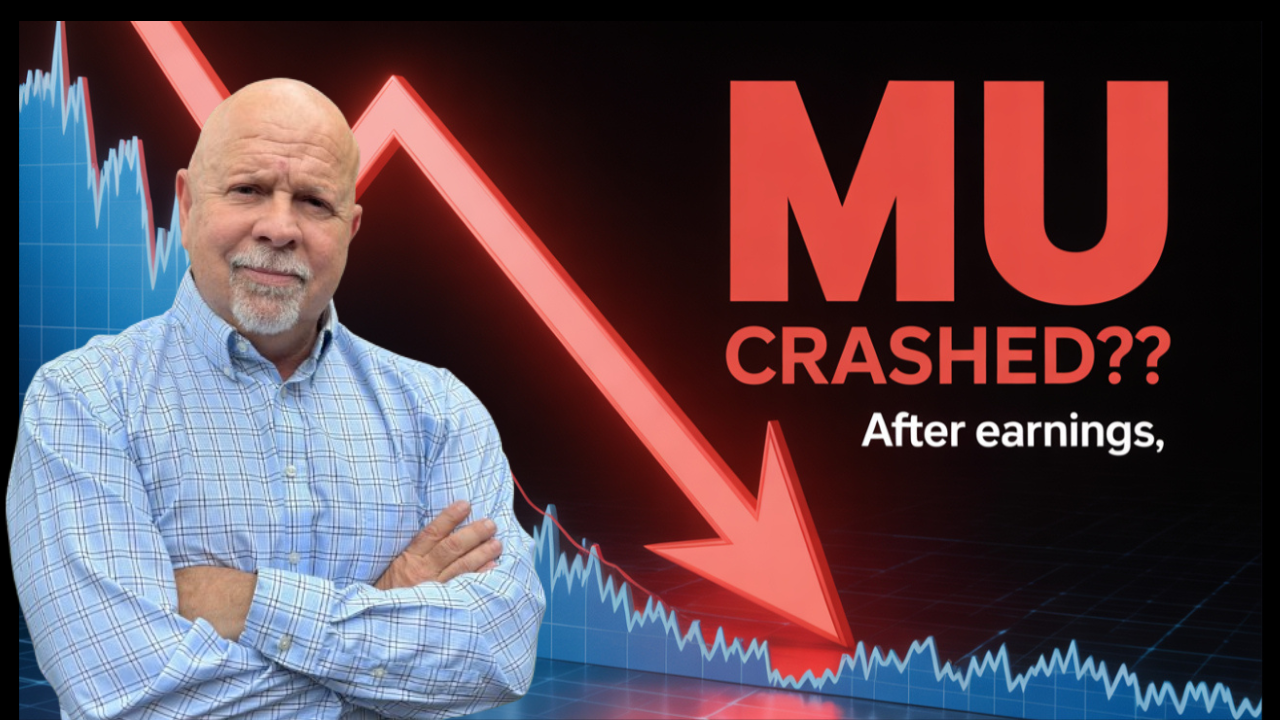
AI Bubble Warning? What Micron’s Selloff Could Be Signaling to Traders
In this video, I use Micron as a warning shot: even a strong AI infrastructure name can break hard when expectations get too high. The big lesson is that great earnings don’t guarantee a rising stock—if something is priced to perfection, even small disappointment (or “not perfect enough”) can trigger a high-volume selloff. I also highlight gap and volume behavior as key tells for whether a drop is stabilizing or setting up for another leg down. The bottom line: in a red market, protect capital first, and don’t rely on narrative when the chart is weakening.

7 Portfolio Income Streams That Can Help You Thrive in Any Market
In this video, I explain why relying on one source of returns (price going up) makes portfolios fragile—especially in volatile markets. I walk through seven complementary income streams designed to create resilience: covered calls (including ITM calls for cushion), cash-secured puts, dividend growth, bond ladders, REIT income, infrastructure/royalty “toll booth” plays, and systematic rebalancing as a discipline-driven return source. The key is stacking strategies so no single stream carries the full load—and focusing on dependable cash flow, not hope.
Upcoming Event:

Strategy Intensive — April 17 to 19
This upcoming event is a small-group strategy workshop designed for investors who want to go deeper on covered calls, trading plans, and market strategy for the rest of the year. It is built for people who want more than market commentary and are ready to work through their own setups in a practical way. The timing matters because this is exactly the kind of market that exposes weak process and rewards disciplined planning.
There is also a live YouTube session scheduled for Monday, March 23 at 7:00 p.m. Eastern, focused on the current market turmoil and the opportunities that may come out of it. For investors looking for a timely market read, that is the most immediate touchpoint this week. The YouTube Live will be recorded if you miss out!
