
Insider Tips - Weekly Stock Market Report - Week April 13, 2026
Insider Tips — April 13, 2026
After three difficult weeks, this market finally looks like it is trying to regain its footing. The tone has shifted from defensive and hesitant to constructive, with stronger candles, improving momentum, and enough follow-through to suggest that this is more than just a one-day relief bounce. The biggest change is not that every chart suddenly looks healthy. It is that the market is beginning to reward risk again.
That matters, because early-stage recoveries rarely feel clean. They usually begin in a mixed environment where a few major indexes improve first, volatility cools off, and leadership starts to re-emerge before broad confidence fully returns. That is exactly the kind of backdrop we are seeing now.
The main opportunity this week is straightforward: when the market starts turning green, investors need to pay attention to the names and sectors showing real relative strength. The main risk is just as clear: this is still an early recovery, not a fully confirmed all-clear signal. Some areas are improving quickly, while others still look fragile. That calls for participation, but it also calls for discipline.
Technical analysis
The most important technical development this week is the shift in trend character. After a textbook three-week decline, price action has started to reverse with stronger candles, improving momentum, and a noticeably better tone across leading growth names. The market is no longer acting like it wants to break down further. It is acting like it wants to rebuild.
The Nasdaq is still the most important chart to watch here. It had looked deeply damaged, but the recent reversal has changed the conversation. The index has bounced sharply, filled a gap, and reclaimed the 50-day moving average. That does not erase the prior damage, but it does suggest that sellers may have exhausted themselves, at least for now. In practical terms, good things tend to happen when growth indexes reclaim the 50-day. Bad things tend to happen when they stay below it.
The S&P 500 is telling a similar story, though in a slightly cleaner way. It spent less time under pressure and is now moving back up the right side of the chart. That is constructive. The Dow, by contrast, still has more repair work to do, as it remains below its 200-day moving average. The New York Stock Exchange Composite sits somewhere in between: healthier than it looked during the decline, but not yet as convincing as the Nasdaq or S&P 500.
Volatility is also improving. The VIX has pulled back sharply and is moving toward more normal levels. That matters because falling volatility tends to bring capital off the sidelines and back into the market. In other words, calmer conditions create room for risk appetite to recover.
So the technical picture is better, but not uniform. The market is improving from the top down, with tech and the S&P leading the recovery while other areas lag. That is often how green phases begin.
Market trends I’m calling out
- The market is rotating from fear back into selective offense
The biggest shift this week is emotional as much as technical. A few days ago, the market felt defensive, uncertain, and difficult to trust. Now it is starting to show the kind of price action that attracts buyers rather than scares them away.
- Growth is regaining leadership
The Nasdaq reclaiming its 50-day moving average is not a small detail. It tells you that growth is back in the conversation. If this rebound is going to have legs, leadership will likely continue to come from tech and semis first.
- This is still an early green phase, not a mature bull move
Mixed internals are normal at the start of a recovery. Some charts already look strong. Others still need time. That is why this kind of market rewards selectivity more than broad enthusiasm.
- Lower volatility is helping the bullish case
When volatility contracts, capital usually becomes more willing to re-enter risk assets. A calmer tape does not guarantee upside, but it creates a much healthier environment for it.
- Story stocks are being tested
This week was also a reminder that a compelling company story is not the same as a high-quality chart setup. That distinction matters more than ever in a market that is still separating leadership from laggards.
Individual stocks: what I’m seeing
Nvidia
Nvidia is trying to recover from a weak stretch near the lows, and the recent bounce has been encouraging. The candles are cleaner, the direction is better, and the stock is finally showing some positive price action. The one missing ingredient is convincing volume. The rebound is real, but it still needs stronger sponsorship to look durable.
Apple
Apple is one of the more interesting watch-list names right now. It is hovering around the 50-day moving average and starting to look better after a long period of going nowhere. This is not a breakout yet, but it has the feel of a stock that may be quietly setting up for a stronger move if the tape stays supportive.
Broadcom
Broadcom looks like one of the cleaner rebound charts in the group. The stock has come sharply off the bottom with several strong up days and a couple of high-volume accumulation sessions. That combination usually deserves respect.
SanDisk
SanDisk continues to behave like a true leader. New highs, exceptional relative strength, and persistent upside momentum make it one of the clearest examples of a stock that investors simply have not been able to step in front of successfully. It is extended, but the strength is undeniable.
Micron
Micron took a post-earnings hit, briefly lost the 50-day, and then recovered quickly without even needing to test the 200-day. That kind of resilience stands out. Getting back above the 50-day with strong relative strength keeps the chart constructive.
Gold and silver
Precious metals have cooled off a bit. Gold has lost some momentum and is trying to stabilize around its 50-day moving average, while silver is showing a similar pattern. Neither chart looks broken, but neither one is showing urgent upside momentum right now. Gold miners, however, are holding up better than the metal itself, which is worth noting.
Amazon
Amazon has quietly improved. After looking sloppy below the 50-day moving average, the stock has started to reassert itself with strong closes near the top of the daily range. The rebound still needs more volume behind it, but the price action has become much more interesting.
Microsoft
Microsoft remains a chart to avoid for now. While other large-cap names are beginning to repair themselves, Microsoft still looks troubled and lacks the kind of constructive behavior you want to see in a recovering market.
Palantir
Palantir is the clearest cautionary chart in the group. The key issue is not whether the company is admired. It is that the stock is breaking support, trading below major moving averages, and doing so with heavy volume. That is typically not the kind of pattern that rewards optimism. It may eventually bottom, but right now the chart is still signaling more downside risk than opportunity.
Tesla
Tesla remains under pressure. The stock has been in a sustained decline, relative strength has weakened dramatically, and the chart still looks damaged. Whatever the long-term story may be, the current setup does not offer many technical reasons to get aggressive.
Alphabet
Alphabet is starting to look better. After being left for dead during the recent drop, it has rebounded above the 50-day moving average and is trying to hold that level. It still needs stronger volume, but the recovery is real enough to keep it on the radar.
Key takeaways
- The market has shifted from defensive to constructive, but this is still an early recovery phase.
- The Nasdaq and S&P 500 are improving faster than the Dow.
- Reclaiming the 50-day moving average is a meaningful technical win for growth.
- Lower volatility is helping capital move back into stocks.
- Leadership is showing up in selected semis and momentum names, not across the board.
- Strong companies are not always strong buys if the chart is deteriorating.
- This is a market for disciplined participation, not emotional chasing.
Conclusion
This week’s market action was a needed reminder that conditions can change quickly once fear starts to unwind. The tone is better, the charts are improving, and there are now enough constructive setups to justify leaning more attentive to the long side.
At the same time, early rebounds can be tricky. They often look strongest just before they are tested. That is why the right approach here is not blind optimism. It is disciplined optimism. Focus on leadership, respect price and volume, and stay alert to whether the major indexes can keep building above their key moving averages.
The next move matters, but the follow-through matters even more.
Current Market Condition
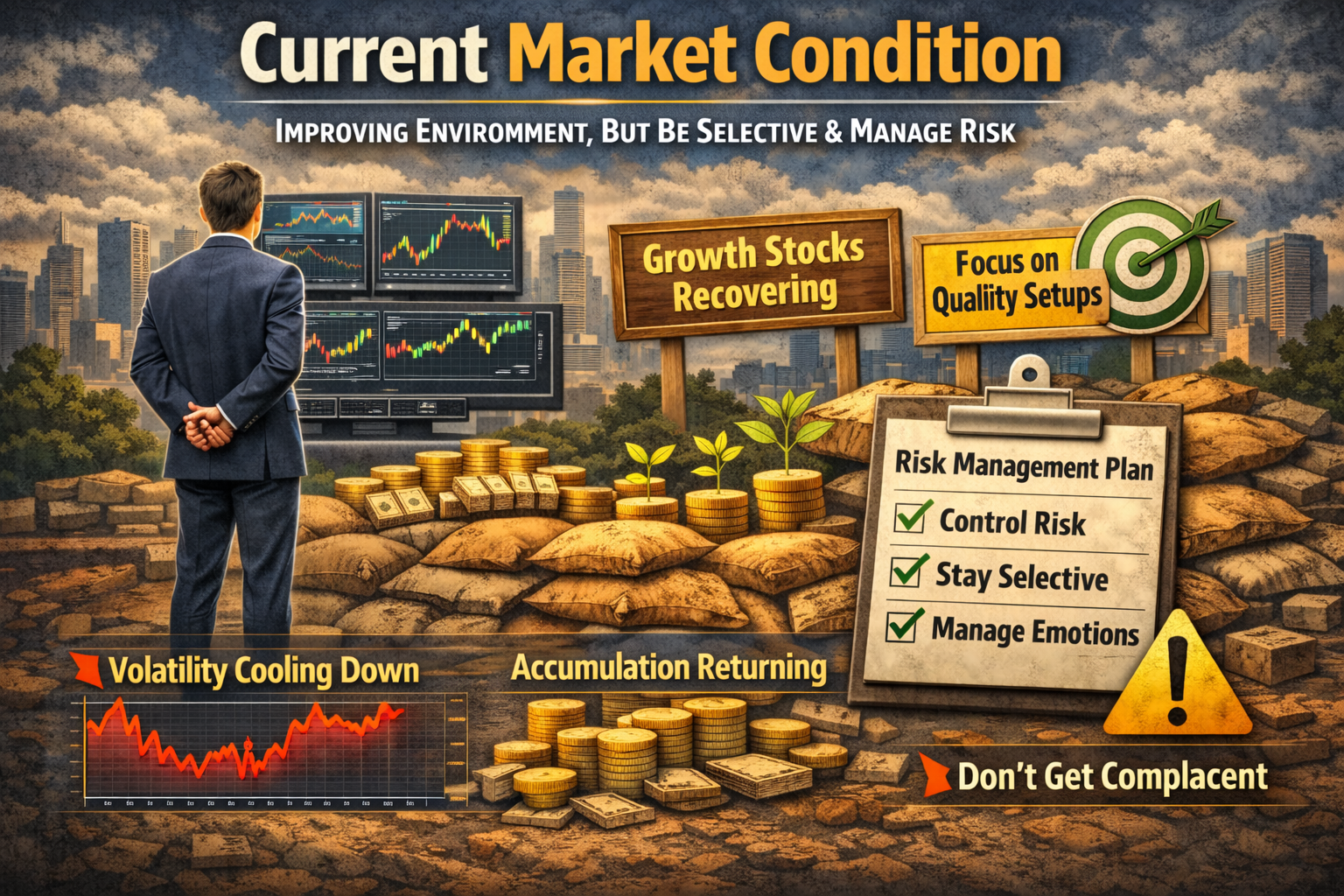
The market feels better than it did a week ago. Growth stocks are recovering, volatility is cooling down, and several leading charts are starting to act like accumulation is returning. It is a healthier environment, but still one where selectivity and risk management matter.
Stock Tips This Week

Wealth Tax Is Closer Than Most Investors Think: 5 Moves to Protect and Grow Your Wealth
In this video, the focus is less on a specific trade and more on building a stronger financial structure around your portfolio. The key lesson is that investors should think beyond returns alone and pay closer attention to tax efficiency, legal protection, cash-flow strategy, and how wealth is organized over time.
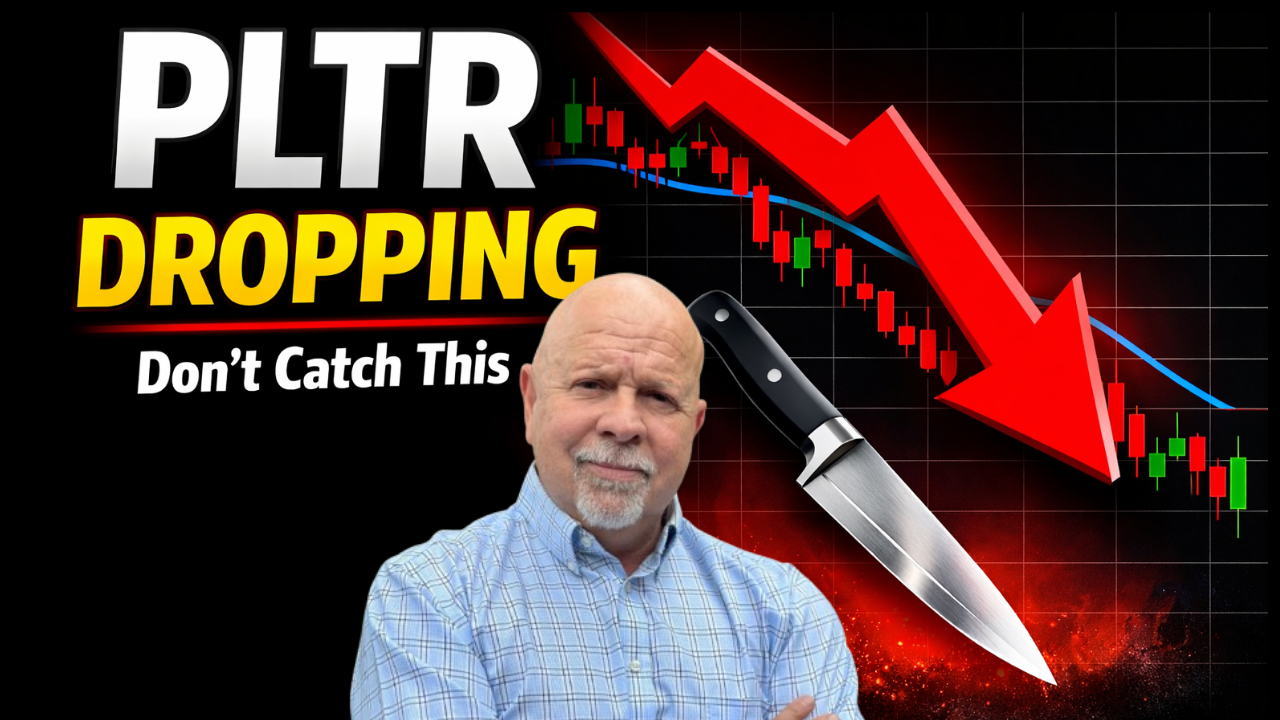
Palantir Is a Great Company. That Doesn’t Mean It’s a Great Buy Right Now
In this video, the main takeaway is that investors need to separate a strong company story from a strong technical setup. It serves as a useful reminder that even popular stocks can become risky when momentum fades, support breaks down, and the chart begins signaling more downside than opportunity.

Covered Calls vs. the 4% Rule: Why Income Investors Are Abandoning the Old Retirement Formula
In this blog, the author compares the traditional 4% retirement withdrawal rule with a covered call income approach, arguing that the 4% rule depends on selling shares and can be vulnerable to sequence-of-returns risk in market downturns. The post presents covered calls as a way to generate monthly cash flow from existing holdings, keep principal invested, and potentially benefit from higher option premiums during volatile markets, while also noting trade-offs like capped upside and assignment risk.

How to Build a Covered Call Portfolio From Scratch (Step-by-Step)
In this blog, the author explains that a successful covered call portfolio should be built as a structured system rather than a collection of random trades. The post walks through setting income and capital targets, choosing quality stocks with liquidity and technical support, diversifying across sectors, keeping some cash in reserve, and managing positions monthly with clear rules for rolling, replacing, and controlling risk.

When to Close a Covered Call Early: Exit Rules Every Income Investor Needs
In this blog, the author argues that covered calls often should be closed before expiration once most of the profit has already been captured, because the remaining premium tends to decay slowly while capital stays tied up. The post highlights a 75% profit guideline, explains how early closing can improve capital efficiency, and outlines other reasons to exit early, including broken technical support, upcoming earnings, better redeployment opportunities, and rising assignment risk.

Asset Protection for Income Investors: 5 Layers to Shield Your Covered Call Portfolio
In this blog, the author describes asset protection as a multi-layer process for covered call investors, starting with premium income as a small downside buffer and then adding stronger defenses. The post covers collars for defined downside protection, diversification and position sizing at the portfolio level, legal structures like LLCs and trusts for larger portfolios, umbrella insurance, and tax strategies designed to preserve more of the portfolio’s long-term income-producing power.

How to Trade Covered Calls During Earnings Season (The Right Way)
In this blog, the author explains that earnings season creates both opportunity and danger for covered call traders because implied volatility boosts option premiums while overnight gaps can produce outsized losses. The post presents three main approaches: avoid holding calls through earnings, sell before earnings to benefit from a possible IV crush if you can manage the risk, or wait until after earnings for a clearer setup, with extra emphasis on planning, weekly options, and smaller position sizes during reporting periods.
Podcast Episode This Week

This week’s podcast episode, EP-184: Tax Scholarship Savings with Brian Eyster, looks especially relevant for readers thinking beyond the next trade and focusing on long-term financial planning. Based on the episode title and available episode summary, it appears to explore tax-smart scholarship and education-funding ideas that could be valuable for families trying to balance college costs with broader wealth-building decisions.
