
Income Is Engineered: Why Most Traders Fail Without a Plan (And How to Build One That Works)
One of the most common reasons traders struggle isn’t bad luck.
It isn’t intelligence.
It isn’t access to capital.
It isn’t even stock selection.
It’s the absence of a structured trading plan.
Professional traders — including institutional desks on Wall Street — operate with clearly defined systems. Many of them specialize in just two or three stocks. They know their instruments intimately. They understand their risk parameters. They follow rules.
If you’re competing in markets where firms deploy billions of dollars and algorithmic precision, you cannot afford to trade casually.
If you don’t have a plan, it will cost you.
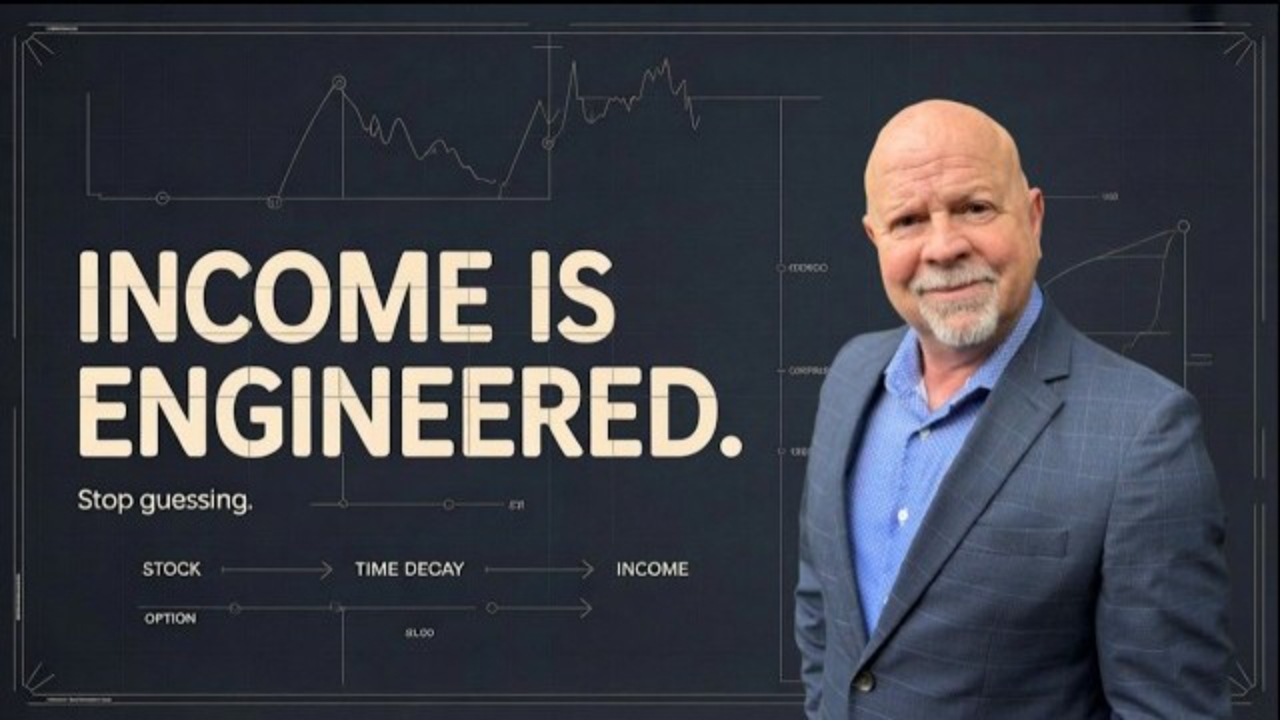
And if you’re a covered call trader, your job is not prediction — it’s engineering income.
The Fundamental Shift: From Prediction to Engineering
Most retail investors wake up asking:
“What’s going to move today?”
That question seems harmless.
It isn’t.
Embedded in that mindset is the belief that income comes from being right about the future.
But prediction is fragile.
Professionals don’t build fragile systems.
If your income depends on guessing direction correctly, your income is borrowed confidence. And borrowed confidence eventually gets called.
Income traders — especially covered call investors — must adopt a different framework:
Income is not a trade.
Income is a machine.
The Rental Property Analogy
Imagine you buy a rental property.
You don’t obsess over its daily Zillow estimate.
You don’t panic if it fluctuates 1% week to week.
You bought it for the rent.
If the tenant leaves, your income stops.
If income stops, your investment thesis collapses.
Covered calls work the same way.
You are not swinging for 100% gains.
You are harvesting consistent yield from an asset you already own.
That’s an engineered system — not speculation.
Why Covered Calls Don’t “Lose” When Stocks Go Up
A common misunderstanding:
“If the stock explodes higher, you lose money.”
That’s incorrect.
If a stock moves above your strike price, you don’t lose money — you cap your upside. There’s a difference.
The math is simple:
- If the stock finishes above your strike, you earn the same maximum return whether it moves $1 above the strike or $1,000 above the strike.
- You sacrifice unlimited upside in exchange for consistent income.
That tradeoff is intentional.
It’s architecture.
The Nvidia Example: Income vs. Idle Capital
Take Nvidia.
Over the past several months, there have been extended periods where price went sideways.
If you simply held shares:
- You may have seen minimal price appreciation.
- Your capital sat idle.
But if you sold covered calls generating 1–2% weekly income:
- Time worked for you.
- Theta decay paid you.
- You engineered yield.
That’s the difference between watching price and harvesting structure.
Retail Investors Confuse Motion With Progress
Retail investors equate activity with productivity:
- More trades = more progress
- More charts = more control
- More signals = more intelligence
But income doesn’t come from motion.
Income comes from structure.
Professionals don’t chase volatility.
They position themselves around forces that require no prediction.
And the most reliable force in the options market is time.
Time Decay: The Engine Most Traders Ignore
Every option contract is a wasting asset.
Every day that passes reduces uncertainty.
Every day that passes erodes extrinsic value.
Time decay (theta) is structural math.
Retail traders treat it as a side effect.
Professionals treat it like gravity.
Price argues.
Time collects.
The professional question isn’t:
“Will the stock go up?”
It’s:
“How do I position so time works whether I’m right or not?”
That shift changes everything.
From Trades to Postures
Once you accept that income is engineered, your thinking reorganizes.
You stop chasing setups.
You start managing postures.
- Defensive when volatility expands.
- Balanced when markets normalize.
- Opportunistic when trends strengthen.
Cash becomes a position.
Patience becomes an asset.
Doing nothing becomes a strategic decision.
That’s how professionals survive decades — not just bull markets.
The Three Tests of a Real Income System
A professional-grade system must pass three tests:
- Repeatability
Can it be executed consistently without improvisation?
- Resilience
Does it survive volatility, drawdowns, and regime shifts?
- Psychological Sustainability
Can you operate it without emotional exhaustion?
Most trading strategies fail the third test first.
Time-based income systems pass quietly.
They aren’t flashy.
They don’t impress at parties.
They work.
The Danger of Emotion in Trading
Money is emotion.
Emotion is energy.
When you:
- Refuse to exit a losing position
- Average down aggressively
- Double size because it’s “cheaper”
- Justify holding because you “like the CEO”
You are no longer operating a system.
You are operating a hope machine.
Hope is not engineering.
Mistakes happen. That’s trading.
But a mistake with a predefined exit is manageable.
A mistake without guardrails becomes catastrophic.
Engineering Your Income Plan
If you want to operate like a professional, you need:
- Defined Entry Criteria
Why are you entering this position?
- Predefined Exit Rules
At what price are you wrong?
- Position Sizing Discipline
How much capital is at risk?
- Income Targets
What percentage are you aiming to generate weekly or monthly?
- Stop-Loss Parameters
How much are you willing to lose before exiting?
- Regime Awareness
Are markets trending, volatile, or consolidating?
If you cannot document your rules clearly, you do not have a system.
Life-Improving Trading Principles
- Stop Chasing. Start Structuring.
Build systems around time, not predictions. - Protect Mental Capital.
Emotional exhaustion reduces decision quality. - Respect Risk First.
Income is secondary to capital preservation. - Detach From Narrative.
Stocks are not stories. They are instruments. - Avoid Personality-Dependent Trading.
If your strategy works only when you're “on fire,” it isn’t durable. - Engineer Freedom, Don’t Gamble for It.
Income investing is about consistency, not lottery tickets.
Frequently Asked Questions (FAQs)
Is covered call income safer than growth investing?
It can be more consistent, but it still requires risk management and disciplined exits.
What happens if the stock drops sharply?
Covered call income helps reduce cost basis, but capital protection rules must still be enforced.
Should I average down on losing positions?
Only if your trading plan explicitly allows it and risk parameters remain intact.
How much weekly income is realistic?
Many structured covered call systems target 1–2% per week under favorable conditions, but consistency depends on volatility and stock selection.
Can I run this system part-time?
Yes — if it’s engineered properly with predefined rules and automation where appropriate.
Call to Action
If you’re serious about transforming your portfolio into an income machine:
- Stop trading emotionally.
- Stop chasing headlines.
- Stop relying on prediction.
Start building a documented, rules-based system where:
- Time works for you.
- Risk is defined.
- Income is intentional.
Engineered income creates freedom.
Undisciplined trading creates stress.
Choose structure.
Conclusion
Most traders don’t fail because they lack intelligence.
They fail because they operate without architecture.
Income is not something you chase.
It’s something you design.
Professionals don’t harvest price.
They structure around time.
If you approach covered call investing like an engineer — with guardrails, documented rules, and disciplined execution — your trading becomes calmer, more consistent, and more sustainable.
Income is engineered.
Time is the engine.
And professionals don’t chase what they can structure.
