
The Wealth Architecture Gap: Why Even Elite Covered Call Traders Lose 30–40% of Their Income (And How to Fix It)
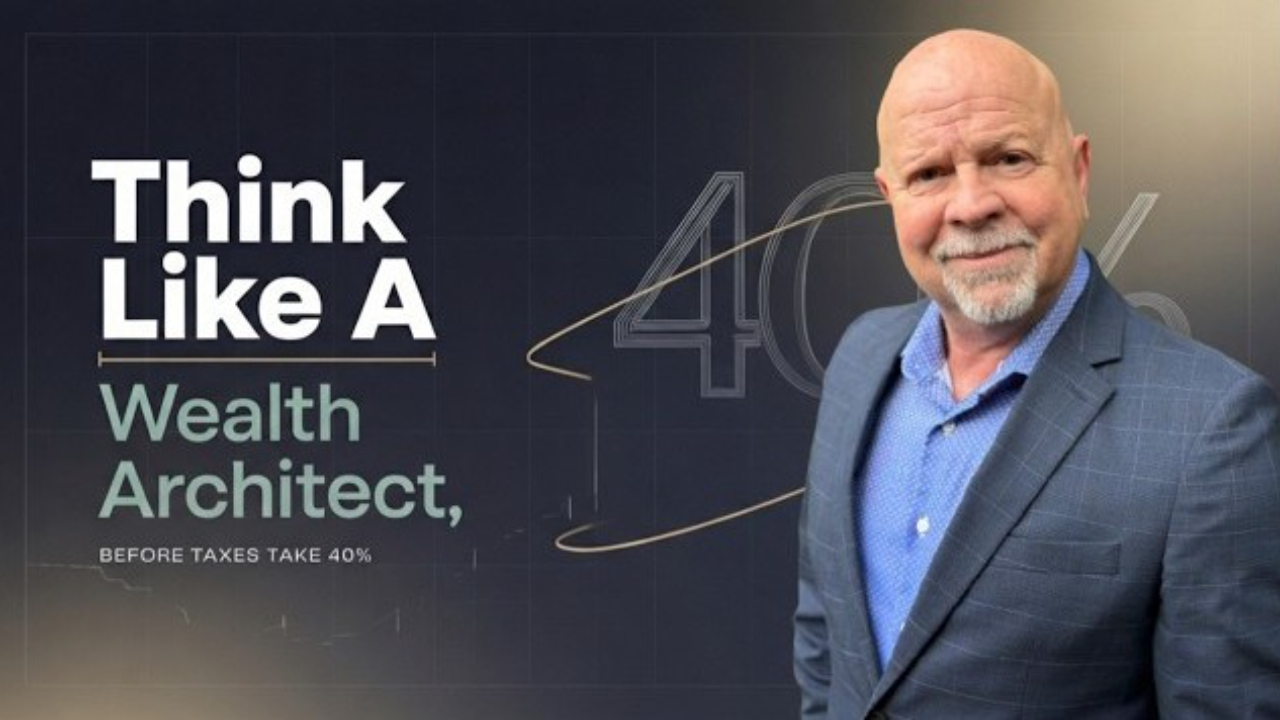
You could be one of the most disciplined covered call traders in the market.
You could be generating:
- $100,000 per year
- $300,000 per year
- $500,000+ per year
in consistent options income.
And still quietly lose 30–40% of your wealth.
Not from bad trades.
Not from volatility.
Not from poor stock selection.
But from taxes, poor structuring, and lack of long-term planning.
This is what we call the Wealth Architecture Gap — the space between generating income and actually keeping it.
And most traders never close it.
The Problem: Traders Optimize Income — Not Wealth
Serious options traders spend enormous time refining:
- Strike selection
- Implied volatility analysis
- Position sizing
- Risk-adjusted return targets
- Rolling strategies
- Managing assignments
They operate systematically.
But when it comes to:
- Tax efficiency
- Entity structure
- Asset protection
- Estate planning
They operate casually — or not at all.
That imbalance is expensive.
The Hidden Cost of Success
Let’s say you’re running covered calls and the wheel strategy.
You generate $400,000 in annual income.
You’re disciplined.
You’re consistent.
You’ve engineered income.
Then tax season arrives.
If that $400,000 is taxed as ordinary income at 35% federal:
- $140,000 goes to federal taxes
- Add state taxes
- Potential self-employment taxes
You may be left with $220,000–$240,000.
You didn’t trade poorly.
You structured poorly.
That’s the gap.
Gap #1: Tax Optimization
Most traders operate in:
- A personal brokerage account
- Possibly an IRA
Every dollar of options premium is treated as ordinary income.
At higher brackets (32%, 35%, 37%), the tax drag is enormous.
The S Corporation Conversation
For traders generating significant income (often $200,000+ annually), entity structuring may provide advantages.
An S Corporation (S Corp) can allow:
- Salary + distribution split
- Payroll tax paid on salary
- Distributions potentially avoiding 15.3% self-employment tax
Example:
Income: $400,000
Reasonable salary: $150,000
Distribution: $250,000
Savings from payroll tax optimization alone can reach tens of thousands per year.
Over a decade?
Potentially $300,000+ retained capital.
Important: This requires proper CPA and legal advice. Not every trader qualifies. But many never even ask.
And that’s the mistake.
Gap #2: Asset Protection & Entity Structuring
If you are trading with $1M+ in capital inside a personal brokerage account, consider this:
What happens if:
- You are sued?
- A business dispute arises?
- A divorce occurs?
- A creditor makes a claim?
Without separation between personal and trading assets, everything is exposed.
High-net-worth individuals often use:
- LLCs
- Holding companies
- Trust structures
to create legal separation.
This isn’t fear-based thinking.
It’s structural thinking.
Wealthy individuals don’t mix capital casually.
They isolate it strategically.
Gap #3: Wealth Preservation & Legacy Planning
Let’s say you’ve built a $2 million portfolio over 15 years.
You generate $150,000 annually from options income.
Now ask yourself:
What happens when you pass that wealth to the next generation?
Without planning:
- Probate can delay distribution
- Estate taxes may apply
- Heirs may incur capital gains upon liquidation
Depending on circumstances, up to 40% of estate value could be eroded in transfer.
There are strategies wealthy families explore, such as:
- Dynasty trusts
- Charitable remainder trusts
- Donor-advised funds
- Strategic gifting structures
These tools allow:
- Tax-efficient transfer
- Ongoing income
- Multi-generational planning
Most traders never explore these options — not because they’re unavailable, but because they’re unaware.
The Mental Shift: Trader vs. Wealth Architect
A trader asks:
“How do I make more income this month?”
A wealth architect asks:
“How does every dollar I make flow through a structure that protects, optimizes, and compounds it?”
That’s a higher-level framework.
Your trading system may be engineered.
But is your wealth engineered?
Trading Is the Engine. Structure Is the Container.
Think of your covered call strategy as the engine.
It produces:
- Cash flow
- Compounding potential
- Portfolio yield
But without structure, the engine leaks.
Taxes drain it.
Lawsuits threaten it.
Poor estate planning erodes it.
Income generation without architecture is incomplete.
Real Numbers: A 10-Year Comparison
Let’s compare two identical traders earning $400,000 annually.
Trader A — No Structure
Taxes: ~$170,000 (federal + state + payroll exposure)
Net income: ~$230,000
Over 10 years: $2.3 million retained
Trader B — Structured Properly
Entity optimization
Retirement contributions
HSA planning
Business deductions
Payroll tax management
Taxes reduced by ~$30,000 annually
Net income: ~$260,000
Over 10 years: $2.6 million retained
Difference: $300,000
And that excludes compounding effects.
That’s the Wealth Architecture Gap quantified.
The Psychological Advantage of Structure
Wealth architecture does more than save taxes.
It provides:
- Clarity
- Confidence
- Reduced stress
- Long-term vision
When you know your capital is protected and structured properly, you trade differently.
You trade calmer.
You trade strategically.
You trade from abundance, not urgency.
That psychological shift alone improves performance.
Life-Improving Wealth Lessons
- Income Is Only Step One
Preservation is step two. Transfer is step three. - Taxes Are Predictable
Ignoring them doesn’t reduce them. - Capital Without Protection Is Vulnerable
Structure before crisis, not after. - Wealth Is Multi-Generational
Plan beyond your lifetime. - Systems Beat Hustle
Sustainable wealth is built on architecture, not adrenaline. - Think Like the Wealthy
The affluent prioritize protection as much as production.
Frequently Asked Questions (FAQs)
Is wealth architecture only for ultra-high-net-worth individuals?
No. Once trading income exceeds six figures annually, structure conversations become relevant.
Is an S Corp right for every trader?
No. Suitability depends on income level, business classification, and professional guidance.
Can I implement asset protection on my own?
Professional legal and CPA advice is critical. Improper structuring can create compliance risks.
When should I start estate planning?
Earlier than you think. Planning is more efficient before wealth compounds significantly.
Does this reduce trading performance?
No. It enhances after-tax returns without changing trading skill.
What You Should Do Next
If you are generating serious income from covered calls or options strategies:
- Schedule a consultation with a CPA experienced in trader taxation.
- Explore entity structuring options.
- Evaluate asset protection strategies.
- Discuss estate planning if assets exceed six figures.
- Review whether your income is flowing through an optimized system.
Do not wait until “next year.”
Every year without structure costs you.
Call to Action: Close the Wealth Architecture Gap Now
If you are generating serious income from covered calls or options trading, this is not a “someday” conversation.
This is a right now conversation.
You’ve already done the hard part — building the skill to produce income consistently. Now it’s time to protect and optimize what you’re earning.
Conclusion
Most traders focus entirely on:
- Making money.
- Almost none focus equally on:
- Keeping money.
- Protecting money.
- Transferring money.
- That’s the Wealth Architecture Gap.
- Trading skill builds income.
- Architecture builds wealth.
If you are serious about covered call income, it’s time to elevate the conversation beyond strike prices and theta.
- Trade like a professional.
- Structure like the wealthy.
- And think like a wealth architect.
